Adhyaya 146
Chapter 146 — Aṣṭāṣṭaka Devī-s (अष्टाष्टकदेव्यः)
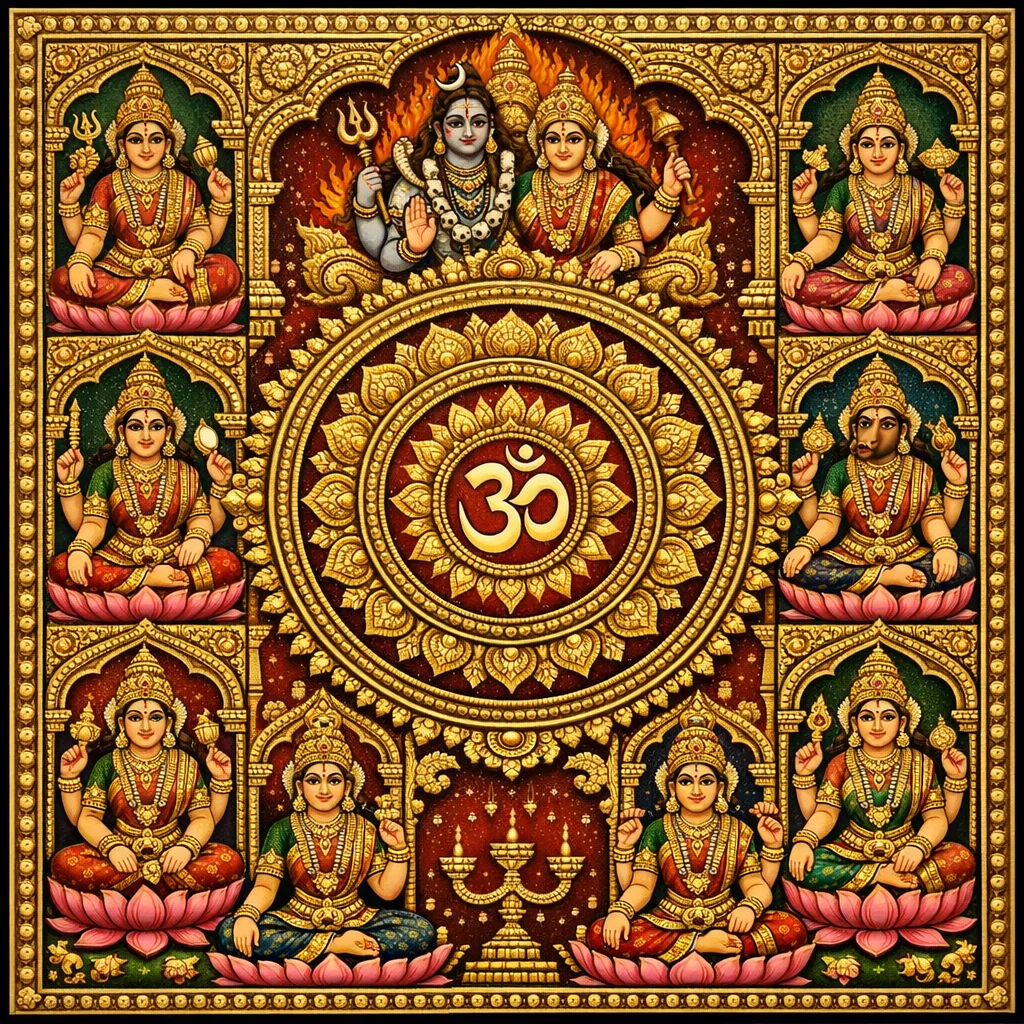
ഈ അധ്യായത്തിൽ അഗ്നി (ഈശ്വരവാണിയായി) ത്രിഖണ്ഡീ—ബ്രഹ്മാ, വിഷ്ണു, മഹേശ്വരി—എന്ന ഘടനയെ മാതൃകകളുടെ ഗൂഢ ‘ഹൃദയ’വുമായി ബന്ധിപ്പിച്ച മന്ത്രരചനയായി അവതരിപ്പിക്കുന്നു. മാതൃശക്തികൾ ലക്ഷ്യസിദ്ധി നൽകുന്നവർ, അക്ഷയർ, തടസ്സമില്ലാത്ത ഗതിയുള്ളവർ; വശീകരണം, ഉച്ചാടനം, മൂലനം തുടങ്ങിയ കർമങ്ങൾ നിർവഹിച്ച്—പ്രത്യേകിച്ച് ശത്രുകൃത്യച്ഛേദത്തിനും സിദ്ധിപ്രാപ്തിക്കും—സഹായിക്കുന്നു. ‘വിച്ചേ സ്വാഹാ’ എന്ന അവസാനം വരുന്ന മന്ത്രഖണ്ഡങ്ങൾ, പാഠഭേദങ്ങൾ, പദ/ശബ്ദഗണന, വലിയ മന്ത്രസമൂഹത്തിലെ വിന്യാസം എന്നിവ നിർദ്ദേശിക്കുന്നു. അഞ്ചു പ്രണവ-പരിധികളോടെ ജപ-പൂജ, പദസന്ധികളിൽ കുബ്ജികാ-ഹൃദയത്തിന്റെ ചേർക്കൽ, ‘മൂന്നിന്റെ മധ്യം’ എന്ന ധ്വനിന്യാസനിയമങ്ങൾ, ശിഖാ-ശിവാ/ഭൈരവ സൂത്രങ്ങൾ, കൂടാതെ 32 അക്ഷരക്രമത്തോട് ചേർന്ന ത്ര്യക്ഷര ബീജസമൂഹങ്ങൾ (ബീജസഹിതം/ബീജരഹിതം) വിശദീകരിക്കുന്നു. ഉത്തരാർദ്ധത്തിൽ കുലാനുസാരം ബ്രാഹ്മണി, മാഹേശ്വരി, കൗമാരി, വൈഷ്ണവി, വാരാഹി, ഐന്ദ്രി, ചാമുണ്ഡാ, മഹാലക്ഷ്മി എന്നീ ദേവീനാമങ്ങൾ പട്ടികപ്പെടുത്തി, യുദ്ധജയാർണവ രീതിയിൽ ജയത്തിനായി മണ്ഡലപൂജയെ ഊന്നിപ്പറയുന്നു.
Shlokas
No shlokas available for this adhyaya yet.
Frequently Asked Questions
A Trikhaṇḍī mantra-framework tied to the secret Mātṛkā-hṛdaya, with prescribed japa/worship, pada-sandhi insertion of Kubjikā-hṛdaya, and phonetic (varṇa) arrangements supporting maṇḍala-based victory rites.
It repeatedly frames the Mothers’ powers as operative for jaya: uprooting obstacles/enemies, cutting hostile rites (para-karma), and prescribing maṇḍala worship of specific kula-born goddess groups explicitly “for victory.”
Because mantra efficacy and transmission depend on exact phonetic forms; the chapter preserves variant endings and syllable-forms to document recensional differences while still maintaining counting schemes (pada totals; inclusion within larger mantra sets).