Adhyaya 141
Ṣaṭtriṃśat-padaka-jñāna (Knowledge of the Thirty-Six Padakas) — Mṛtasañjīvanī-Rasāyana and Coded Therapeutic Counts
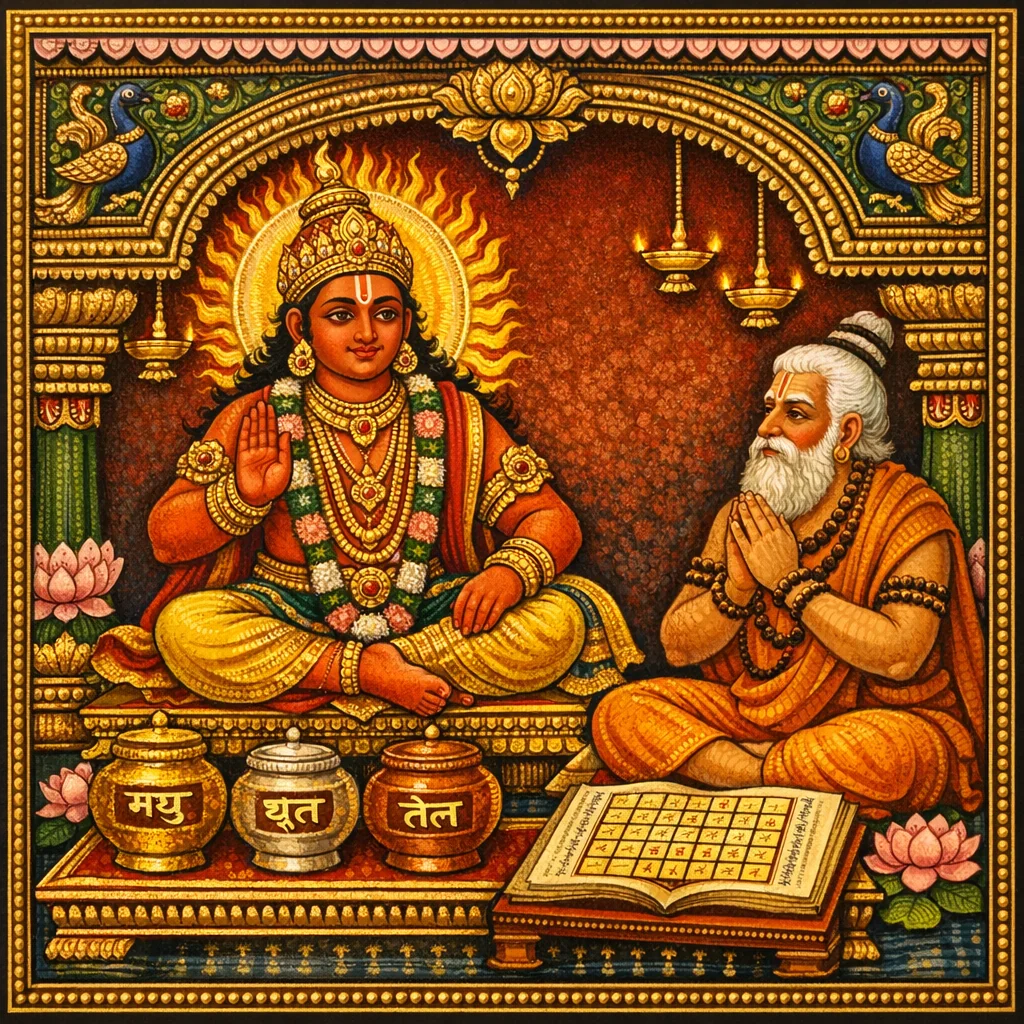
ഈ അധ്യായത്തിൽ ഭഗവാൻ അഗ്നി “ഷട്ത്രിംശത്-പദക” എന്ന സാങ്കേതിക രസായനക്രമം ഉപദേശിക്കുന്നു; ബ്രഹ്മാ, രുദ്രൻ, ഇന്ദ്രൻ എന്നിവർ ആദരിച്ച മൃതസഞ്ജീവനി-രസായനമായി ഇതിനെ പ്രസ്താവിക്കുന്നു. 36 ഔഷധദ്രവ്യങ്ങളെ എണ്ണിപ്പറഞ്ഞ്, ഏകാദി മുതലായ ക്രമത്തിൽ ശാസ്ത്രവിധിപൂർവ്വം സംയോജിപ്പിച്ചാൽ അവ സർവരോഗഹരമായി അമരീകരണം—മരണരഹിതത്വത്തിന് സമാനമായ പ്രാണശക്തി—നൽകുമെന്ന് പറയുന്നു. മാത്രാനിർണ്ണയം, സേവനരൂപങ്ങൾ (ചൂർണം, ഗുളിക, ലേഹ്യം, ക്വാഥം, മധുരഗോളം/ശർക്കര-ഗുഡ് പാകം) എന്നിവയും, സ്വരസ-ഭാവനയിലൂടെ ആവർത്തിച്ച് സംസ്കാരം ചെയ്ത് ശക്തി വർധിപ്പിക്കണമെന്നും നിർദ്ദേശിക്കുന്നു. ചുളിവുകളും മുടി വെളുപ്പും കുറയുക, ശരീരത്തിലെ വിവിധ കോഷ്ഠങ്ങളിൽ വ്യാപക ഫലം, നിയന്ത്രിതാചാരത്തോടെ 300 വർഷ ആയുസ്സെന്ന ആദർശഫലം എന്നിവ പ്രസ്താവിക്കുന്നു. തിഥി-സൗരമാനം, വാണ-ഋതു-ശൈല-വസു തുടങ്ങിയ സംകേതഗണനകളും ഗ്രഹ-ഗ്രഹണബന്ധിത കർമങ്ങളും വഴി ചികിത്സയെ ജ്യോതിഷസദൃശ കാല-സംഖ്യാനിയമങ്ങളോട് ബന്ധിപ്പിക്കുന്നു. അവസാനം ഈ പദകജ്ഞാനം രഹസ്യമാണെന്നും അയോഗ്യർക്കു നൽകരുതെന്നും വ്യക്തമാക്കുന്നു.
Shlokas
No shlokas available for this adhyaya yet.
Frequently Asked Questions
A structured rasāyana system called “Ṣaṭtriṃśat-padaka,” listing 36 medicinal dravyas and describing preparation modes, dosage, vehicles (honey/ghee/oil), and grouped formulations (navaka-yoga) aimed at disease removal and rejuvenation.
Harītakī, Akṣī, Āmalakī, Marīca, Pippalī, Śiphā, Vahni, Śuṇṭhī, Guḍūcī, Vacā, Nimba, Vāsaka, Śatamūlī, Saindhava, Sindhuvāraka, Kaṇṭakārī, Gokṣurā, Bilva, Punarnavā, Balā, Eraṇḍa, Muṇḍī, Rucaka, Bhṛṅga, Kṣāra, Parpaṭa, Dhanyāka, Jīraka, Śatapuṣyī, Javānikā, Viḍaṅga, Khadira, Kṛtamāla, Haridrā, Vacā, Siddhārtha.
It introduces coded numerical/timing schemes (tithi-and-solar measures; code-terms like vāṇa/ṛtu/śaila/vasu) and references rites spanning planets to eclipses, implying calendrical/ritual structuring of therapeutic control.
By placing potent medical knowledge under divine authority, prescribing disciplined conduct, and restricting transmission to qualified recipients, it frames health and longevity as dharmic supports for sustained sādhanā rather than mere indulgence.