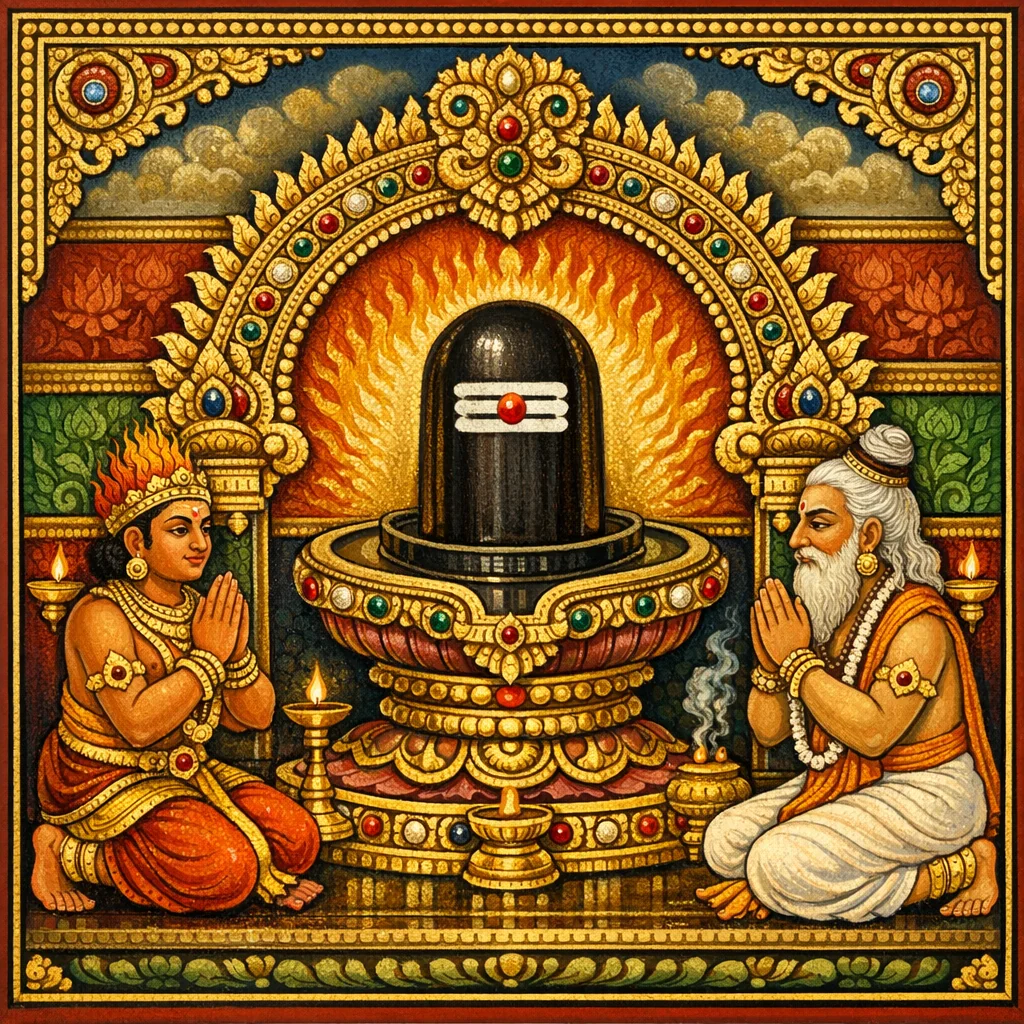
Adhyaya 217
Gāyatrī-nirvāṇa (गायत्रीनिर्वाणम्) — Śiva-Liṅga Stuti as a Path to Yoga and Nirvāṇa
അഗ്നി പറയുന്നു—ലിംഗരൂപത്തിൽ ശിവനെ സ്തുതിച്ചാൽ ഗായത്രിയിലൂടെ യോഗസിദ്ധി ലഭിക്കുന്നു; വസിഷ്ഠാദി ഋഷികൾ ശങ്കരനിൽ നിന്ന് ‘നിർവാണ’മെന്ന പരബ്രഹ്മം പ്രാപിച്ചു. അധ്യായം സംക്ഷിപ്ത ലിംഗസ്തോത്രമായി വിരിയുന്നു—ശിവൻ സ്വർണമയൻ, വൈദികൻ, പരമൻ, ആകാശസദൃശൻ, സഹസ്രരൂപൻ, അഗ്നിതേജസ്വി, ആദി, ശ്രുതി-പ്രസിദ്ധൻ എന്നു നമസ്കരിക്കുന്നു. സ്തോത്രത്തിൽ ലിംഗത്തെ പാതാളം–ബ്രഹ്മം മുതൽ അവ്യക്തം, ബുദ്ധി, അഹങ്കാരം, ഭൂതങ്ങൾ, ഇന്ദ്രിയങ്ങൾ, തന്മാത്രകൾ, പുരുഷൻ, ഭാവം, ത്രിഗുണങ്ങൾ വരെ, അവസാനം യജ്ഞവും തത്ത്വവും എന്ന ചിഹ്നമായി ഏകീകരിക്കുന്നു. തുടർന്ന് പ്രാർത്ഥന—ഉത്തമ യോഗം, യോഗ്യ സന്തതി, അക്ഷയ ബ്രഹ്മം, പരമ ശാന്തി നൽകണമേ. അവസാനം ശ്രീപർവതത്തിൽ വസിഷ്ഠന്റെ സ്തുതിയിൽ പ്രസന്നനായ ശിവൻ വംശത്തിന്റെ അക്ഷയതയും അചഞ്ചല ധർമ്മബുദ്ധിയും വരമായി നൽകി അന്തർധാനം ചെയ്തു—സ്തോത്രം തത്ത്വോപദേശവും വരപ്രദാനസാധനവും ആണെന്ന് ഉറപ്പിക്കുന്നു.
Shlokas
No shlokas available for this adhyaya yet.
Frequently Asked Questions
That Śiva as Liṅga is the all-pervading reality mirrored in cosmic and psychological principles, and that Gāyatrī-linked devotion and yoga culminate in realization of Nirvāṇa (Parabrahman).
A layered identification of the liṅga with Sāṃkhya-style tattvas (avyakta, buddhi, ahaṅkāra, indriyas, tanmātras, bhūtas), the tri-guṇas, and yajña/tattva—presenting Śiva as both transcendence and immanence.
It frames stuti as sādhanā: devotion and mantra-yoga yield inner peace and Brahman-realization, while also legitimizing worldly stability through boons such as akṣaya lineage and steadfastness in dharma.