Adhyaya 214
मन्त्रमाहात्म्यकथनम् (Account of the Greatness of Mantras)
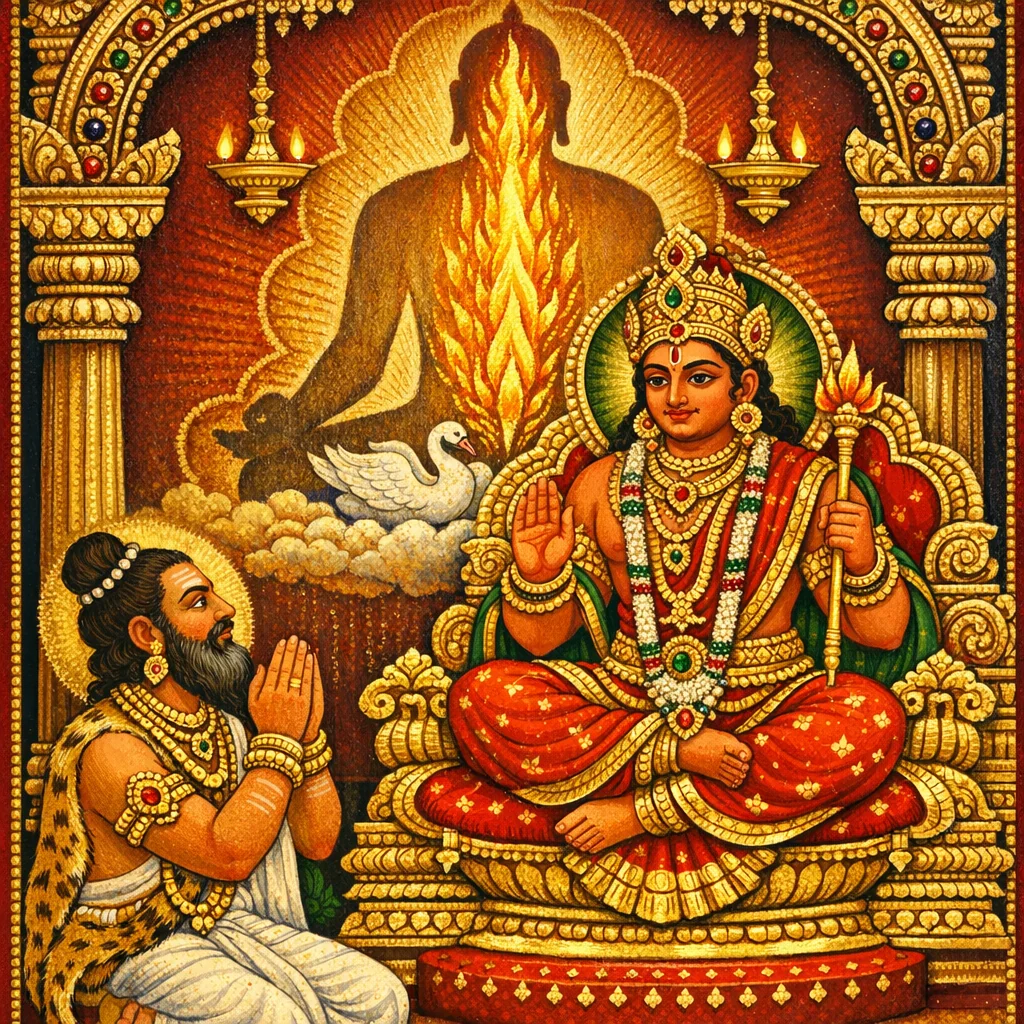
ഭൂമിദാനവിഷയം സമാപിച്ചതിന് ശേഷം ഭഗവാൻ അഗ്നി ദാനത്തിന്റെ ബാഹ്യപുണ്യത്തെ അന്തർമുഖ ശാസനയായി—മന്ത്രവും പ്രാണവും—പുനഃകേന്ദ്രിതമാക്കുന്നു. നാഭിക്കു താഴെയുള്ള കന്ദത്തിൽ നിന്നുയരുന്ന നാഡീചക്രം വിശദീകരിച്ച് 72,000 നാഡികളും ഇഡാ, പിംഗളാ, സുഷുമ്നാ മുതലായ പത്ത് പ്രധാന നാഡികളും എണ്ണിപ്പറയുന്നു. പത്ത് വായുക്കൾ—അഞ്ച് പ്രധാന (പ്രാണ, അപാന, സമാന, ഉദാന, വ്യാന)യും അഞ്ചു ഉപവായുക്കൾ (നാഗ, കൂർമ, കൃകര, ദേവദത്ത, ധനഞ്ജയ)യും—ഇവയുടെ ദേഹപ്രവർത്തനങ്ങളും പ്രാണ–അപാനങ്ങളുടെ ദിന-രാത്രി ധ്രുവത്വവും ബന്ധിപ്പിക്കുന്നു. സംക്രാന്തി, വിഷുവം, അയനം, അധിമാസം, ഋണം, ഊനരാത്രം, ധനം തുടങ്ങിയ കാലചിഹ്നങ്ങളെ ദേഹലക്ഷണങ്ങളോടും ശ്വാസസൂചനകളോടും ചേർത്ത് ശ്വാസത്തിലൂടെ വിശ്വകാലം വായിക്കുന്ന വ്യാഖ്യാനം സൂചിപ്പിക്കുന്നു. പൂരക, കുംഭക, ഊർധ്വരേചന ക്രമത്തിൽ പ്രാണായാമം, തുടർന്ന് അജപാ-ജപം (ഗായത്രിയുടെ സ്വാഭാവിക ജപം)യും ഹംസസാധനയും ഉപദേശിക്കുന്നു. ഹൃദയപ്രദേശത്തെ കുണ്ഡലിനി, അമൃതധ്യാനം, ദേഹത്തിലെ ദേവതാസ്ഥാനങ്ങൾ—ഹൃദയത്തിൽ ബ്രഹ്മാ, കണ്ഠത്തിൽ വിഷ്ണു, താലുവിൽ രുദ്രൻ, ലലാട്ടത്തിൽ മഹേശ്വരൻ—എന്ന സൂക്ഷ്മദേഹ ദൈവശാസ്ത്രം വരുന്നു. അവസാനം മന്ത്രത്തെ ‘പ്രാസാദ’സദൃശ ഘടനയായി കണ്ട് ഹ്രസ്വ-ദീർഘ-പ്ലുതമാത്രകൾ, ഫട് വഴി മാരണപ്രയോഗം, ഹൃദയമന്ത്രം വഴി ആകൃഷ്ടി, ജപ-ഹോമ സംഖ്യകൾ, ത്രിശൂന്യ സിദ്ധാന്തം, കൂടാതെ ഓം-ഗായത്രി-രുദ്രജ്ഞാനത്തിൽ പ്രാവീണ്യമുള്ള ആചാര്യ/ഗുരുവിന്റെ യോഗ്യതയും പ്രതിപാദിക്കുന്നു।
Shlokas
No shlokas available for this adhyaya yet.
Frequently Asked Questions
A structured subtle-physiology: 72,000 nāḍīs from the kanda below the navel; ten principal nāḍīs (including iḍā, piṅgalā, suṣumṇā); and ten vāyus with precise functional definitions, integrated with prāṇāyāma steps (pūraka–kumbhaka–release).
It internalizes dharma through disciplined breath and mantra: ajapā-japa and haṃsa contemplation purify the practitioner, establish deity-awareness within the body via nyāsa, and present mantra as a ‘prāsāda’ whose correct phonetics and method lead to siddhi and, through tri-śūnya insight, liberation.
Gāyatrī is called Ajapā (spontaneous, unforced repetition), identified as embodying Brahmā, Viṣṇu, and Maheśvara; repeating it is said to end rebirth.
An ācārya must be endowed with the thirty-eight kalās; a true guru is described as one who knows Oṁkāra, Gāyatrī, and the Rudra-deities and their principles.