Adhyaya 212
Meru-dānāni (Meru-Donations) — Kāmya-dāna, Month-wise Offerings, and the Twelvefold Meru Rite
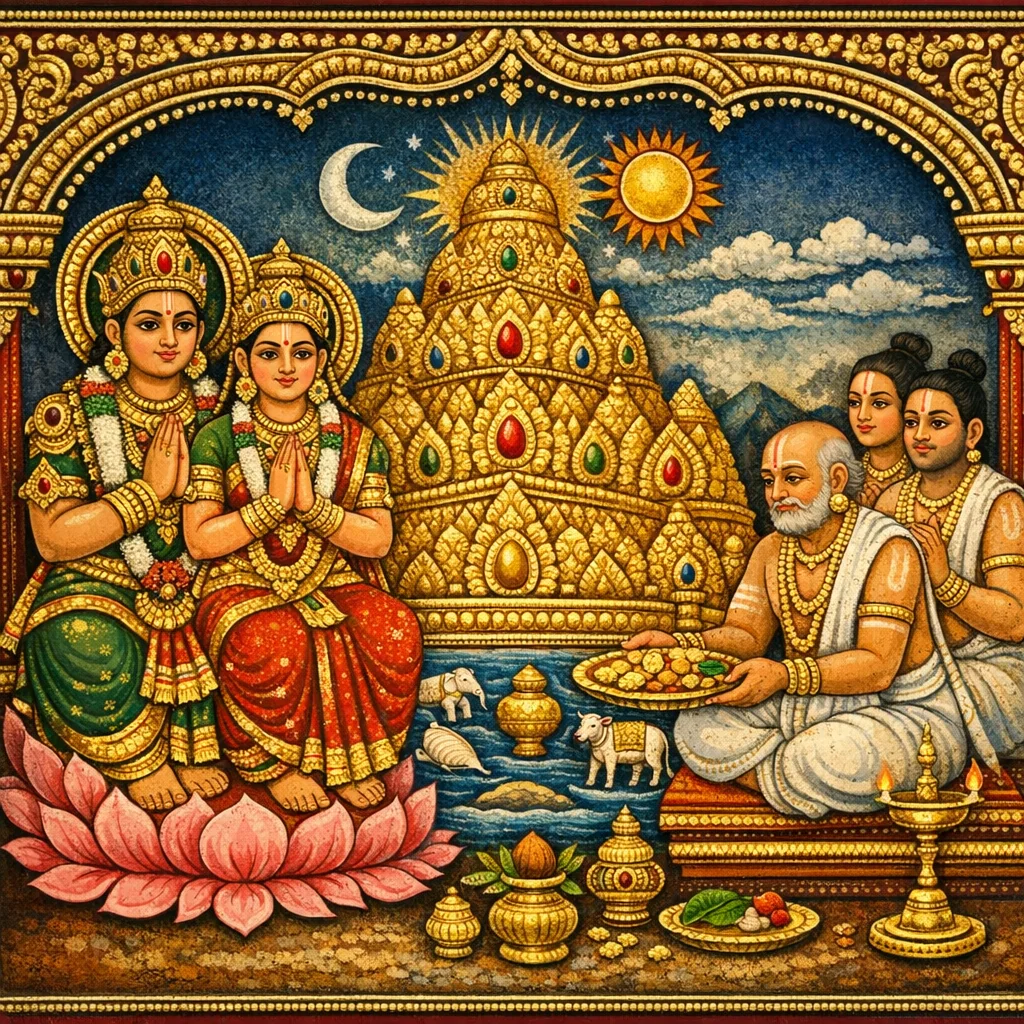
അഗ്നിദേവൻ മുൻ അധ്യായത്തിലെ ദാനപ്പട്ടികയിൽ നിന്ന് മുന്നോട്ട് നീങ്ങി, നിർദ്ദിഷ്ട ഫലങ്ങൾ നൽകുന്ന കാമ്യദാനത്തെ ക്രമബദ്ധമായി വിശദീകരിക്കുന്നു—മാസംതോറും തുടർച്ചയായ പൂജയോടുകൂടിയ അർപ്പണങ്ങൾ, ചിലത് പിഷ്ടകത്തിൽ നിർമ്മിച്ച പ്രതിമകളായി, അവയുടെ ഫലങ്ങൾ, ഒടുവിൽ വർഷാന്ത മഹാവിധി. തുടർന്ന് കാർത്തികത്തിൽ ദ്വാദശവിധ ‘മേരു-ദാനം’ വ്രതം അവതരിപ്പിക്കുന്നു; ഇത് ഭുക്തിയും മുക്തിയും ഒരുപോലെ നൽകുന്നതായി പറയുന്നു. നിശ്ചിത അളവുകളും സ്വർണ്ണാദി ദ്രവ്യങ്ങളും ഉപയോഗിച്ച് മേരു നിർമ്മിച്ച്, പദ്മയന്ത്രത്തിൽ പ്രതിഷ്ഠിച്ച്, മദ്ധ്യത്തിൽ ബ്രഹ്മാ–വിഷ്ണു–ഈശന്മാരെ സ്ഥാപിച്ച്, ദിക്കനുസരിച്ച് നാമിത പർവതങ്ങളാൽ ചുറ്റുന്ന വിന്യാസം വിവരിക്കുന്നു. മന്ത്രം, ഗോത്രോച്ചാരത്തോടെ ദാനം, കപടധനം ഒഴിവാക്കൽ തുടങ്ങിയ ദാനനിയമങ്ങൾ; സംക്രാന്തി, അയനം, ഗ്രഹണം മുതലായ ശുഭകാലങ്ങൾ; കൂടാതെ സ്വർണം, വെള്ളി, അശ്വം, ഗാവ്, വസ്ത്രം, ഘൃതം, ധാന്യം, എള്ള്, ഖണ്ഡ-മേരു തുടങ്ങിയ പല മേരു-ഭേദങ്ങളും പറയുന്നു. അവസാനം മേരു വിഷ്ണുസ്വരൂപമാണെന്ന് സ്തുതിച്ച്, ശുദ്ധി, വംശോന്നതി, സ്വർഗ്ഗലാഭം, ഒടുവിൽ ഹരിസാന്നിധ്യം എന്നിവ ലക്ഷ്യമാക്കിയ ഭക്തിനിവേദനത്തോടെ അധ്യായം സമാപിക്കുന്നു.
Shlokas
No shlokas available for this adhyaya yet.
Frequently Asked Questions
Regular monthly worship → year-end grand worship → Kārttika Meru-vrata with bathing/fasting → worship of Viṣṇu (or Śiva) → mantra-guided gifting of a constructed Meru to a brāhmaṇa (often gotra-addressed) → dedication (nivedana) for bhukti and mukti.
Ratna-meru (jeweled), Hema/Svarṇa-meru (gold), Rāupya-meru (silver), Hasti-meru (elephant-form), Aśva-meru (horses), Go-meru (cows), Vastra-meru (cloth), Ājya-parvata (ghee mountain), Dhānya-meru (grain), Tila-meru (sesame), and Khaṇḍa-meru (symbolic/segmented Meru).
It frames giving as a mokṣa-supporting discipline: purity through non-deceit, devotion-centered worship, cosmological visualization (Meru as Viṣṇu-form), lineage uplift, and final orientation toward Hari/Viṣṇuloka—thus integrating merit, devotion, and liberation.
Graded measurement logic (highest/middle/lower), prescribed weights (palas, khāras, prastha), construction rules (three peaks with Brahmā–Viṣṇu–Maheśvara), directional mountain placement, and calendrical triggers (Kārttika, saṅkrānti, ayana, grahaṇa).