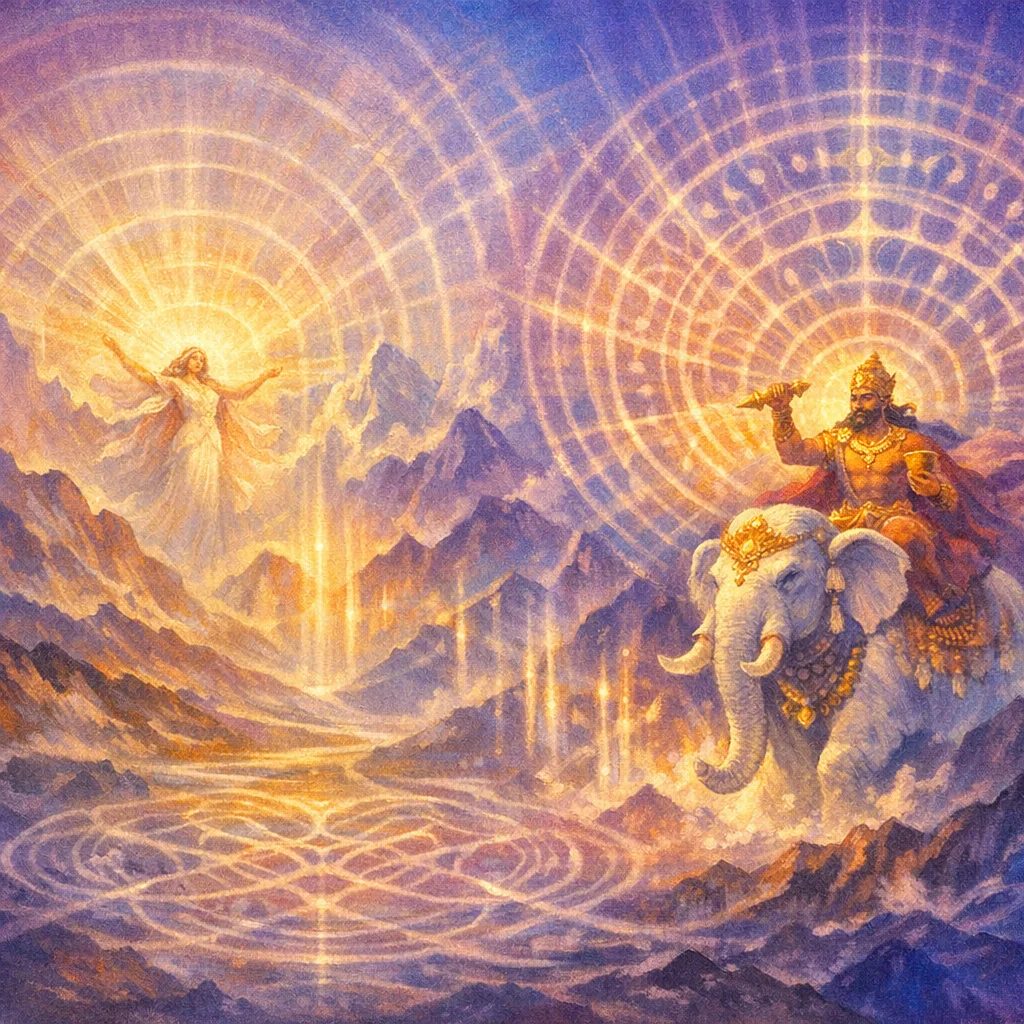
Dashati 2
Uṣas (Dawn) revealing light and opening the rite, leading into Indra’s arrival for Soma
Indra
Bright awakening and forward-driving—moving from serene illumination to vigorous summons and praise
R̥ṣi and chandas are not supplied in the input; identification requires Rigvedic concordance/anukramaṇī for these mantra sources.
Applied to Soma preparation and offering: pressing/straining is urged (“drāvaya somam”) and Indra is invited as the principal Soma-drinker.
Mantras
Mantra 1
प्रत्यु अदर्श्यायत्यू3च्छन्ती दुहिता दिवः अपो मही वृणुते चक्षुषा तमो ज्योतिष्कृणोति सूनरि
She has appeared, coming towards us, shining forth—the daughter of heaven; the fair (Dawn), great, takes to herself the waters; with her eye she makes light, (and) darkness (she dispels).
Mantra 2
इमा उ वां दिविष्टय उस्रा हवन्ते अश्विना अयं वामह्वे ऽवसे शचीवसू विशंविशं हि गच्छथः
These ruddy (rays), abiding in heaven, invoke you, O Aśvins; I also invoke you for succour, ye possessors of power and wealth; for ye go (bringing aid) to every tribe, to every dwelling.
Mantra 3
कु ष्ठः को वामश्विना तपानो देवा मर्त्यः घ्नता वामश्मया क्षपमाणोंशुनेत्थमु आदुन्यथा
Where stand ye? who (seeks) you, O Aśvins, divine ones? what afflicted mortal, wasting away, (invokes you) that, smiting (his malady) with the stone, with the ray, ye thus bring him relief?
Mantra 4
अयं वां मधुमत्तमः सुतः सोमो दिविष्टिषु तमश्विना पिबतं तिरो अह्न्यं धत्तं रत्नानि दाशुषे
This Soma, most rich in sweetness, expressed for you twain, is set forth in the divine rites: drink ye, Aśvins, that daytime draught, and bestow treasures upon the offerer of oblations.
Mantra 5
आ त्वा सोमस्य गल्दया सदा याचन्नहं ज्या भूर्णिं मृगं न सवनेषु चुक्रुधं क ईशानं न याचिषत्
With the Soma’s galda, ever supplicating, I call to thee at the pressings, as one pursueth a swift wild creature; for who would not implore the Lord?
Mantra 6
अध्वर्यो द्रावया त्वं सोममिन्द्रः पिपासति उपो नूनं युयुजे वृष्णा हरी आ च जगाम वृत्रहा
O Adhvaryu, make the Soma to flow; Indra thirsteth: now indeed he hath yoked his vigorous tawny steeds, and the slayer of Vṛtra is come.
Mantra 7
अभी षतस्तदा भरेन्द्र ज्यायः कनीयसः पुरूवसुर्हि मघवन्बभूविथ भरेभरे च हव्यः
Bring aid against the many, O Indra; thou art the greater than the lesser: for, Maghavan, thou hast become possessed of abundant wealth, and in every conflict art worthy to be invoked with oblations.
Mantra 8
यदिन्द्र यावतस्त्वमेतावदहमीशीय स्तोतारमिद्दधिषे रदावसो न पापत्वाय रंसिषम्
Since, O Indra, so far as thou art, so far may I have power; O giver of wealth, thou appointest the praiser: I would not take delight for evil’s sake.
Mantra 9
त्वमिन्द्र प्रतूर्तिष्वभि विश्वा असि स्पृधः अशस्तिहा जनिता वृत्रतूरसि त्वं तूर्य तरुष्यतः
Thou, Indra, in all encounters art against rivalries; thou art the destroyer of reproach, the begetter (of success), the overcomer of Vṛtra: thou art the champion against the assailants.
Mantra 10
प्र यो रिरिक्ष ओजसा दिवः सदोभ्यस्परि न त्वा विव्याच रज इन्द्र पार्थिवमति विश्वं ववक्षिथ
Mighty by strength, thou hast advanced from the heavenly seats; no region, O Indra, hath encompassed thee: beyond the earthly (spaces) thou hast extended over all.
Frequently Asked Questions
Uṣas marks the ritual and cosmic ‘opening’—light makes the morning rite possible—after which the focus naturally turns to Indra, the chief Soma-drinker, who is summoned and praised for arriving and empowering the sacrifice.
It is a direct injunction to the Adhvaryu to make the Soma flow—i.e., expedite pressing/straining and readiness of the offering—because Indra is ‘thirsting’ and is to be received promptly.
The hymn praises Indra’s vyāpti (pervasion): no realm confines him, so he can come from any divine seat to the sacrifice, protect it, and grant victory and fulfillment.