Dashati 5
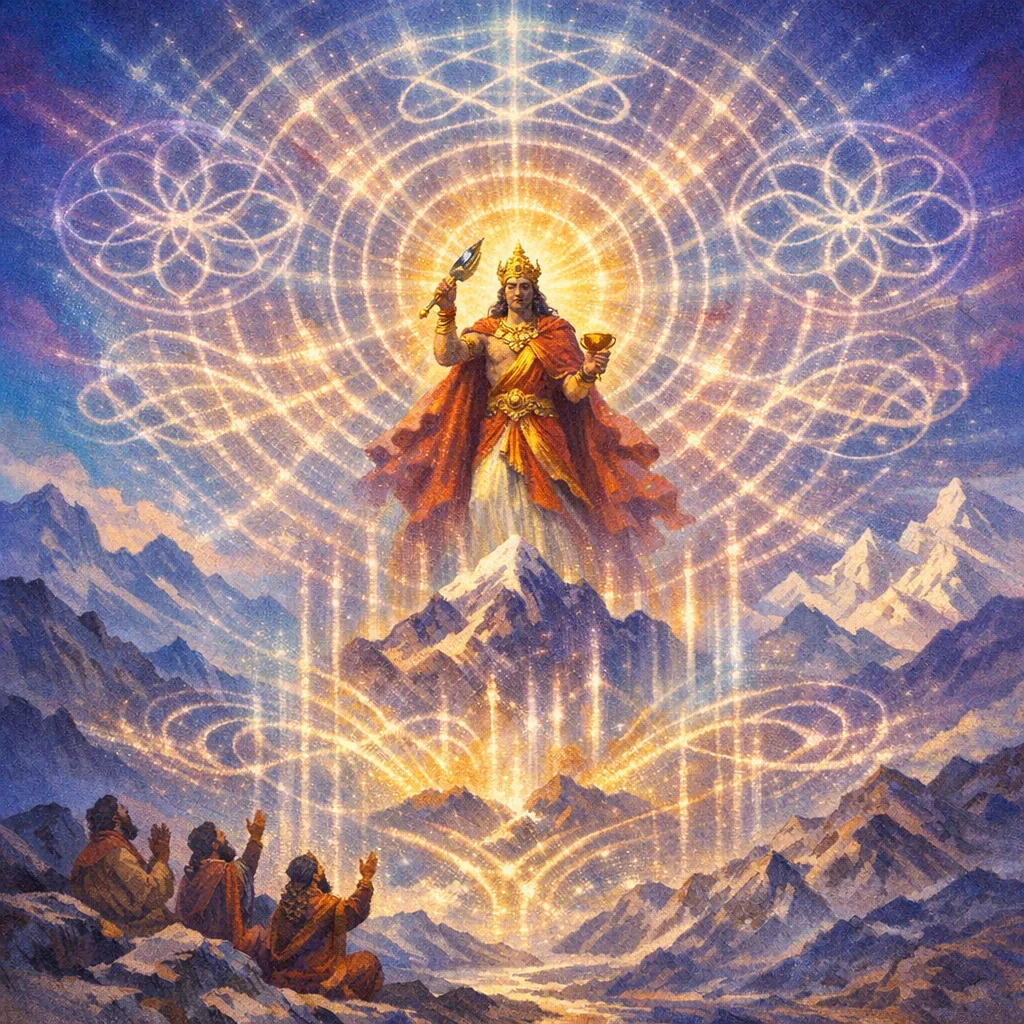
Aindra praise invoking Indra’s sovereign power to hear the stotra and grant victory, abundance, and unhindered ritual progress
Indra
Uplifting heroic and proclamatory (royal/celebratory Aindra tone)
R̥ṣi attribution is not provided in the input; without cross-referencing the underlying Ṛgvedic source and Sāmavedic anukramaṇī no family assignment is made.
Soma-stotra setting implied by Aindra classification and references to āśiṣ (benediction) gīr/stotra and bhūryāsuti (abundant libations).
Mantras
Mantra 1
इहेव शृण्व एषां कशा हस्तेषु यद्वदान् नि यामं चित्रमृञ्जते
Hear, as it were, even here, of these (thy worshippers), whose goad is in their hands; by speech they apply the wondrous guidance (and so attain their end).
Mantra 2
इम उ त्वा वि चक्षते सखाय इन्द्र सोमिनः पुष्टावन्तो यथा पशुम्
These, verily, behold thee, O Indra,—thy friends, the Soma-possessors, abounding in sacrificial prosperity,—as men look upon a cherished victim (set apart for the rite).
Mantra 3
समस्य मन्यवे विशो विश्वा नमन्त कृष्टयः समुद्रायेव सिन्धवः
To the impetuous might (of him who is praised) in this Sāman, all the clans, all the peoples bow down, as the rivers (flow) to the ocean.
Mantra 4
देवानामिदवो महत्तदा वृणीमहे वयम् वृष्णामस्मभ्यमूतये
That great (favour), (won) by the invocations of the gods, we solicit—(the favour) of the vigorous (Indra)—for our succour.
Mantra 5
सोमानां स्वरणं कृणुहि ब्रह्मणस्पते कक्षीवन्तं य औशिजः
Make thou the Soma-offerings resplendent (and duly voiced), O Lord of prayer; (prosper) Kakṣīvant, who is the son of Uśij.
Mantra 6
बोधन्मना इदस्तु नो वृत्रहा भूर्यासुतिः शृणोतु शक्र आशिषम्
Let there be for us the Ida (duly offered), with awakened mind; may the Vṛtra-slayer, of abundant libations, the mighty Śakra, hear our benediction.
Mantra 7
अद्य नो देव सवितः प्रजावत्सावीः सौभगम् परा दुःष्वप्न्यं सुव
To-day, O divine Savitṛ, impel for us prosperity with offspring; drive far away the evil dream (the inauspicious omen).
Mantra 8
क्वा3स्य वृषभो युवा तुविग्रीवो अनानतः ब्रह्मा कस्तं सपर्यति
Where is he, the youthful bull, the strong-necked, the unconquered? What priest (of sacred prayer) worships him with due service?
Mantra 9
उपह्वरे गिरीणां सङ्गमे च नदीनाम् धिया विप्रो अजायत
In the winding region of the mountains, and at the confluence of the rivers, the inspired priest was born (i.e., the inspiration arose) by sacred thought.
Mantra 10
प्र सम्राजं चर्षणीनामिन्द्रं स्तोता नव्यं गीर्भिः नरं नृषाहं मंहिष्ठम्
Forth let the praiser celebrate with fresh hymns Indra, the universal king of men, the hero, the overcomer of foes, the most bountiful.
Frequently Asked Questions
It centers on praising Indra—especially as Vṛtrahā (slayer of obstacles) and samrāj (sovereign)—and urging him to hear the singers’ benediction and grant success and gifts.
Idā is treated as a ritual portion/invitation; “bodhanmanas” stresses that the offering and chant must be performed with awakened, attentive intention for the prayer to be effective.
They can be read as metaphors for controlled, well-directed recitation and melody: disciplined speech guides the rite forward and helps the worshippers reach their intended sacrificial goal.