
Bhagavad Gita — Raja Vidya Raja Guhya Yoga, Shloka 29
Raja Vidya Raja Guhya Yoga
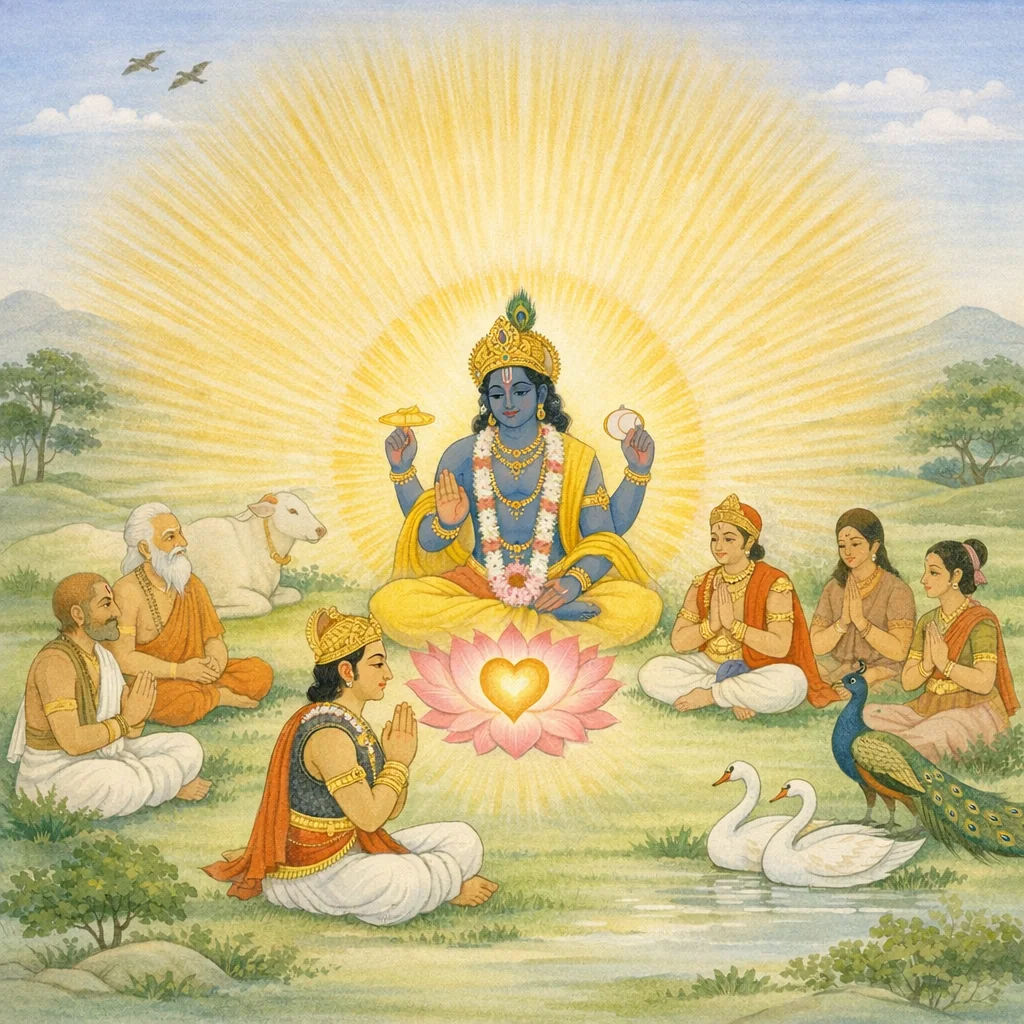
समोऽहं सर्वभूतेषु न मे द्वेष्योऽस्ति न प्रियः । ये भजन्ति तु मां भक्त्या मयि ते तेषु चाप्यहम् ॥ ९.२९ ॥
samo 'haṁ sarva-bhūteṣu na me dveṣyo 'sti na priyaḥ | ye bhajanti tu māṁ bhaktyā mayi te teṣu cāpy aham || 9.29 ||

I am equal toward all beings; to Me none is hateful and none dear. Yet those who worship Me with devotion abide in Me, and I too abide in them.
I am the same toward all beings; to Me none is hateful or dear. But those who worship Me with devotion are in Me and I am also in them.
I am equal toward all beings; for Me there is none disliked, none dear. Yet those who worship Me with devotion are in Me, and I too am in them.
The apparent tension—divine impartiality vs special closeness to devotees—is commonly explained as non-arbitrary reciprocity: the divine is equally available, but intimacy is realized through devotion (a relational/epistemic condition rather than favoritism).
FAQs
It balances universal dignity with the idea that closeness to the sacred grows through sustained practice, offering a model of attachment grounded in ethical and contemplative discipline.
The verse expresses both transcendence (impartiality) and immanence (mutual indwelling), a hallmark of the Gita’s theistic philosophy.
After describing liberation through dedicated action, it clarifies that the divine is not biased, while still affirming the transformative intimacy of devotion.
It can encourage impartial respect toward others while cultivating a personal practice that deepens one’s sense of connection and meaning.