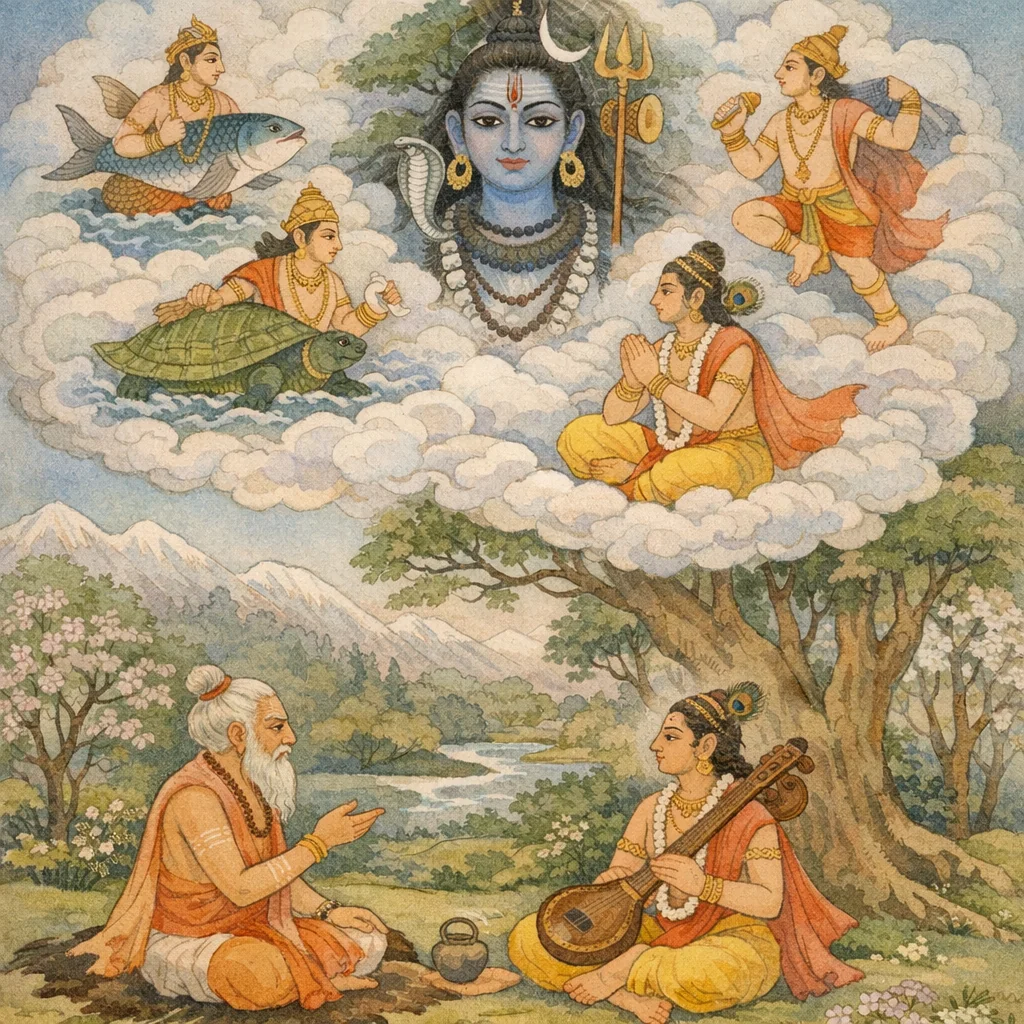
Adhyaya 61: The Second Sin-Destroying Hymn (Pāpaśamana Stava) and Syncretic Praise of Hari-Hara
द्वितीय-पापशमन-स्तवः (Dvitīya-Pāpaśamana-Stavaḥ)
Syncretic Praise of Hari-Hara
ವಾಮನಪುರಾಣದ 61ನೇ ಅಧ್ಯಾಯದಲ್ಲಿ ಪುಲಸ್ತ್ಯ ಋಷಿ ನಾರದರಿಗೆ ‘ದ್ವಿತೀಯ ಪಾಪಶಮನ ಸ್ತವ’ವನ್ನು ಉಪದೇಶಿಸಿ, ಅದರ ಸಮ್ಯಗಧ್ಯಯನ ಮತ್ತು ಜಪವು ಪಾಪನಾಶಕವೆಂದು ಹೇಳುತ್ತಾರೆ. ಅಧ್ಯಾಯವು ಮುಖ್ಯವಾಗಿ ನಮಸ್ಕಾರಗಳ ಸ್ತೋತ್ರಮಾಲೆ; ಇಲ್ಲಿ ವೈಷ್ಣವ-ಶೈವ ರೂಪಗಳು ಸಮನ್ವಯವಾಗಿ ಹರಿಯುತ್ತವೆ—ಮತ್ಸ್ಯ, ಕೂರ್ಮ, ಹಯಗ್ರೀವ, ತ್ರಿವಿಕ್ರಮ, ನಾರಾಯಣ, ಗರುಡಾಸನ ಜೊತೆಗೆ ಶ್ರೀಕಂಠ/ನೀಲಕಂಠ, ಕಪರ್ದಿ, ತ್ರಿನಯನ, ಕಾಲಾಗ್ನಿ, ರುದ್ರದೇವೇಶ ಇತ್ಯಾದಿ ಶಿವನಾಮಗಳೂ ಬರುತ್ತವೆ. ಅಂತ್ಯದಲ್ಲಿ ನಿರಾಕಾರ, ನಿರಂಜನ ಮೊದಲಾದ ನಿರ್ಗುಣ ವಿಶೇಷಣಗಳಿಂದ ಸ್ತುತ್ಯ ದೇವತೆಯನ್ನು ಪಂಥಾತೀತ, ವಿಶ್ವವ್ಯಾಪಿಯಾಗಿ ನಿರೂಪಿಸುತ್ತದೆ. ಸಮಾಪ್ತಿಯಲ್ಲಿ ಸಂಕೀರ್ತನ, ಸ್ಮರಣ, ಶ್ರವಣಗಳನ್ನು ಬಹುಪಾಪನಾಶಕ ರಕ್ಷಕ ಸಾಧನೆಗಳೆಂದು ಪ್ರಶಂಸಿಸುತ್ತದೆ; ತೀರ್ಥವರ್ಣನೆ ಅಲ್ಪ, ಹರಿಹರ-ಸಮ್ಮತ ಭಕ್ತಿಭಾಷೆಯೇ ಪ್ರಧಾನ।
Divine Beings
Mortal & Asura Figures
Key Content Points
- Pulastya-to-Nārada transmission: the sage presents a second “sin-destroying hymn,” asserting that proper study and recitation lead to pāpa-nāśa.
- Iconographic catalog as syncretic theology: a continuous sequence of namas-kāras spans Vaiṣṇava avatāras (Matsya, Kūrma, Trivikrama, Hayagrīva) and Śaiva forms/epithets (Trinayana, Kapardin, Kālāgni, Rudradeveśa), implying Hari-Hara concord.
- Soteriology of sound and memory: the closing verse elevates saṃkīrtana (chanting), smaraṇa (remembering), and śravaṇa (hearing) as purificatory practices with ‘bahu-pāpa-nāśana’ efficacy.
Shlokas in Adhyaya 61
Verse 1
इति श्रीवामनपुराणे षष्ठितमो ऽध्यायः पुलस्त्य उवाच द्वितीयं पापशमनं स्तवं वक्ष्यामि ते मुने येन सम्यगधीतेन पापं नाशं तु गच्चति
ಇಂತೆ ಶ್ರೀವಾಮನಪುರಾಣದ ಅರವತ್ತನೆಯ ಅಧ್ಯಾಯ ಸಮಾಪ್ತ. ಪುಲಸ್ತ್ಯನು ಹೇಳಿದನು—ಹೇ ಮುನೇ, ಪಾಪಶಮನಕರವಾದ ಎರಡನೆಯ ಸ್ತವವನ್ನು ನಿನಗೆ ಹೇಳುತ್ತೇನೆ; ಅದನ್ನು ಸಮ್ಯಕವಾಗಿ ಅಧ್ಯಯನ/ಪಠಿಸಿದರೆ ಪಾಪವು ನಿಶ್ಚಯವಾಗಿ ನಾಶವಾಗುತ್ತದೆ।
Verse 2
मत्स्यं नमस्ये देवेशं कूर्मं गोविन्दमेव च हयशीर्षं नमस्ते ऽहं भवं विष्णुं त्रिविक्रमम्
{"prahlada_mentioned": false, "lineage_reference": null, "bhakta_parampara": null, "hiranyakashipu_context": null, "narasimha_echo": false, "asura_devotee_theme": null}
Verse 4
ऊर्ध्वकेशं नृसिहं च रुपधारं कुरुध्वजम् कामपालमखण्डं च नमस्ये ब्राह्मणप्रियम्
{"scene_description": "A sacred map with three focal shrines: Māhiṣmatī city-ghāṭa with Śiva (three-eyed) and a blazing Agni altar; Arbuda mountain with a deity titled Tri-sauparṇa (render with three Garuḍa/wing motifs or a triple-bird emblem); Sūkarācala hill with Kṣmādhara (earth-bearer) shown as Viṣṇu’s Varāha-associated strength or a mountain-bearing figure.", "primary_figures": ["Śiva (Trinayana)", "Agni (Hutāśana)", "Tri-sauparṇa (localized form)", "Kṣmādhara (earth-bearer form)", "pilgrims/ṛṣis"], "setting": "City by river, mountain peak, and forested hill—composite pilgrimage panorama.", "color_palette": ["ash grey", "flame orange", "mountain ochre", "emerald green", "gold"], "tanjore_prompt": "Tanjore composite: Māhiṣmatī panel with Trinayana Śiva under gold arch and adjacent Agni kuṇḍa with flames; Arbuda panel with mountain shrine and Tri-sauparṇa emblem (three-winged Garuḍa motif) in gold; Sūkarācala panel with Kṣmādhara as powerful earth-bearer/Varāha-associated icon; heavy jewelry, embossed halos, rich reds and greens.", "pahari_prompt": "Pahari miniature landscape: river-city Māhiṣmatī with small Śiva temple and fire altar; distant Arbuda mountain with a triple-bird banner; Sūkarācala hill with boar-associated shrine; soft pastels, fine pilgrims walking paths.", "kerala_mural_prompt": "Kerala mural frieze: Śiva with three eyes and Agni flames stylized; Arbuda mountain with emblematic Tri-sauparṇa; Kṣmādhara rendered with strong stance and earth motifs; bold outlines, temple border ornaments.", "pattachitra_prompt": "Pattachitra scroll: sequential frames—Trinayana Śiva, Hutāśana fire altar, Arbuda with Tri-sauparṇa banner, Sūkarācala with Kṣmādhara; flat colors, patterned flames and mountains, decorative borders."}
Verse 7
नमस्ये च गदापाणिं नमस्ये च कुशोशयम् अर्धनारीश्वरं देवं नमस्ये पापनाशनम्
ನಾನು ಗದಾಪಾಣಿಗೆ ನಮಸ್ಕರಿಸುತ್ತೇನೆ; ಕುಶದ ಮೇಲೆ ಶಯನಿಸುವವನಿಗೆ ನಮಸ್ಕರಿಸುತ್ತೇನೆ; ಅರ್ಧನಾರೀಶ್ವರ ದೇವನಿಗೆ ನಮಸ್ಕರಿಸುತ್ತೇನೆ; ಪಾಪನಾಶಕನಿಗೆ ವಂದಿಸುತ್ತೇನೆ.
Verse 8
गोपालं च सैवकुण्ठं नमस्ये चापराजितम् नमस्ये विश्वरूपं च सौगन्धिं सर्वदाशिवम्
ನಾನು ಗೋಪಾಲನಿಗೆ, ಸೈವಕುಂಠನಿಗೆ ಮತ್ತು ಅಪರಾಜಿತನಿಗೆ ನಮಸ್ಕರಿಸುತ್ತೇನೆ; ವಿಶ್ವರೂಪನಿಗೆ, ಸೌಗಂಧಿಗೆ ಹಾಗೂ ಸರ್ವದಾಶಿವನಿಗೆ ವಂದಿಸುತ್ತೇನೆ.
Verse 63
पाञ्चालिकं हयग्रीवं स्वयम्भुवममरेश्वरम् नमस्ये पुष्कराक्षं च पयोगन्धिं च केशवम्
{"location": "Śoṇa (river); Kuṇḍina; Bhillīvana; Mādradeśa", "location_type": "tirtha", "region": "Central India river Śoṇa; Vidarbha-associated Kuṇḍina; Bhillīvana (forest associated with Bhilla/tribal region); Mādras (northwest Punjab region in epic geography)", "sacred_significance": "Associates distinct divine epithets/forms with river, city, forest, and regional peoples—suggesting that sanctity permeates varied landscapes and communities, including forest/tribal zones.", "cosmic_realm": "bhuloka"}
Verse "
नमस्ये पद्मकिरणं नमस्ये वडवामुखम् कार्त्तिकेयं नमस्ये ऽहं बाह्लीकं शिखिनं तथा
I bow to Padmakiraṇa; I bow to Vaḍavāmukha. I bow to Kārttikeya; and likewise I bow to Bāhlīka and to Śikhin.
Verse No rivers, lakes, forests, or tīrthas are named in this verse
59
ज्याची ब्राह्मण यज्ञांनी उपासना करतात—जो यज्ञांचा अधिपती आणि यज्ञ सिद्ध करणारा आहे—त्या सनातन यज्ञपुरुष विष्णूला मी प्रणाम करतो।
Verse 19
श्रीकण्ठं वासुदेवं नीलकण्ठं सदण्डिनम् नमस्ये सर्वमनघं गौरीशं नकुलीस्वरम्
{"avatara_relevance": true, "avatara_stage": null, "dwarf_form_active": false, "trivikrama_form_active": false, "bali_interaction": null, "divine_purpose": "Implicit via the epithet Upendra (Vāmana), recalling Viṣṇu’s descent to restore Indra’s sovereignty; not narratively developed here.", "aditi_kashyapa_context": null}
Verse 25
अगस्तयं गरुडं विष्णुं कपिलं ब्रह्मवाङ्मयम् सनातनं च ब्रह्माणं नमस्ये ब्रह्मतत्परम्
ನಾನು ಅಗಸ್ತ್ಯ, ಗರುಡ, ವಿಷ್ಣು ಮತ್ತು ಕಪಿಲರಿಗೆ ನಮಸ್ಕರಿಸುತ್ತೇನೆ—ಅವರು ಬ್ರಹ್ಮವಾಙ್ಮಯ, ಪವಿತ್ರ ವಾಕ್ಸ್ವರূপ ಬ್ರಹ್ಮ. ಹಾಗೆಯೇ ಪರಬ್ರಹ್ಮನಿಷ್ಠನಾದ ಸನಾತನ ಬ್ರಹ್ಮನಿಗೂ ಪ್ರಣಾಮ ಮಾಡುತ್ತೇನೆ.
Verse 26
अप्रतर्क्यं चतुर्बाहुं सहस्रांशुं तपोमयम् नमस्ये धर्मराजानं देवं गरुडवाहनम्
ತರ್ಕಕ್ಕೆ ಅತೀತನಾದ, ಚತುರ್ಭುಜ, ಸಹಸ್ರ ಕಿರಣಗಳಿಂದ ಪ್ರಕಾಶಿಸುವ ತಪೋಮಯನಾದ ಗರುಡವಾಹನ ಧರ್ಮರಾಜ ದೇವನಿಗೆ ನಾನು ನಮಸ್ಕರಿಸುತ್ತೇನೆ.
Verse 27
सर्वबूतगतं शान्तं निर्मलं सर्वलक्षणम् महायोगिनमव्यक्तं नमस्ये पापनाशनम्
{"avatara_relevance": false, "avatara_stage": null, "dwarf_form_active": false, "trivikrama_form_active": false, "bali_interaction": null, "divine_purpose": "Supports the Purāṇa’s broader Viṣṇu-centered sacred geography that later contextualizes Vāmana as one manifestation among many.", "aditi_kashyapa_context": null}
Frequently Asked Questions
By structuring a single continuous stava that alternates and interweaves Vaiṣṇava avatāra-names (e.g., Matsya, Kūrma, Trivikrama, Keśava) with explicitly Śaiva epithets (e.g., Trinayana, Kapardin, Rudradeveśa, Kālāgni), the chapter models a Harihara-compatible devotional practice: multiple sectarian iconographies are treated as valid manifestations within one purificatory address.
This chapter contains no explicit tīrtha catalogue or Kurukṣetra/Sarasvatī-basin topography; its sanctifying force is primarily liturgical rather than locational, grounding purification in recitation (saṃkīrtana), remembrance (smaraṇa), and hearing (śravaṇa) of the stava.
Pulastya emphasizes correct learning/study (samyag-adhyayana) of the hymn, and the concluding verse explicitly adds saṃkīrtana, smaraṇa, and śravaṇa as efficacious modes—treating the stava as a portable ritual instrument of purification independent of pilgrimage setting.