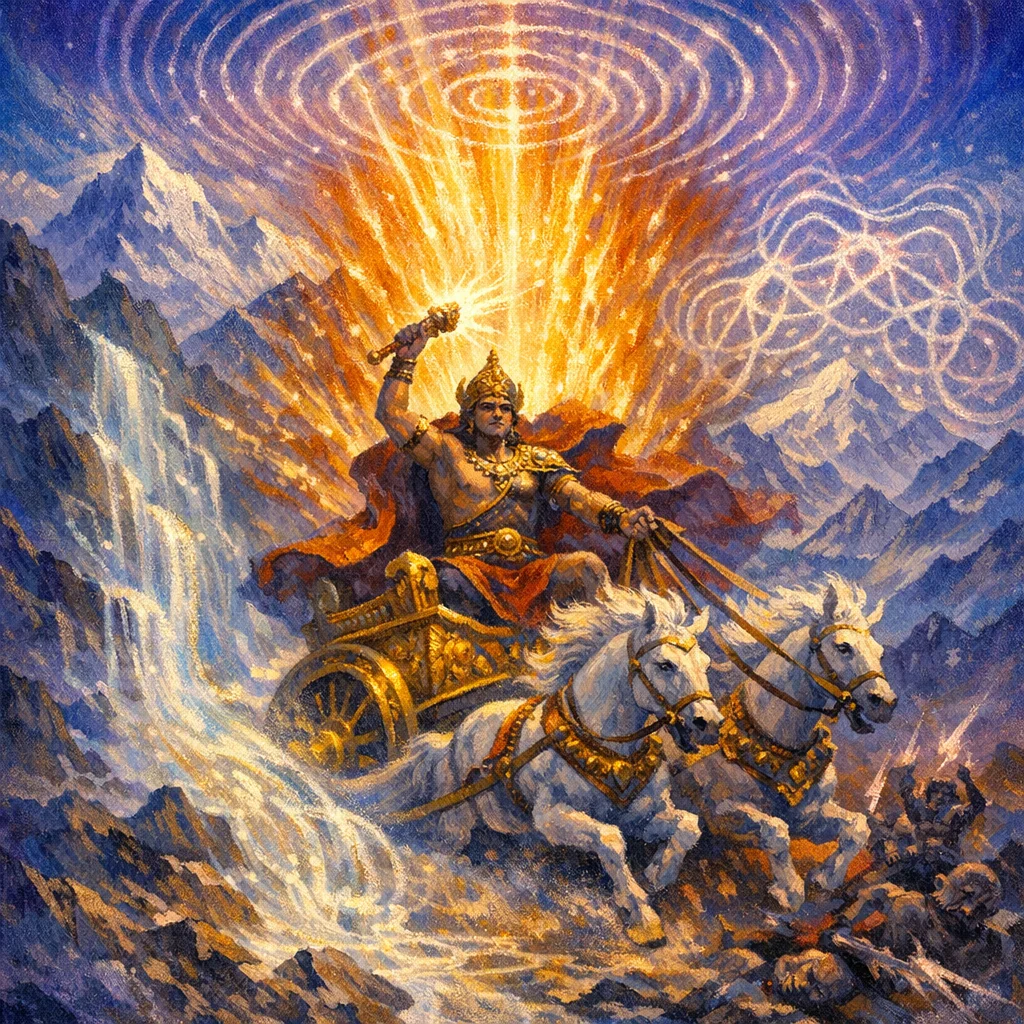
Dashati 20
Indra empowered by Soma-exhilaration (mada/matsara) to grant victory and wealth
Indra
Exultant martial and triumphant—built on the imagery of surging Soma-power and battle-victory
Ṛṣi attribution and chandas are not supplied here; they require Rigvedic concordance for the underlying RV originals used by this Sāmavedic selection.
ಸೋಮರಸದ ಉತ್ಸಾಹಶಕ್ತಿಯಿಂದ (ಮದ/ಮತ್ಸರ) ಬಲಪಡೆದ ಇಂದ್ರನನ್ನು ಯಜ್ಞಕ್ಕೆ ಆಕರ್ಷಿಸಿ, ಆ ಸೋಮಪ್ರಭಾವವೇ ಯಜಮಾನನ ವಲಯಕ್ಕೆ ಪ್ರವೇಶಿಸಲಿ ಎಂದು ಪ್ರಾರ್ಥನೆ. ಇಂದ್ರನು ಪೃತನಾಶಾಟ್—ಯುದ್ಧಗಳನ್ನು ಗೆಲ್ಲಿಸುವವನು—ಶತ್ರುಬಲವನ್ನು ನಾಶಮಾಡಿ, ರಥವನ್ನು ವೀರವಾಗಿ ಚಲಿಸಿ, ಅವ್ರತ (ವ್ರತವಿಲ್ಲದ) ಮತ್ತು ದಸ್ಯು ವಿರೋಧವನ್ನು ಮಣಿಸಿ, ಸಹಸ್ರಸಾತಿಯಾಗಿ ಅಪಾರ ಧನ-ಸಂಪತ್ತನ್ನು ದಾನಮಾಡಲಿ. ಇಲ್ಲಿ ಸೋಮವು ಮದ್ಯವಲ್ಲ; ಇಂದ್ರನನ್ನು ಸನ್ನಿಧಾನಗೊಳಿಸಿ ಯಾಗಫಲವನ್ನು ಜಯ, ಲಾಭ ಮತ್ತು ಧಾರ್ಮಿಕ ಕ್ರಮವಾಗಿ ಪರಿವರ್ತಿಸುವ ಅಭಿಷಿಕ್ತ ಶಕ್ತಿ.
Mantras
Mantra 1
मत्स्यपायि ते महः पात्रस्येव हरिवो मत्सरो मदः वृषा ते वृष्ण इन्दुर्वाजी सहस्रसातमः
ಹರಿವತ್ (ಹರಿಯೋ), ಪಾತ್ರದಿಂದ ಹೊರಹೊಮ್ಮುವಂತಿರುವ ನಿನ್ನ ಮಹಾ ಉಲ್ಲಾಸವೇ ತೀವ್ರ ಮತ್ಸರ, ಮದ. ವೃಷಭಸಮಾನ ಸೋಮ-ಬಿಂದು, ವೃಷಭನಾದ ಇಂದ್ರನಿಗಾಗಿ, ಬಲದಾತ; ಸಾವಿರಗಳ ಜಯದಲ್ಲಿ ಅತ್ಯಂತ ವಿಜಯಶಾಲಿ.
Mantra 2
आ नस्ते गन्तु मत्सरो वृषा मदो वरेण्यः सहावां इन्द्र सानसिः पृतनषाडमर्त्यः
ನಮ್ಮ ಕಡೆಗೆ ನಿನ್ನ ಉಲ್ಲಾಸಭರಿತ ಪ್ರೇರಕ ವೇಗ ಬರುವುದಾಗಲಿ; ಅದು ವೃಷಭಸಮಾನ, ಶ್ರೇಷ್ಠ ಮದ. ಹೇ ಇಂದ್ರ, ಸಹಾವಾನ್, ಸಾನಸಿ (ಲಾಭದಾತ), ಪೃತನಾಷಾಡ್ (ಯುದ್ಧಜಯಿ), ಅಮರ್ತ್ಯ (ಅಮರ) — ನಮ್ಮ ಬಳಿಗೆ ಬಾ.
Mantra 3
त्वं हि शूरः सनिता चोदयो मनुषो रथम् सहावान्दस्युमव्रतमोषः पात्रं न शोचिषा
ಹೇ ಇಂದ್ರ, ನೀನೇ ಶೂರ, ಸನಿತಾ (ವಿಜಯಿ); ನೀನು ಮನುಷ್ಯನ ರಥವನ್ನು ಚೋದಿಸುತ್ತೀ. ಸಹಾವಾನ್, ದಸ್ಯುವನ್ನು ಲೂಟಿಗೈಯುವವ, ಅವ್ರತನನ್ನು ಹರಣಮಾಡುವವ; ಪಾತ್ರದಂತೆ ಶೋಚಿಷಾ (ಪ್ರಭೆ)ಯಿಂದ ನೀನು ದೀಪಿಸುತ್ತೀ.
Frequently Asked Questions
It celebrates Soma’s ritual exhilaration (mada/matsara) as the power that makes Indra victorious—bringing battle-success, protection, and abundant gains to the sacrificer.
The ‘pātra’ points to the Soma-cup used in the rite; the imagery stresses that Indra’s strength and the sacrificer’s benefits arise from a concrete sacrificial act, not from emotion alone.
They represent opponents of Vedic order—those without observance (a-vrata) and hostile forces (Dasyu). The hymn frames Indra’s victory as both martial and moral-ritual protection for the yajamāna.