Prapathaka 2
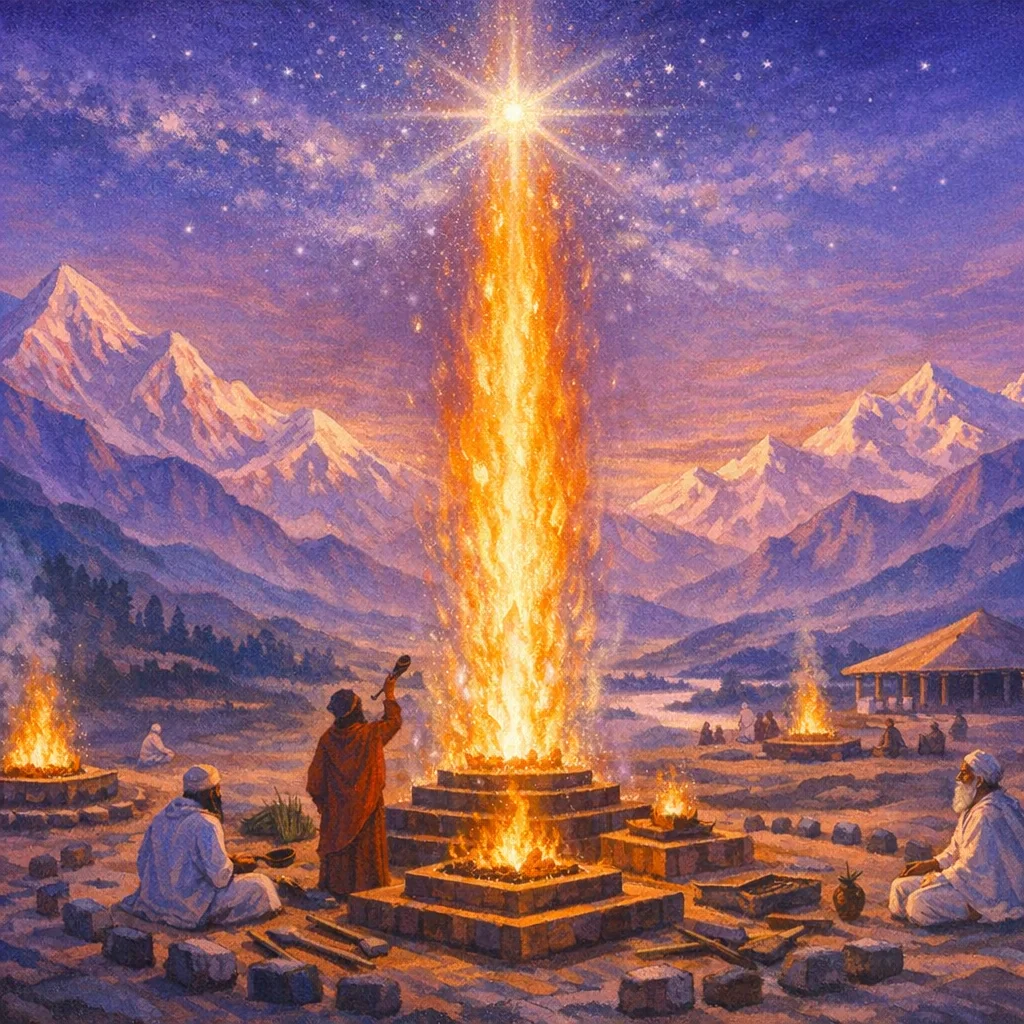
Agnicayana / Soma-sacrifice continuum (Śrauta): preparatory and consecratory operations around the fire-altar program—especially the ritual securing of Agni’s “body” (bricks/altars), establishment of ritual space, and the linked Soma-yajña framework in which the built Agni becomes the mouth of the gods.
Kṛṣṇa Yajurveda 6.2 belongs to the Śrauta complex in which Agni is ritually reconstituted through ordered acts and formulae, integrating altar-construction ideology with the Soma-sacrifice horizon. The chapter advances a characteristic Taittirīya theme: Agni is not merely kindled but “made” (saṃskṛta) through spatial demarcation, material selection, and mantraic animation, so that the altar becomes a living body and a cosmogram. The text’s liturgical logic binds microcosm and macrocosm—bricks, layers, and directions correspond to worlds, seasons, and deities—while the yajamāna’s consecration and the priestly offices stabilize the rite’s authority. Mantras function performatively: they authorize taking, placing, and fixing, and they narrate Agni’s cosmic career (from waters/earth to heaven). The prapāṭhaka thus exemplifies how the Black Yajurveda fuses procedural prose with mantra to generate ritual efficacy and theological coherence.
Anuvakas
Anuvakas for this prapathaka are loading. Please check back soon.