
Bhagavad Gita — Shraddhatraya Vibhaga Yoga, Shloka 21
Shraddhatraya Vibhaga Yoga
यत्तु प्रत्युपकारार्थं फलमुद्दिश्य वा पुनः । दीयते च परिक्लिष्टं तद्दानं राजसं स्मृतम् ॥ १७.२१ ॥
yat tu pratyupakārārthaṁ phalam uddiśya vā punaḥ | dīyate ca parikliṣṭaṁ tad dānaṁ rājasaṁ smṛtam || 17.21 ||

ಆದರೆ ಪ್ರತಿಫಲ ಪಡೆಯುವ ಉದ್ದೇಶದಿಂದ, ಅಥವಾ ಫಲವನ್ನು ದೃಷ್ಟಿಯಲ್ಲಿ ಇಟ್ಟು, ಮನಸ್ಸಿಗೆ ಕಷ್ಟವಾಗುವಂತೆ/ಅನಿಚ್ಛೆಯಿಂದ ನೀಡುವ ದಾನವು ರಾಜಸವೆಂದು ಸ್ಮರಿಸಲ್ಪಡುತ್ತದೆ.
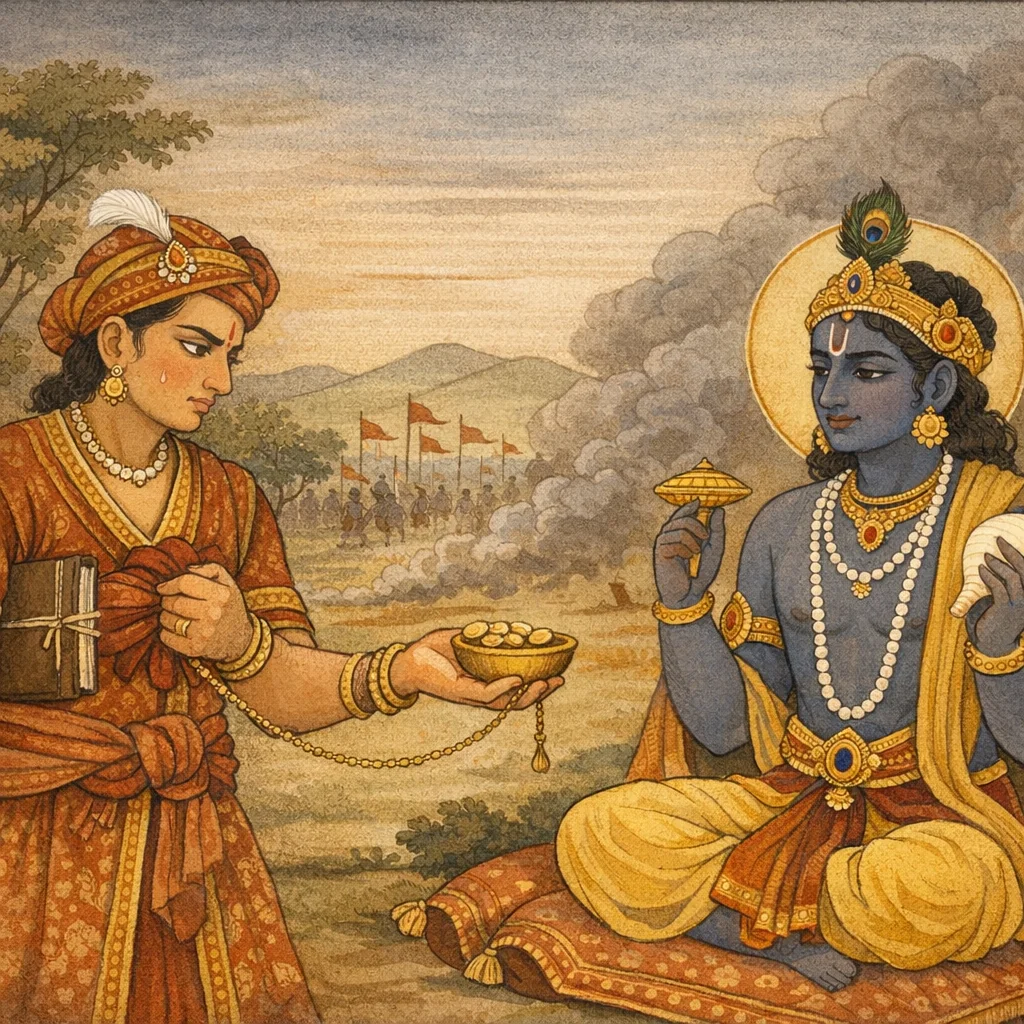
But charity given with the aim of receiving something in return, or with a view to its reward, and given reluctantly, is considered rājasa.
That gift which is given for reciprocal benefit, or again with reward in mind, and given with strain/reluctance, is remembered as rājasa.
parikliṣṭa is rendered “reluctantly,” “with distress,” or “under strain,” indicating either emotional reluctance or burdensome calculation. The verse emphasizes transactional intention (reciprocity/reward) as the rājasa marker.
FAQs
It highlights how giving can be compromised by bargaining and resentment, turning generosity into a stressful exchange rather than a free offering.
Because it strengthens attachment to results and social leverage, rājasa dāna is treated as less purifying than sāttvika giving.
The verse contrasts with 17.20 by shifting from duty-based, discerning giving to reward-based, reciprocity-seeking giving.
When donating or helping, notice expectations (credit, influence, returns). Reducing those expectations aligns the act more closely with non-attachment.