
Bhagavad Gita — Moksha Sannyasa Yoga, Shloka 54
Moksha Sannyasa Yoga
ब्रह्मभूतः प्रसन्नात्मा न शोचति न काङ्क्षति । समः सर्वेषु भूतेषु मद्भक्तिं लभते पराम् ॥ १८.५४ ॥
brahma-bhūtaḥ prasannātmā na śocati na kāṅkṣati | samaḥ sarveṣu bhūteṣu mad-bhaktiṁ labhate parām || 18.54 ||

ಬ್ರಹ್ಮಭಾವವನ್ನು ಪಡೆದವನು ಪ್ರಸನ್ನಚಿತ್ತನಾಗಿ, ದುಃಖಿಸುವುದಿಲ್ಲ, ಬಯಸುವುದಿಲ್ಲ; ಎಲ್ಲ ಜೀವಿಗಳಲ್ಲಿಯೂ ಸಮಭಾವದಿಂದಿದ್ದು, ನನ್ನ ಪರಾಭಕ್ತಿಯನ್ನು ಪಡೆಯುತ್ತಾನೆ.
ब्रह्मभूत (ब्रह्मभाव को प्राप्त) पुरुष प्रसन्नचित्त होता है, न शोक करता है न कामना करता है; वह समस्त प्राणियों में समभाव वाला होकर मेरी पराभक्ति को प्राप्त होता है।
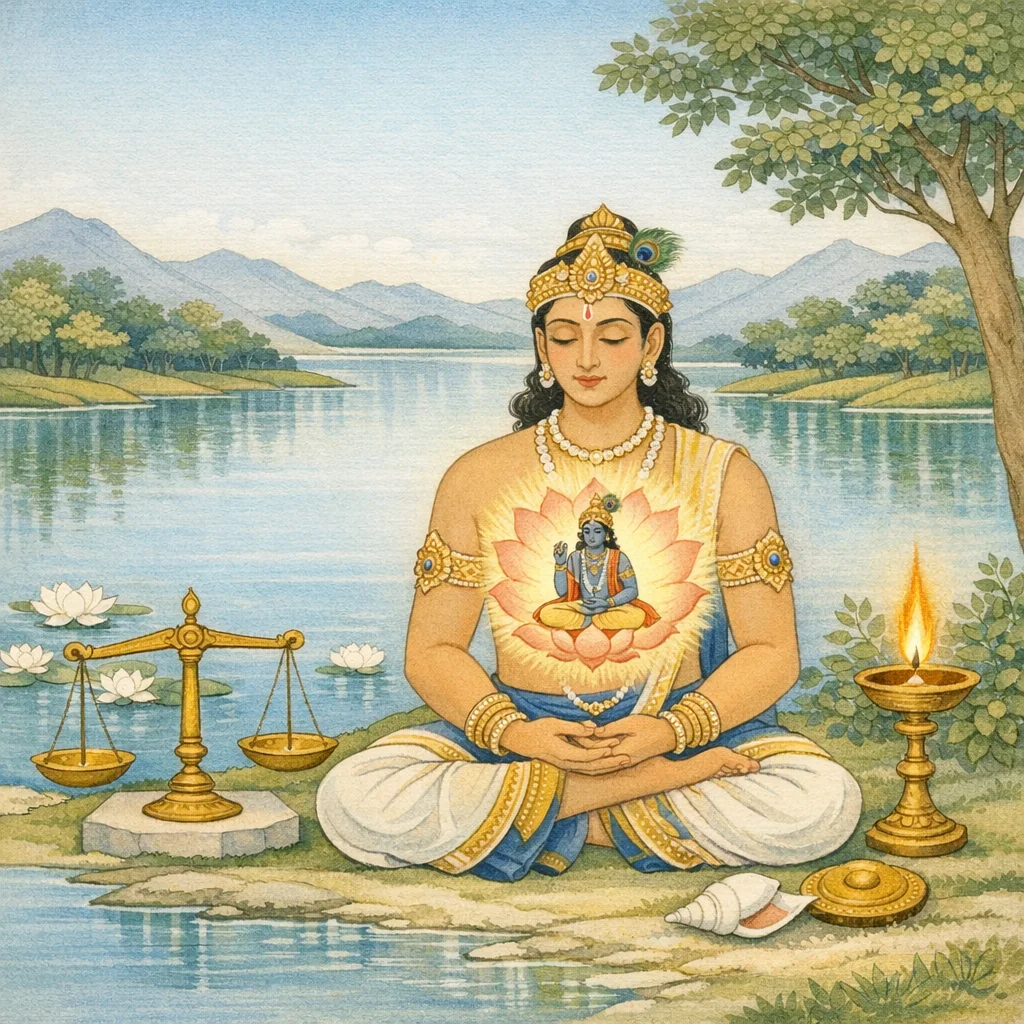
Having become Brahman, serene in self, one neither grieves nor desires; being equal toward all beings, one attains supreme devotion to Me.
The verse is notable for linking Brahman-state with bhakti. Some interpret this as: realization yields devotion as its mature expression; others (especially non-dualist readings) interpret ‘bhakti’ as steadfast contemplative orientation to the highest reality. Text is stable across editions in meaning.
FAQs
Serenity is defined by reduced rumination (grief) and reduced compulsive wanting (craving). Equanimity toward others indicates less bias-driven reactivity.
The Brahman-state is characterized by non-dual or ultimate orientation; from that standpoint, devotion is portrayed as a ‘supreme’ mode of relation to the divine/ultimate.
After describing the disciplines that make one fit for Brahman (18.51–53), Kṛṣṇa describes the experiential markers of that attainment and its culmination in bhakti.
Cultivate emotional steadiness and impartial goodwill; let devotion or contemplative commitment become a stabilizing center rather than a source of identity conflict.