
Shloka 27
Karma Yoga — Karma Yoga
प्रकृतेः क्रियमाणानि गुणैः कर्माणि सर्वशः । अहंकारविमूढात्मा कर्ताहमिति मन्यते ॥ ३.२७ ॥
prakṛteḥ kriyamāṇāni guṇaiḥ karmāṇi sarvaśaḥ | ahaṅkāra-vimūḍhātmā kartāham iti manyate || 3.27 ||

ಎಲ್ಲ ರೀತಿಯ ಕರ್ಮಗಳು ಪ್ರಕೃತಿಯ ಗುಣಗಳಿಂದಲೇ ನಡೆಯುತ್ತವೆ; ಆದರೆ ಅಹಂಕಾರದಿಂದ ಮೋಹಿತನಾದವನು ‘ನಾನೇ ಕರ್ತನು’ ಎಂದು ಭಾವಿಸುತ್ತಾನೆ.
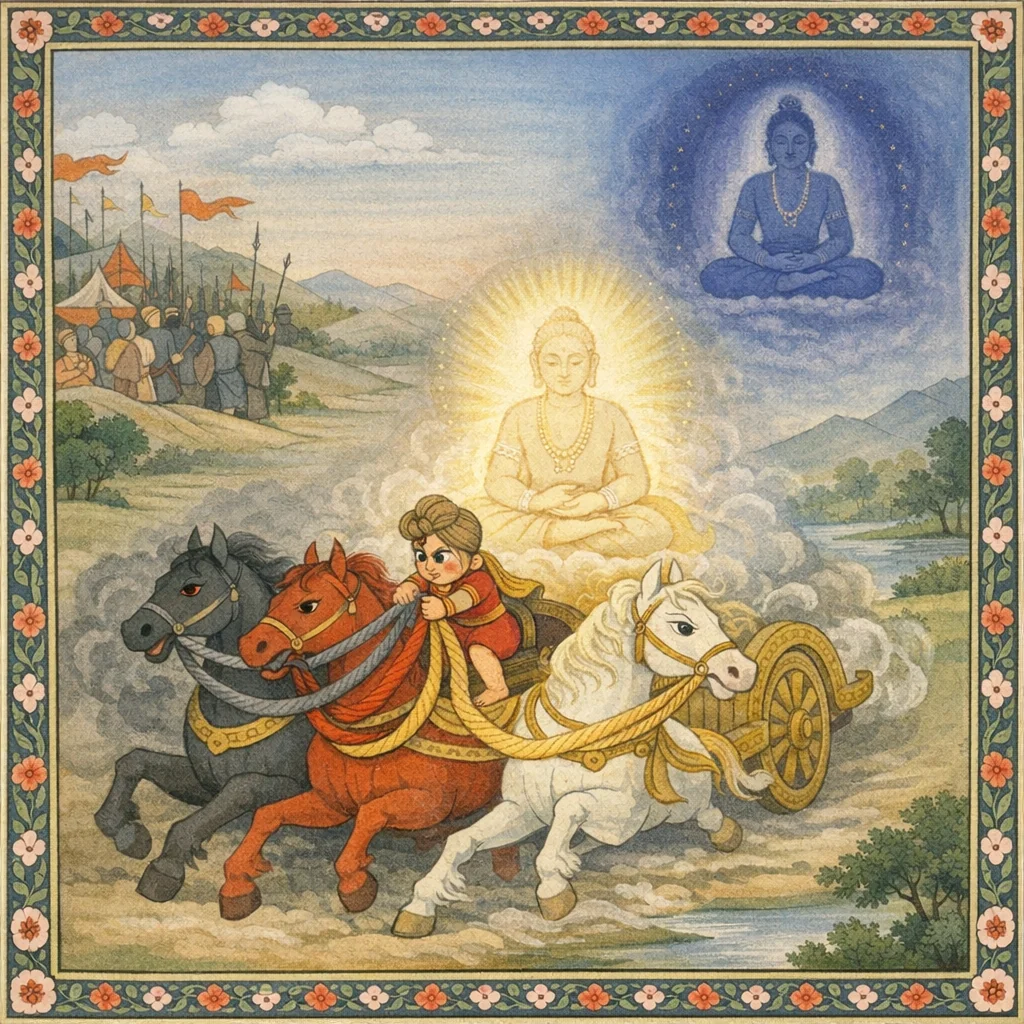
All actions are performed by the guṇas of prakṛti; one whose self is deluded by ego thinks, ‘I am the doer.’
Actions in every way are being done by the guṇas of nature; the self confused by egoism imagines: ‘I am the agent.’
Traditional Vedāntic readings may connect this to non-doership of the ātman; Sāṅkhya-leaning readings emphasize prakṛti as causal matrix. Both converge on critique of egoic appropriation.
FAQs
It analyzes agency as partly constructed: the ego narrates ownership over processes (habits, impulses, social conditioning) that often operate automatically.
The verse situates action in prakṛti’s guṇas, challenging the notion of an independent ego-agent; liberation involves seeing this mechanism clearly.
Krishna deepens karma-yoga by explaining why detachment is rational: the ego is not the ultimate source of action.
Mindful practice can reduce over-identification with outcomes by recognizing the roles of temperament, environment, and conditioning in behavior.