
Shloka 7
Shraddhatraya Vibhaga Yoga — Shraddhatraya Vibhaga Yoga
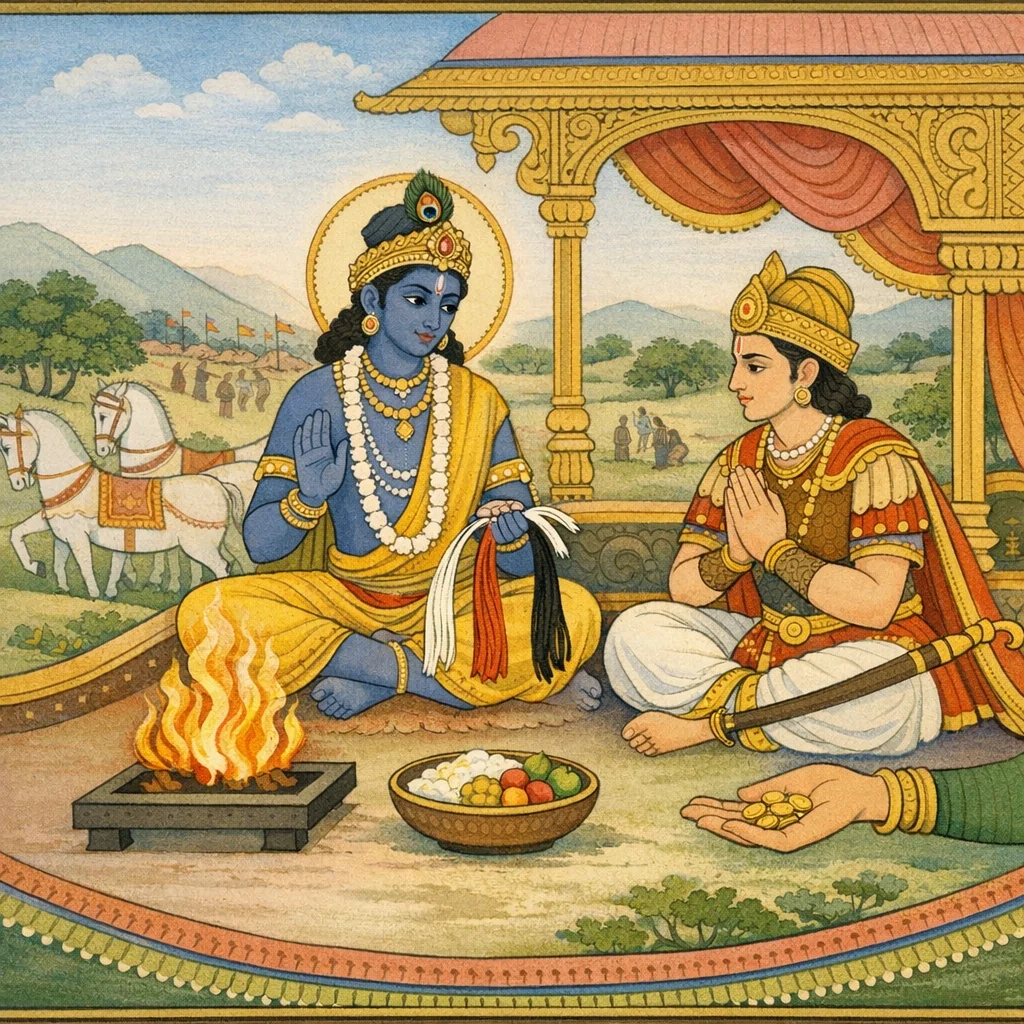
आहारस्त्वपि सर्वस्य त्रिविधो भवति प्रियः । यज्ञस्तपस्तथा दानं तेषां भेदमिमं शृणु ॥ १७.७ ॥
āhāras tv api sarvasya trividhō bhavati priyaḥ | yajñas tapas tathā dānaṃ teṣāṃ bhedam imaṃ śṛṇu || 17.7 ||

Even the food dear to each person is of three kinds; likewise sacrifice (yajña), austerity (tapas), and charity (dāna) are also of three kinds. Hear now this distinction among them.
सबका प्रिय भोजन भी तीन प्रकार का होता है तथा यज्ञ, तप और दान भी (तीन प्रकार के होते हैं); उनके इस भेद को सुनो।
Food, too, which is dear to everyone, is of three kinds; likewise sacrifice, austerity, and giving—hear now their distinctions.
Most translations agree closely here; the main interpretive point is that ‘trividha’ anticipates classification by the three guṇas (sattva/rajas/tamas) applied across diet and religious-ethical practices.
FAQs
By classifying preferences as threefold, the verse implies that habits—including diet—shape temperament and attention, influencing how one approaches discipline and generosity.
The guṇa framework situates human action within nature’s modalities; the verse sets up how apparently ‘ordinary’ choices (food) and ‘religious’ acts (yajña, tapas, dāna) share the same ontological conditioning.
It introduces the next subsection (17.8–17.10 and onward), where specific examples of sattvic, rajasic, and tamasic forms are enumerated.
It supports a comparative approach to lifestyle and ethics: examining how consumption patterns and charitable or disciplined behaviors reflect underlying motivations and mental qualities.