
Bhagavad Gita — Raja Vidya Raja Guhya Yoga, Shloka 31
Raja Vidya Raja Guhya Yoga
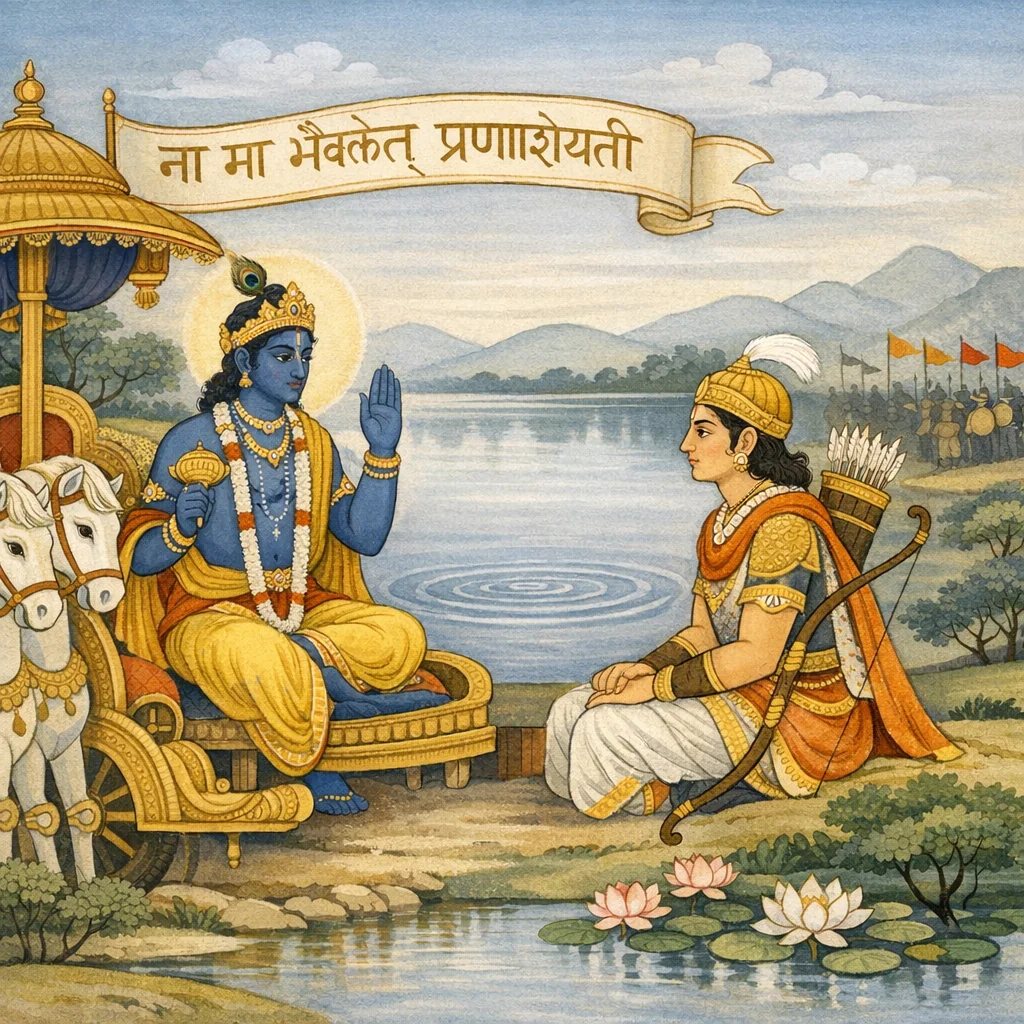
क्षिप्रं भवति धर्मात्मा शश्वच्छान्तिं निगच्छति । कौन्तेय प्रति जानीहि न मे भक्तः प्रणश्यति ॥ ९.३१ ॥
kṣipraṁ bhavati dharmātmā śaśvac-chāntiṁ nigacchati | kaunteya prati jānīhi na me bhaktaḥ praṇaśyati || 9.31 ||

He quickly becomes righteous and attains everlasting peace. O son of Kuntī, know it for certain: My devotee never perishes.
He quickly becomes righteous and attains lasting peace. O son of Kuntī, declare it firmly: My devotee never perishes.
He quickly becomes one whose self is aligned with dharma and goes to enduring peace. O Kaunteya, know for certain: My devotee does not come to ruin.
‘Praṇaśyati’ is variously rendered as ‘perishes,’ ‘is lost,’ or ‘comes to ruin.’ In context it is typically taken as spiritual security (not a guarantee of worldly success), emphasizing the reliability of the devotional path.
FAQs
It describes recovery: a sincere reorientation can quickly support healthier habits and inner calm, countering despair about one’s past.
The verse promises stability of spiritual trajectory for the devotee, linking devotion with dharmic alignment and lasting peace as a higher state of being.
It completes the claim of 9.30 by stating the expected outcome of exclusive devotion: rapid ethical alignment and secure progress.
It can motivate sustained practice by emphasizing that consistent commitment yields steadiness and reduces fear of failure in the long term.
Ask anything about this verse
Curious about the meaning, context, or a word? Ask, and continue the conversation in the Vedapath app.
A free Google sign-in keeps your chat saved across web and the app.
Read Bhagavad Gita in the Vedapath app
Scan the QR code to open this directly in the app, with audio, word-by-word meanings, and more.