Dashati 8
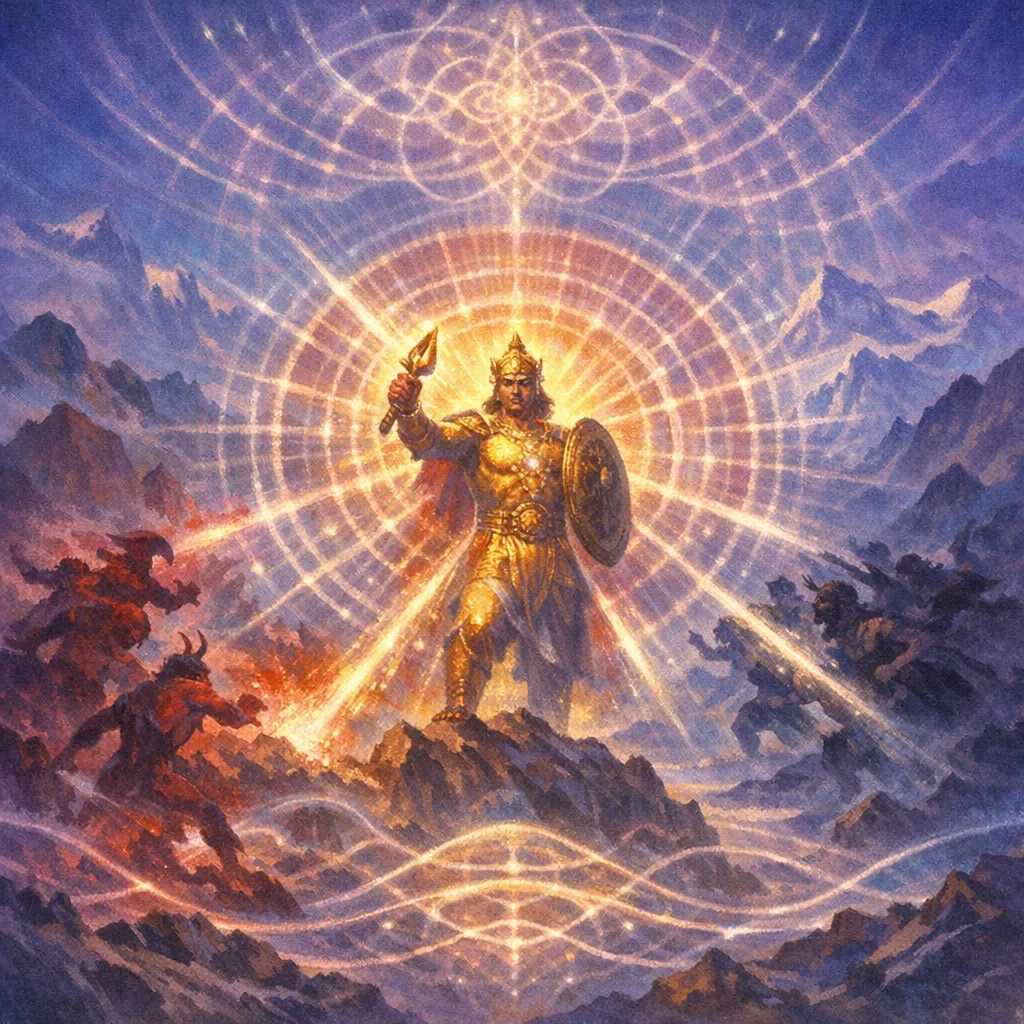
Aindra protection and victory: divine light as inner armor and the defeat of hostile forces
Indra
Brisk forceful and warding (rakṣoghna/apotropaic) with a luminous contemplative refrain-like center
R̥ṣi attribution is not supplied; identification requires concordance to the corresponding Ṛgvedic sources for each mantra. The theological coloring matches common Aindra/Rakṣā usage rather than a single clearly marked family in the provided excerpt.
主題:インドラによる守護と勝利――神聖な光(jyotis)を内なる鎧として、敵対する力を打ち砕く。副主題:火神・インドラ・太陽を「一つの光」として同定する光明同一視;内外の襲撃(自己の内なる乱れ/外からの害)を退ける厄除けの祈り;アグニが浄めて敵意を追い払い、続いてインドラが仇敵を討って勝利を授けるという二段の防護;マントラを鎧(varman)・庇護(śarman)として確証する。神学的焦点:マントラは実効力(brahma-varman)として働き、光明との観想的合一とインドラの威力の招請によって、祭主を守り、障碍を覆滅し、諸神により害そうとする者を惑乱させる。
Mantras
Mantra 1
मर्माणि ते वर्मणा च्छादयामि सोमस्त्वा राजामृतेनानु वस्ताम् उरोर्वरीयो वरुणस्ते कृणोतु जयन्तं त्वानु देवा मदन्तु
汝の急所を鎧もて覆わん。ソーマ(Soma)王よ、不死のものをもって汝をまとわせよ。ヴァルナ(Varuṇa)よ、さらに広く、さらに厚き守りを汝のために成せ。勝利する汝に従い、神々は歓喜せよ。
Mantra 2
अन्धा अमित्रा भवताशीर्षाणो ऽहय इव तेषां वो अग्निनुन्नानामिन्द्रो हन्तु वरंवरम्
敵どもは盲となり、首を失い、蛇のごとくあれ。汝のためにアグニ(Agni)に追い立てられし彼らを、インドラ(Indra)が一人ひとり討ち滅ぼせ。
Mantra 3
यो नः स्वो ऽरणो यश्च निष्ट्यो जिघांसति देवास्तं सर्वे धूर्वन्तु ब्रह्म वर्म ममान्तरं शर्म वर्म ममान्तरम्
われらを害そうとする者——身内の者であれ、よそ者であれ——その者を、すべての神々よ、ことごとく打ち砕きたまえ。ブラフマンの聖なる祈り(brahma)は、わが内奥の鎧。安らぎの護り(śarma)は、わが内奥の鎧。
Frequently Asked Questions
It teaches that divine light (jyotis) is the shared essence of Agni, Indra, and Sūrya, and that the mantra itself becomes ‘armor’ protecting the sacrificer while Indra overcomes hostile forces.
The verses present a two-step protection: Agni first purifies and drives out the hostile influence, and Indra then destroys the adversary decisively, ‘one by one’ (varaṃ-varaṃ).
Here ‘brahma’ is the potent sacred utterance/mantra, not merely abstract knowledge; it functions as varman (cuirass/armor) and śarman (refuge), guarding one’s ‘inner being’ (antaram).