Dashati 14
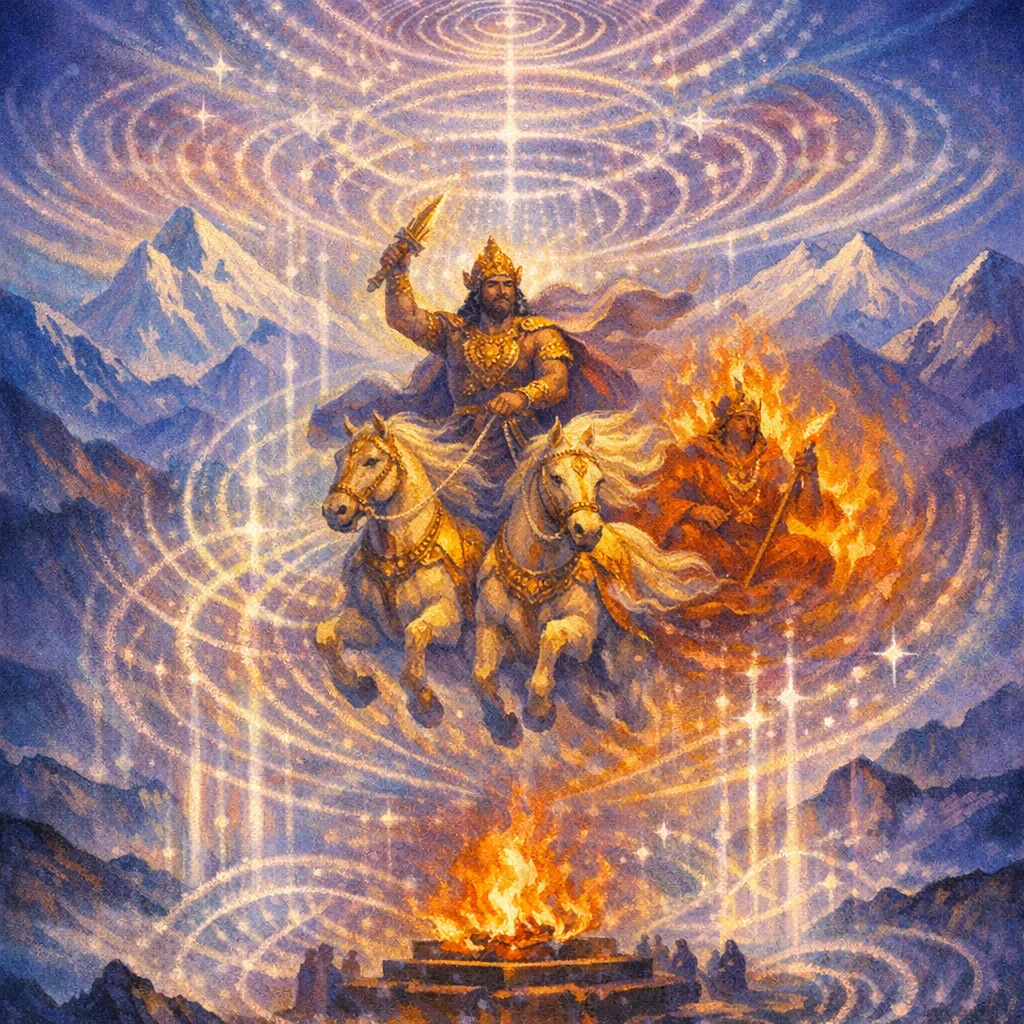
Aindra invocations centering on Indra’s power made effective through yajña—especially Indra’s joint action with Agni and his swift approach to the rite.
Indra
Energetic triumphant and summoning—aimed at quick divine arrival and visible empowerment.
Rishi attribution is not provided in the input; the material draws on widely attested Ṛgvedic strata commonly adapted into Sāman chant-books without always preserving explicit seer labels at the dashati summary level.
本ダシャティはインドラを主軸に、インドラおよびインドラ=アグニをソーマ祭へ迅速に招来し、祭儀(yajña)の力によってその威力を現実の効験として顕現させ、祭主にvāja(力/賞)をもたらすことを目的とする。さらに、夜と曙光が争わず途切れなく継起する姿にṛtaと神定の秩序(devaśiṣṭa)を見て、正しく整えられた讃歌と供物が繁栄と戦利・力の分配を成就することを示す。
Mantras
Mantra 1
इदं श्रेष्ठं ज्योतिषां ज्योतिरागाच्चित्रः प्रकेतो अजनिष्ट विभ्वा यथा प्रसूता सवितुः सवायैवा रात्र्युषसे योनिमारैक्
これぞ最勝の光、諸光の光が来たりぬ。輝くしるしは生まれ、遍く満ちわたる。サヴィトリ(Savitṛ)の促しにより、夜と暁とにそれぞれの座・住処を定めた。
Mantra 2
रुशाद्वत्सा रुशती श्वेत्यागादारैगु कृष्णा सदनान्यस्याः समानबन्धू अमृते अनूची द्यावा वर्णं चरत आमिनाने
輝く暁は、白く光りつつ、闇なる夜より現れ出づ、まるで子牛が母より出づるがごとし。二つは同族の絆をもち、不死にして相次ぎ、各々の住処を巡り、害なくその色を移し変える。
Mantra 3
समानो अध्वा स्वस्रोरनन्तस्तमन्यान्या चरतो देवशिष्टे न मेथेते न तस्थतुः सुमेके नक्तोषासा समनसा विरूपे
二人の姉妹に同じく無窮の道あり。神々に定められし掟のもと、彼女らは次々に進む。争わず、立ち止まらず、夜と暁は心を一つにして、姿は異なる。
Frequently Asked Questions
It chiefly invokes Indra (often with Agni) to come to the sacrifice, manifest heroic power, and grant ‘vāja’—the invigorating gain and reward connected with yajña.
They are a ritual-poetic way to hasten Indra’s arrival: yoking the well-matched steeds symbolizes bringing the god swiftly and surely to the offering.
It reinforces ṛta (cosmic and ritual order): just as Night and Dawn move without conflict or pause by divine ordinance, the rite too must proceed in correct sequence for its power to be effective.