Dashati 3
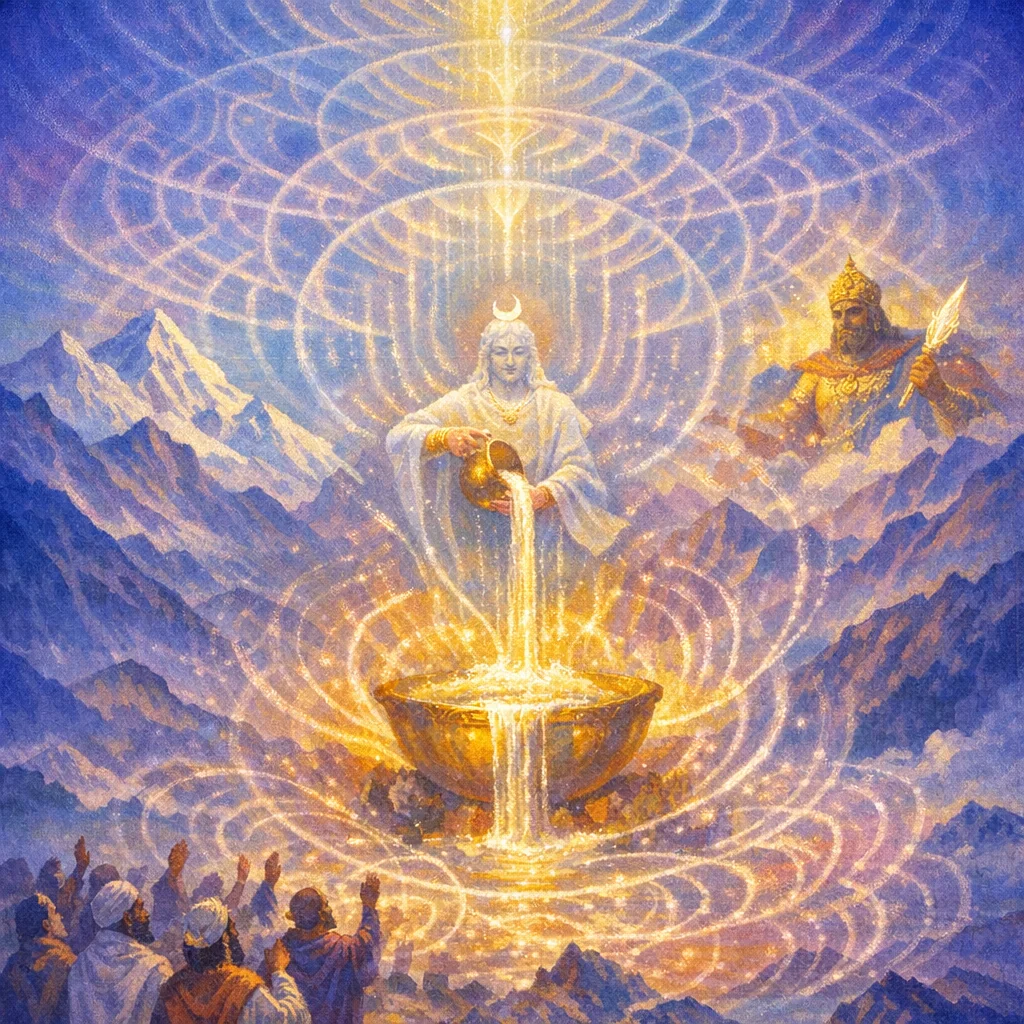
Pavamāna Soma’s ancient, heaven-derived flow—pressed, purified, and offered—bringing Indra’s epiphany and prosperity to the sacrificer
Soma Pavamāna
Bright expansive and triumphant—purification leading to a climactic communal acclamation
Ṛṣi attribution is not determinable from the provided excerpt alone; the verses reflect mixed deity-address (Pavamāna/Indra/Agni) typical of Sāmavedic selection from multiple Ṛgvedic sources.
本ダシャティの主題:天来の古き浄化ソーマ(パヴァマーナ)が搾られ、清められ、供献されることで、ソーマ生成の場にインドラが顕現し、祭主に繁栄と尽きぬ賜物を与える。ソーマは「pratna(太古のもの)」なる甘露(pīyūṣa)として搾汁器に入り、「乳しぼるように搾り出される」(nir-adhukṣata)。共同の斉唱(samasvaran)は神の現前を現成させる儀礼行為であり、アグニは酥油供物を受けて諸神へ運ぶ担い手として供献の連鎖を確立する。インドラは主要な享受者・施与者として、馬・牛・富(「黄金の泉」)を授け、布施(dāna)を守護する。旋律性は明るく拡がり勝利的で、ソーマの入器に始まり、搾取と奉献の推進を経て、インドラへの一致した唱和と祈願で肯定的に結ぶ。
Mantras
Mantra 1
शग्ध्यू3 षु शचीपत इन्द्र विश्वाभिरूतिभिः भगं न हि त्वा यशसं वसुविदमनु शूर चरामसि
幸いあれ、シャチーの主インドラよ、あらゆる護り(ūtí)もってわれらを守りたまえ。われらは汝のほか誰にも従わず――栄光ある勇士、富を見いだす者よ。福分のために、ただ汝に随い行く。
Mantra 2
पौरो अश्वस्य पुरुकृद्गवामस्युत्सो देव हिरण्ययः न किर्हि दानं परि मर्धिषत्वे यद्यद्यामि तदा भर
汝はプール(Pūru)の駿馬の恵み手、牛の泉、黄金の湧き出づる泉なるかな、神よ。汝の施しが決して損なわれぬように。われが願い求むるものは何であれ、それを携え来たりて授けたまえ。
Mantra 3
अध यदिमे पवमान रोदसी इमा च विश्वा भुवनाभि मज्मना यूथे न निष्ठा वृषभो वि राजसि
さらに、これら(流れ)が、その大いなる力によって二つの世界と一切の存在を包みめぐるとき、浄めるソーマ(Soma)よ――汝は群れの中に堅く立つ牡牛のごとく、あらわに輝き出で、光を放つ。
Frequently Asked Questions
It centers on Soma as an ancient, ambrosial power that is pressed and purified in the rite; through the chant, Indra is made present and is asked to grant and protect prosperity.
In Soma ritual practice, Soma is prepared and offered, Indra is a chief recipient and boon-giver, and Agni is the sacrificial ‘carrier’ who accepts offerings (like ghee) and conveys them—so all three naturally converge.
They are musical extensions that help shape the melody, coordinate the singers, and emphasize key ritual moments—turning the verse into a sustained, flowing sāman suitable for liturgical performance.