Dashati 16
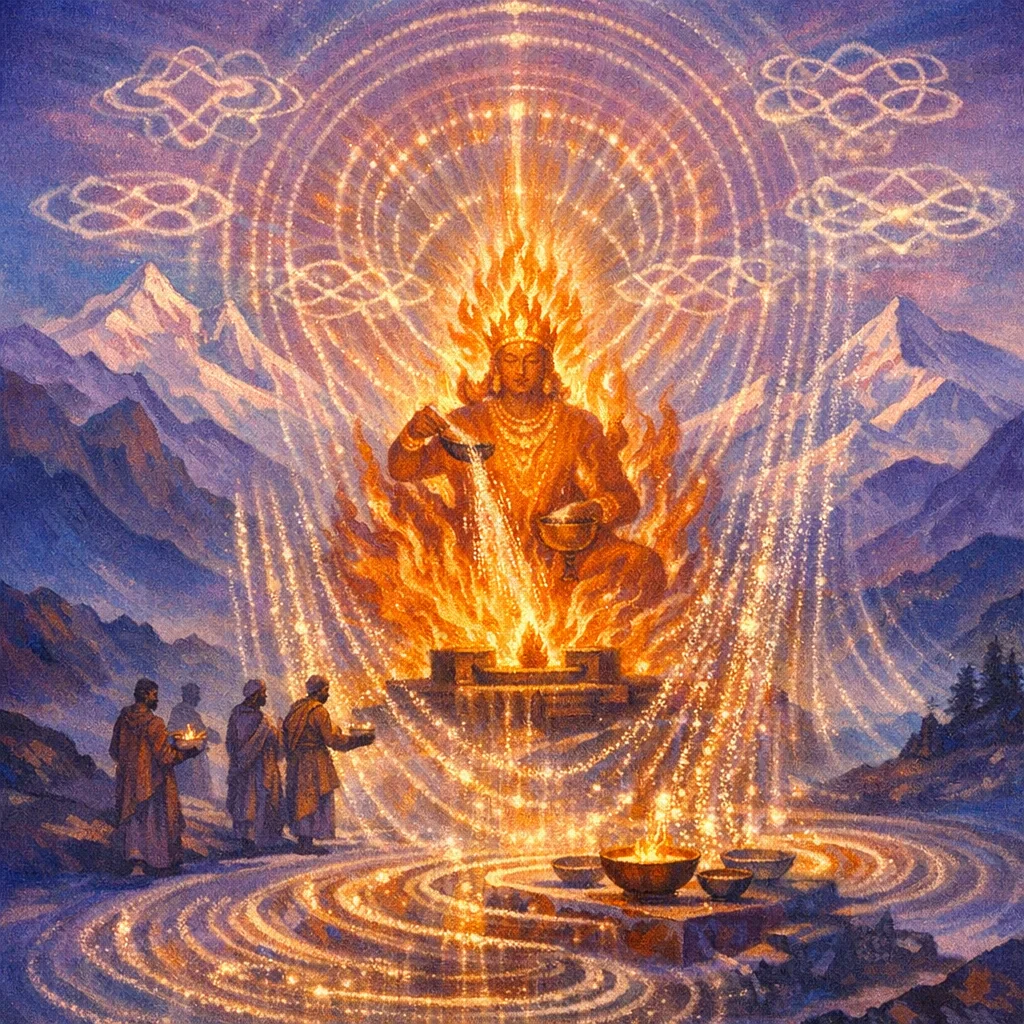
Agni’s ritual pre-eminence and the enlivening power that sustains the sacrifice
Agni
Elevated and proclamatory with a consecratory (abhisecana-like) undercurrent
Individual ṛṣi attributions require concordance with the corresponding Ṛgvedic sources; this dashati appears to combine Agni praise with Aindra/Soma ritual imagery typical of mixed Uttarārcika selections.
主題:アグニの祭儀的優越と、祭を生きものとして保ち続ける賦活の力。アグニは宇宙と祭式の「頭」「頂の主」(mūrdhā・kakutpati)として高らかに宣言され、諸水の生殖・潤沢の力を活気づけ(apāṃ retāṃsi jinvati)、ソーマの圧搾と井戸/槽への灌ぎ・散水(avaṭa・siñcanti)の作業像を導く。光線/富が「牛群」のように吉祥に近づき祭に随伴し、結びでは祭が損なわれず過失なく連続すること(akṣita)が保証され、力と迅速な贈与、そしてヤジュニャの成就へと収斂する。
Mantras
Mantra 1
गाव उप वदावटे महि यज्ञस्य रप्सुदा उभा कर्णा हिरण्यया
牝牛らは讃歌を唱うる者のもとへ近づき、迅き贈り物の授け手として、この大いなる祭儀を飾る。その両の耳は黄金なり。
Mantra 2
अभ्यारमिदद्रयो निषिक्तं पुष्करे मधु अवटस्य विसर्जने
われは堅固なる祭儀の担い手らに近づく。樋(avaṭa)の放出口(visarjana)にて、甘きソーマ(Soma)が鉢(puṣkara)へと注がれるところへ。
Mantra 3
उदग्ने शुचयस्तव शुक्रा भ्राजन्त ईरते तव ज्योतींष्यर्चयः
アグニ(Agni)よ、汝の清浄にして輝く炎は立ち昇り、きらめきつつ動き出す。汝の光は、讃歌の光輝なり。
Frequently Asked Questions
It presents Agni as the foremost power of the sacrifice—cosmic in stature and ritually central—who energizes the waters and ensures the rite proceeds effectively and without loss.
Samavedic selections often pair praise with ritual action imagery. Terms like sprinkling the trough/well and references to implements point to Soma-pressing procedures understood as sacred, power-bearing acts.
Stobhas mainly serve musical and liturgical purposes—marking structure, cadence, and expansion for melody. They usually do not change the core meaning of the ṛc-text, but they shape how it is sung in ritual.