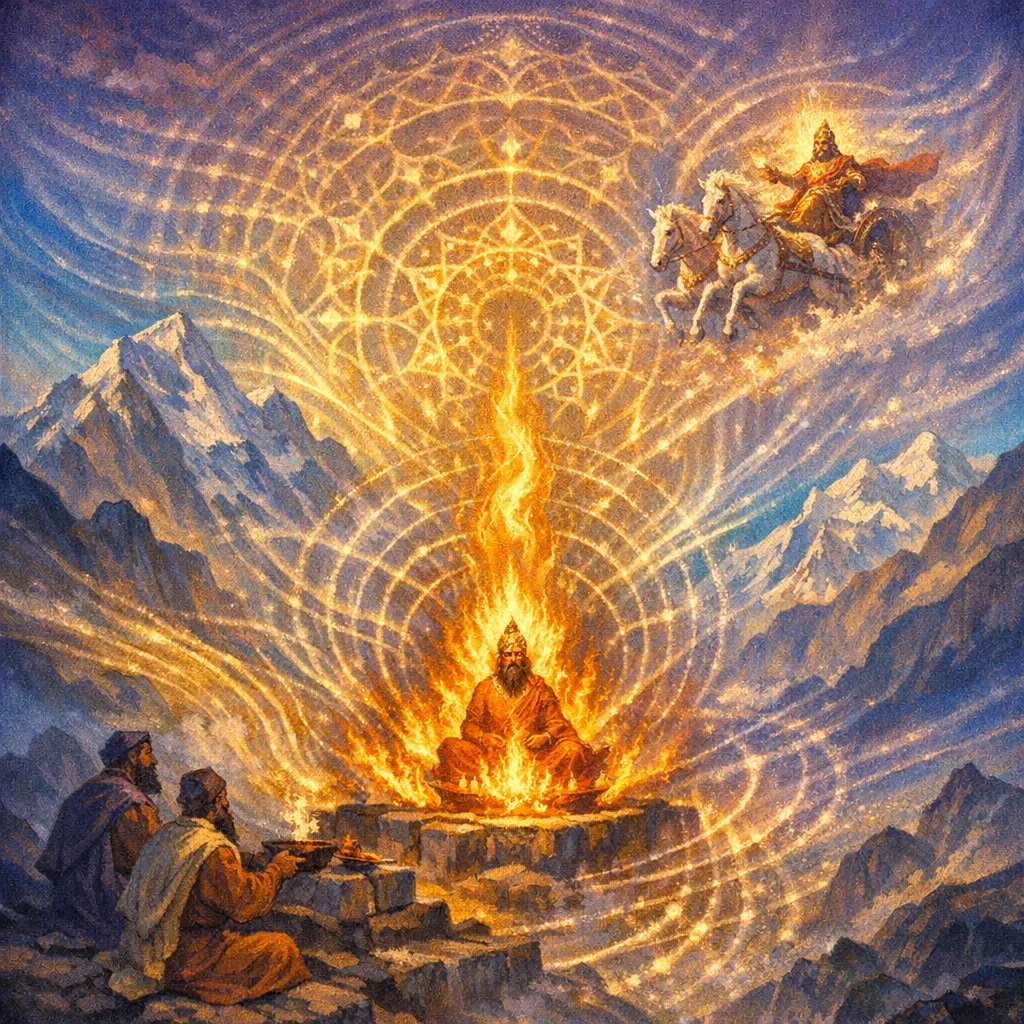
Dashati 1
Agni as the ritual nexus and Indra’s arrival/empowerment through Soma and praise
Agni
Invocatory and energizing—questioning/solemn at the start then increasingly triumphant and expansive
Ṛṣi attribution is not supplied here; identification normally follows the underlying Ṛgvedic sources for each mantra which are not fully provided in the input.
本連は、アグニを祭儀の要として讃える。アグニは祭の「口・座」であり、祭主の扶持(供養)に依ってそこに安住する。ついでインドラがヴィシュヌとともに、敷かれたバルヒス(barhis)へ来臨するよう招かれ、駿馬は急ぎ、ソーマを飲んで男らしい力(vṛṣṇya-śavas)を奮い、讃歌(stotra)に応じて威力を現す。正しく整えられた火と祭場、そしてソーマと讃えによって神々は現前し、その力は祭(yajña)のただ中で開示されることが示される。
Mantras
Mantra 1
अभि प्र गोपतिं गिरेन्द्रमर्च यथा विदे मूनुं सत्यस्य सत्पतिम्
牛の主、聖歌の主、山のごとき主宰に向かい、讃え歌え。願わくは我ら、智者にして、真なる祭の真の主(satpati)に到らん。
Mantra 2
त्वं जामिर्जनानामग्ने मित्रो असि प्रियः सखा सखिभ्य ईड्यः
アグニよ、汝は人々の親族。汝は मित्र(友)にして प्रिय(愛しき) साथी(伴)なり。友らのうちに、汝は讃えられ礼拝されるにふさわし。
Mantra 3
इन्द्राय गाव आशिरं दुदुह्रे वज्रिणे मधु यत्सीमुपह्वरे विदत्
インドラのために、牝牛らは āśira(混和の供乳)を搾り出し、甘き飲みものを、金剛を執る者(vajriṇ)に献ず。祭儀の呼びかけにより、彼が近き場にそれを見いだしたときに。
Frequently Asked Questions
It frames a ritual teaching: Agni ‘belongs’ to the one who tends him with fuel and offerings, so the sacrificer becomes Agni’s closest human relation in the rite.
They are a standard image for Indra’s swift approach; the verse functions as an invitation for Indra to come to the prepared barhis and accept the offering.
Indra–Viṣṇu appear as cooperative powers in Vedic praise; here their joint mention reinforces Indra’s greatness and the traditional support they give to the sacrifice.