Adhyaya 7
Bṛhaspati Rejects the Demigods: The Root of Deva Weakness and the Need for Humility
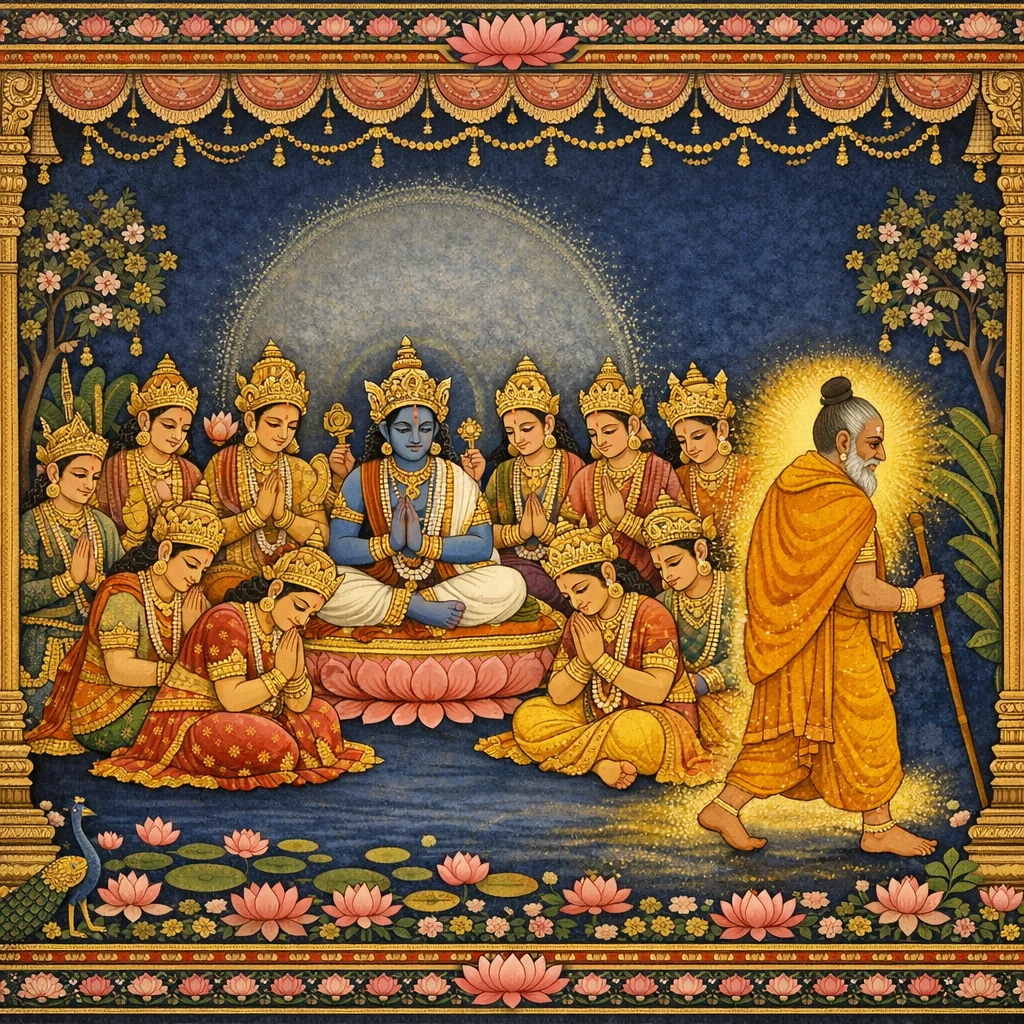
デーヴァとアスラの抗争の進展を受け、また第六巻が外的地位より内なる資質を重んじることを示す中で、マハーラージャ・パリークシットはシュカデーヴァ・ゴースヴァーミーに重要な転機を問う。すなわち、デーヴァの師であるブリハスパティが、なぜ自らの弟子たちから身を引いたのかである。本章は、デーヴァたちの過失が霊的師への正当な敬意と傾聴を欠いたこと—地位への驕りと政治的権力への執着から生じたguru-aparādha—であると明かす。ブリハスパティの離去によりデーヴァの霊的支えは弱まり、アスラとの戦いにおいて戦略面でも道徳面でも混迷が生じる。こうして物語は、贖罪と浄化の教えを天界の統治へと結びつける。ダルマの根本—グルへの崇敬とバガヴァーンへの依存—が疎かにされると、宇宙の秩序は揺らぐのである。章の流れは、デーヴァが別の助言を求め、やがて真の謙虚さとヴィシュヌ中心の帰依へと促され、展開していくヴリトラースラの物語へ向かうことを示している。
Shlokas
Frequently Asked Questions
Because the devas failed in proper guru-sevā and respect—an offense rooted in pride and neglect. In Bhāgavata theology, the guru is not merely an advisor but the channel of dharma and divine favor; when disciples disregard him, their spiritual potency and right judgment diminish, and their worldly power becomes unreliable.
They violated appropriate etiquette and honor toward him—treating the guru as secondary to courtly and political concerns. Such disrespect constitutes guru-aparādha, which is portrayed as spiritually corrosive: it blocks blessings, weakens protection (poṣaṇa), and invites disorder even among the devas.
Bṛhaspati’s withdrawal explains the devas’ ensuing vulnerability and missteps, preparing the ground for the larger lesson that victory depends on humility, proper shelter, and Viṣṇu’s will—not merely celestial weaponry. This moral causality culminates in the Vṛtrāsura episodes, where devotion and surrender overturn simplistic labels of ‘deva’ and ‘asura.’