
Shloka 20
Sankhya Yoga — Sankhya Yoga
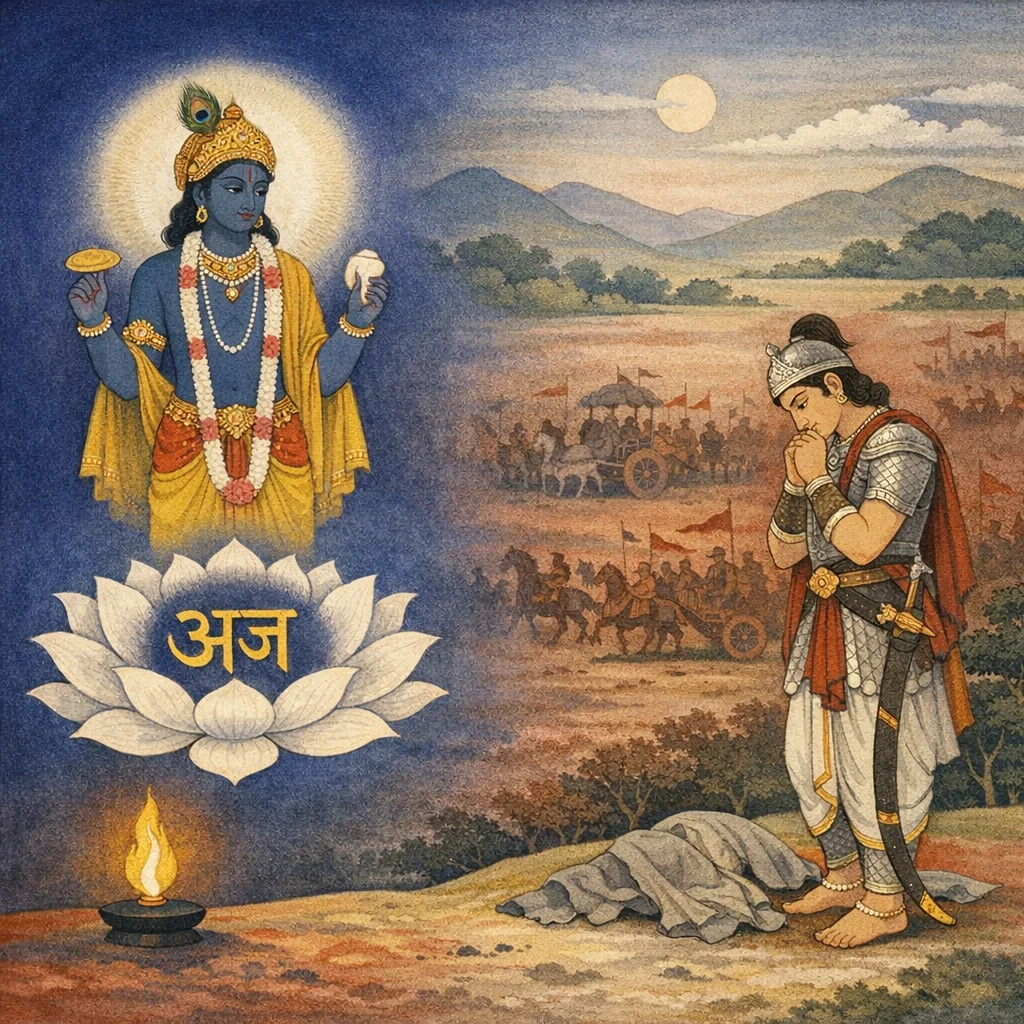
न जायते म्रियते वा कदाचि- न्नायं भूत्वा भविता वा न भूयः । अजो नित्यः शाश्वतोऽयं पुराणो न हन्यते हन्यमाने शरीरे ॥ २.२० ॥
na jāyate mriyate vā kadācin nāyaṃ bhūtvā bhavitā vā na bhūyaḥ | ajo nityaḥ śāśvato 'yaṃ purāṇo na hanyate hanyamāne śarīre || 2.20 ||

この我(アートマン)は生まれず、また死なず、いかなる時にもそうである。いったん在るものは、再び生じることはない。生まれず、常住にして永遠、太古よりのもの。身体が殺されるときにも、これは殺されない。
It is not born, nor does it die; having been, it does not again come to be. Unborn, eternal, everlasting, ancient, it is not affected when the body is affected.
It is never born, nor does it ever die; it does not come into being again after having been. Unborn, eternal, enduring, ancient—it is not destroyed when the body is destroyed.
The provided input was truncated, but the standard received text concludes with ‘hanyamāne śarīre.’ Interpretively, ‘purāṇa’ (‘ancient’) emphasizes timelessness rather than historical age.
FAQs
It addresses existential fear by locating identity in something not defined by life-stage transitions or bodily vulnerability.
A strong statement of the self’s non-origination and non-destruction, foundational for later Indian debates on permanence and liberation.
Krishna continues a sustained argument meant to dissolve grief by clarifying what, in his view, truly changes and what does not.
As a meditative teaching, it can support equanimity in the face of aging, illness, and major life changes.