Adhyaya 357
Tिङ्विभक्तिसिद्धरूपम् (Established Forms of Tiṅ-Inflections)
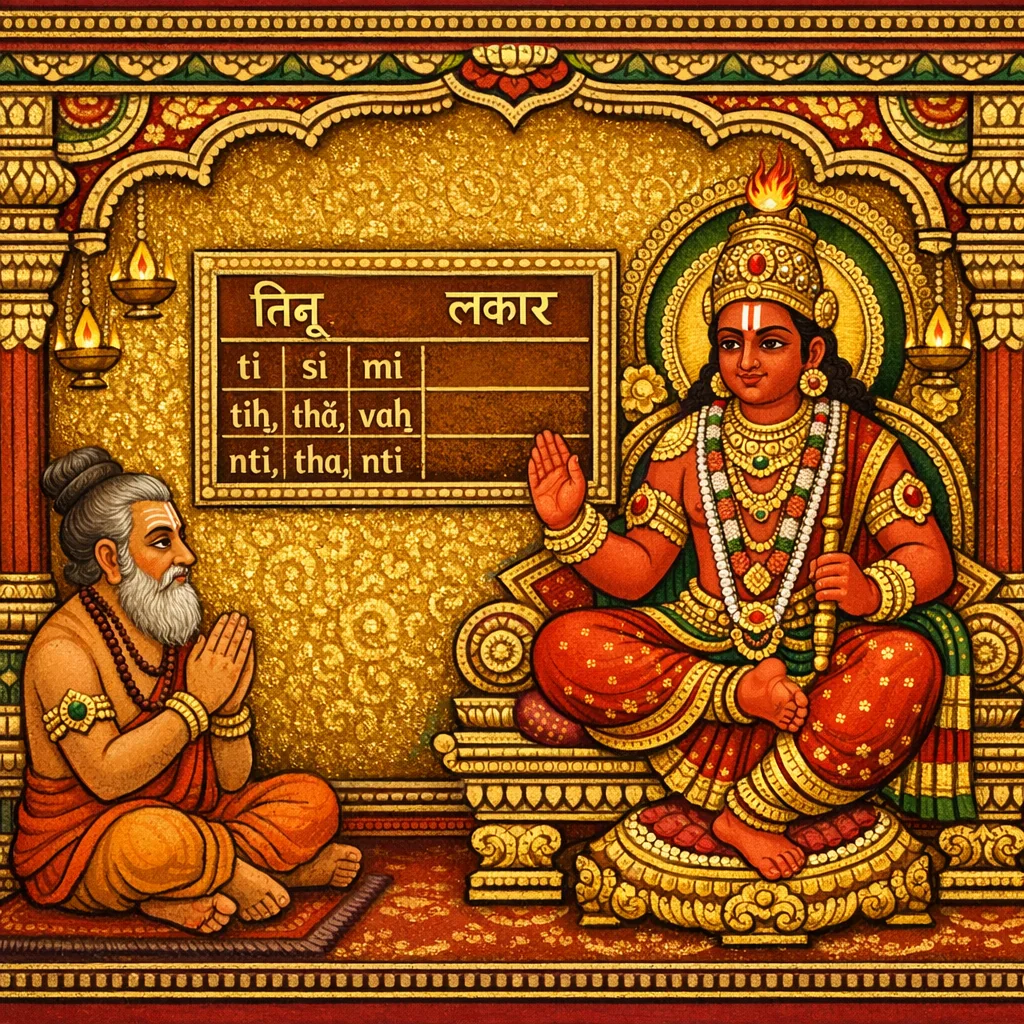
本章は、動詞の人称語尾である tiṅ(ティング語尾)を扱う簡潔なヴャーカラナ(vyākaraṇa)手引きとなり、bhāva(無人称の行為・状態)、karma(目的語中心/受動の志向)、kartṛ(行為者中心/能動の志向)に応じた用法を説く。まず前段の uṇādi に関する本文の不連続を指摘し、続いて lakāra を意味領域とともに体系的に列挙する――laṭ は現在、liṅ は勧令・願望および祝祷、loṭ は命令と祝福、laṅ は遠過去、luṅ と liṭ は過去(liṭ は不見・伝聞など間接の過去を強調)、luṭ/ḷṅ は未来義。次に人称語尾と parasmaipada/ātmanepada の区別を示し、bhū(「ある/なる」)や edh(「栄える/燃え立たせる」)などの語根で活用の型を例示し、他の dhātu 群や vikaraṇa の注記も添える。最後に、願望派生 san、使役 ṇic、反復 yaṅ、yaṅ-luk などの派生形を示し、活用パターンを具体的用例と模範図式 “rūpaka” に結び付けて明らかにする。
Shlokas
No shlokas available for this adhyaya yet.
Frequently Asked Questions
The mapping of lakāras to time/meaning (present, past, future, injunction, benediction, conditional) along with tiṅ-ending paradigms across persons and voices, illustrated via bhū/edh and related dhātu examples plus san–ṇic–yaṅ derivations.
By safeguarding linguistic precision for mantra and śāstra, it supports correct ritual speech and disciplined study; this technical clarity is framed as Agneya Vidya—worldly mastery (bhukti) placed in service of dharma and inner purification toward mukti.