Adhyaya 74
शिवपूजाकथनम् (Śiva-pūjā-kathana) — The Exposition of Śiva Worship
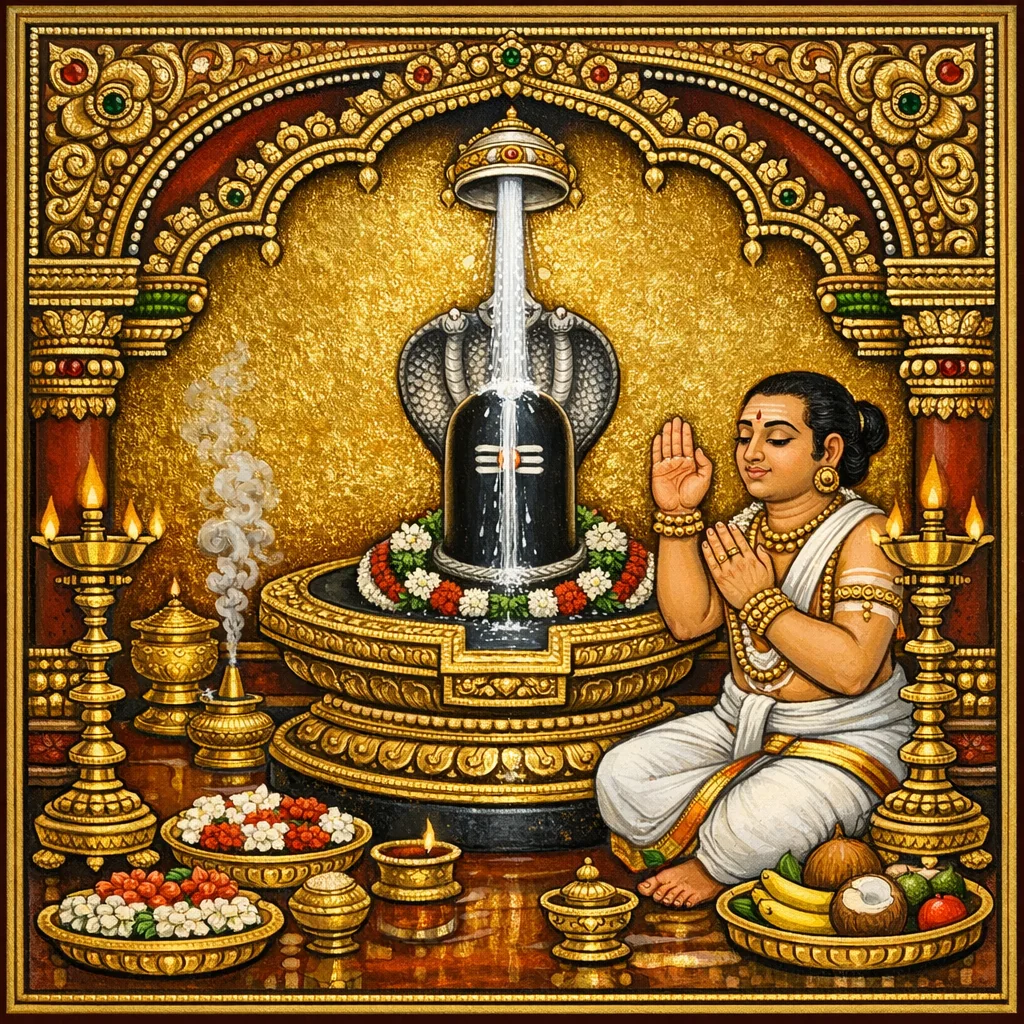
前章の太陽礼拝を結んだのち、本章はイーシュヴァラが説く Śiva-pūjā(シヴァ礼拝)を、厳密に配列された儀礼次第として示す。まず ācamana、praṇava により力づけられた arghya、astrāmbu による戸口の灑水、さらに入口の守護者と随伴神々(Gaṇa、Sarasvatī、Lakṣmī;Nandī、Gaṅgā;Mahākāla、Yamunā)への供養が行われる。行者は踵打ち・敷居越え・右足からの入場・左の門柱に触れて支える等の所作に従って壇場へ入り、udumbara 柱に護身の astra を安置し、中央で Vāstu-adhipati Brahmā を礼拝する。続いて水器と供具を整え、bhūtaśuddhi と微細なヨーガ行(prāṇāyāma、granthi-bheda、dvādaśānta、bindu 観)を修し、maṇḍala 観想と bīja-mantra により地・水・火・風・空の五大を浄化して、招請のための「心座」を確立する。さらに sakalīkaraṇa と防護(astra の結界、śakti-net、mahāmudrā)を施し、心蓮華における内供のシヴァ礼拝へ進み、外供として arghya・法具の準備と liṅga の浄化を行う。五面十臂のシヴァの観想、mūla/śiras/śikhā/kavaca/astra 各真言の nyāsa、そして連続する諸物による abhiṣeka を含む upacāra 全次第が詳説される。結びに āratī、bhoga 供養、japa の奉献、讃歌、pradakṣiṇā、Aṣṭamūrti Śiva への aṣṭāṅga 礼拝が述べられ、瞑想と火などの表象形態による継続供養へと導く。
Shlokas
No shlokas available for this adhyaya yet.
Frequently Asked Questions
Three right-heel strikes on the ground, stepping over the threshold, entering supported by the left doorpost, and entering with the right foot; followed by astra installation on the udumbara and central worship.
Gaṇa, Sarasvatī, Lakṣmī (upper udumbara position), Nandī and Gaṅgā on the right, and Mahākāla with Yamunā are also beheld/considered in the early protective sequence.
It prescribes bhūtaśuddhi, prāṇāyāma (recaka–pūraka–kumbhaka), granthi-bheda, dvādaśānta and bindu contemplation, then transitions into nyāsa, āvāhana, and upacāra offerings.
Washing the pedestal and liṅga with astra-water, then sprinkling with arghya-vessel water while using the Hṛd-mantra—this procedure is explicitly named liṅga purification.
Gentle bathing with arghya-water and flower-scented water, followed successively by milk, curd, ghee, honey, sugar, and related substances, with mantra-consecrated materials and mūla-mantra bathing.
Astra-mantra perimeter protection, casting a śakti-net above and below, displaying mahāmudrā, using kavaca/varma, and repeated sprinkling/consecration of implements with astrāmbu and hṛd-mantra.