Adhyaya 21
भीष्मव्यूहदर्शनम् / Viewing Bhīṣma’s Battle Array and Arjuna’s Reassurance
Upa-parva: Sainyavihāra–Vyūha-cintā (Battle-array appraisal episode)
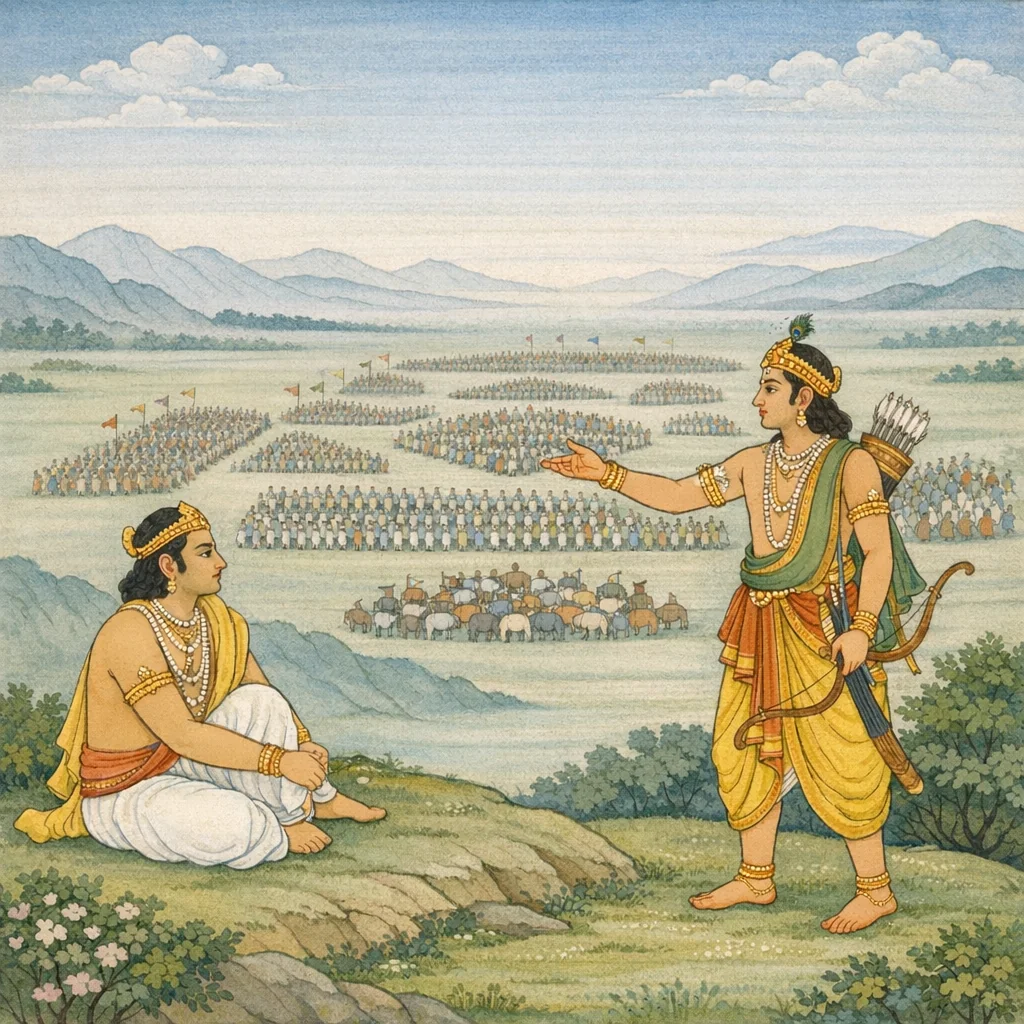
Saṃjaya reports that Yudhiṣṭhira, seeing the vast Dhārtarāṣṭra army prepared for engagement, becomes distressed. He notes Bhīṣma’s carefully constructed, seemingly unbreakable vyūha and asks Arjuna how their side can contend against a force led by the revered grandsire. Arjuna responds by shifting the evaluative frame: superior numbers and valor do not secure success as reliably as truth, non-cruelty, dharma, and energetic perseverance. He urges the abandonment of adharma, greed, delusion, and ego, asserting the maxim that where dharma stands, victory follows. Arjuna then grounds assurance in received tradition (attributed to Nārada and earlier divine counsel): victory accompanies Kṛṣṇa; ‘jaya’ is portrayed as an attribute that follows Mādhava, implying that ethical alignment and the stabilizing presence of Kṛṣṇa provide decisive confidence amid tactical uncertainty.
Chapter Arc: संजय धृतराष्ट्र से कहता है कि दुर्योधन की विशाल, युद्धोन्मुख सेना और भीष्म-रचित अभेद्य व्यूह को देखकर युधिष्ठिर के मन में अचानक विषाद छा गया। → युधिष्ठिर अर्जुन से पूछते हैं कि जिनके अग्रणी योद्धा स्वयं पितामह भीष्म हैं और जिनका व्यूह शास्त्रीय विधि से ‘अक्षोभ्य’ और ‘अभेद्य’ रचा गया है, उनसे रण में विजय कैसे संभव है। → अर्जुन उत्तर में युद्ध-नीति से भी ऊँचा सूत्र रखता है—बुद्धि, गुण, त्याग और धर्म-आश्रय से अल्प बल भी बहुबल को जीत सकता है; अधर्म-लोभ-मोह त्यागकर अहंकार-शून्य होकर उद्यम करने पर ‘यतो धर्मस्ततो जयः’ और निर्णायक वाक्य—‘यतः कृष्णस्ततो जयः’। → अर्जुन युधिष्ठिर की व्यथा शांत करता है: कृष्ण का आश्रय लेकर देवताओं ने भी त्रैलोक्य-समृद्धि पाई; जिनके जय की कामना स्वयं त्रिदिवेश्वर करता है, उनके लिए यहाँ चिंता का कारण नहीं—धर्म और कृष्ण-सान्निध्य से विजय ध्रुव है। → कृष्ण-सहायता और धर्म-निष्ठा का आश्वासन मिलते ही भीषण संग्राम का द्वार खुला रहता है—अभेद्य व्यूह के सामने पाण्डवों का अगला कदम क्या होगा।
Shlokas
Verse 1
संजय कहते हैं--राजन! युद्धके लिये उद्यत हुई दुर्योधनकी विशाल सेनाको देखकर कुन्तीपुत्र राजा युधिष्ठिरके मनमें विषाद छा गया
Sanjaya said: O King, when Yudhishthira—the son of Kunti—saw Duryodhana’s vast army fully prepared for war, a deep despondency settled over his mind. The sight of imminent slaughter and the moral weight of kin-slaying clouded his resolve, revealing the tension between royal duty and the ethical cost of violence.
Verse 2
व्यूहं भीष्मेण चाभेद्यं कल्पितं प्रेक्ष्य पाण्डव: । अक्षोभ्यमिव सम्प्रेक्ष्य विवर्णोडर्जुनमब्रवीत्,भीष्मने जिस व्यूहकी रचना की थी, उसका भेदन करना असम्भव था। उसे अक्षोभ्य- सा देखकर पाण्डुनन्दन युधिष्ठिरकी अंगकान्ति फीकी पड़ गयी। वे अर्जुनसे इस प्रकार बोले--
Verse 3
धनंजय कथं शक््यमस्माभिरययोंद्धुमाहवे । धार्तराष्ट्रमहाबाहो येषां योद्धा पितामह:,“महाबाहु धनंजय! जिनके प्रधान योद्धा पितामह भीष्म हैं, उन धृतराष्ट्रपुत्रोंके साथ हम समरभूमिमें कैसे युद्ध कर सकते हैं?
Sanjaya said: “O Dhanañjaya, how can we possibly fight in this battle? O mighty-armed one, how can we wage war against the sons of Dhṛtarāṣṭra, whose foremost warrior is the grandsire himself?”
Verse 4
अक्षोभ्योडयमभेद्यक्ष भीष्मेणामित्रकर्षिणा । कल्पित: शास्त्रदृष्टेन विधिना भूरिवर्चसा,“महातेजस्वी शत्रुसूदन भीष्मने शास्त्रीय विधिके अनुसार यह अक्षोभ्य एवं अभेद्य व्यूह रचा है
Sañjaya said: “This battle-formation, unshakable and impenetrable, has been arrayed by Bhīṣma—the mighty one who crushes the foe—according to the rule and method prescribed in the martial treatises. It is a disciplined ordering of war, designed to be firm against assault and hard to break.”
Verse 5
ते वयं संशयं प्राप्ता: ससैन्या: शत्रुकर्षण । कथमस्मान्महाव्यूहादुत्थानं नो भविष्यति,'शत्रुनाशन अर्जुन! हमलोग अपनी सेनाओंके साथ प्राणसंकटकी स्थितिमें पहुँच गये हैं। इस महान् व्यूहसे हमारा उद्धार कैसे होगा?”
Sanjaya said: “O Arjuna, subduer of foes, we—together with our armies—have fallen into grave uncertainty and peril. How will there be deliverance for us from this vast and formidable battle-formation?”
Verse 6
अथार्जुनोडब्रवीत् पार्थ युधिष्िरममित्रहा । विषण्णमिव सम्प्रेक्ष्य तव राजन्ननीकिनीम्,राजन! तब शत्रुओंका नाश करनेवाले अर्जुनने आपकी सेनाको देखकर विषादग्रस्त-से हुए कुन्तीपुत्र युधिष्ठिरको सम्बोधित करके कहा--
Sanjaya said: Then Arjuna, the son of Pṛthā and destroyer of foes, seeing Yudhiṣṭhira—Kuntī’s son—looking as though overcome by dejection upon beholding your army, O King, addressed him. The moment frames the ethical weight of war: even the righteous are shaken when confronted with the vast human cost and the responsibility of leadership.
Verse 7
प्रज्ञयाभ्यधिकाज्शूरान् गुणयुक्तान् बहूनपि । जयन्त्यल्पतरा येन तन्निबोध विशाम्पते,'प्रजानाथ! अधिक बुद्धिमान, उत्तम गुणोंसे युक्त तथा बहुसंख्यक शूरवीरोंको भी बहुत थोड़े योद्धा जिस प्रकार जीत लेते हैं, उसे बताता हूँ, सुनिये--
Sanjaya said: O lord of men, understand from me how a very small band can overcome even many heroic warriors—men superior in intelligence and endowed with fine qualities. Listen as I explain the means by which the few prevail over the many.
Verse 8
तत्र ते कारणं राजन प्रवक्ष्याम्पनसूयवे । नारदस्तमृषिर्वेद भीष्मद्रोणी च पाण्डव,“राजन! आप दोषदृष्टिसे रहित हैं, अतः आपको वह युक्ति बताता हूँ। पाण्डुनन्दन! उसे केवल देवर्षि नारद, भीष्म तथा द्रोणाचार्य जानते हैं
Sañjaya said: “O King, since you are free from fault-finding, I shall explain to you the reason in this matter. That secret is known only to the sage Nārada, and to Bhīṣma and Droṇa, O son of Pāṇḍu.”
Verse 9
एनमेवार्थमाश्रित्य युद्धे देवासुरे5ब्रवीत् । पितामहः किल पुरा महेन्द्रादीनू दिवौकस:,“कहते हैं, पूर्वकालमें जब देवासुर-संग्राम हो रहा था, उस समय इसी विषयको लेकर पितामह ब्रह्माने इन्द्र आदि देवताओंसे इस प्रकार कहा था--
Verse 10
न तथा बलवीर्याभ्यां जयन्ति विजिगीषव: । यथा सत्यानृशंस्याभ्यां धर्मेणैवोद्यमेन च,“विजयकी इच्छा रखनेवाले शूरवीर अपने बल और पराक्रमसे वैसी विजय नहीं पाते, जैसी कि सत्य, सज्जनता, धर्म तथा उत्साहसे प्राप्त कर लेते हैं
Sañjaya said: Those heroic men who long for victory do not win so surely by sheer strength and prowess as they do by truthfulness and compassion—by standing in dharma and by steadfast effort. The verse frames victory not merely as a product of force, but as the ethical fruit of righteous conduct and disciplined resolve.
Verse 11
त्यक्त्वाधर्म च लोभं॑ च मोहं चोद्यममास्थिता: । युद्धवध्वमनहंकारा यतो धर्मस्ततो जय:,“देवताओ! अधर्म, लोभ और मोह त्यागकर उद्यमका सहारा ले अहंकारशून्य होकर युद्ध करो। जहाँ धर्म है उसी पक्षकी विजय होती है"
Sañjaya said: “Casting aside unrighteousness, greed, and delusion, take refuge in resolute effort. Fight without ego; for where dharma stands, there indeed is victory.”
Verse 12
एवं राजन् विजानीहि ध्रुवो5स्माकं रणे जय: । यथा तु नारद: प्राह यतः कृष्णस्ततो जय:,“राजन! इसी नियमके अनुसार आप भी यह निश्चितरूपसे जान लें कि युद्धमें हमारी विजय अवश्यम्भावी है। जैसा कि नारदजीने कहा है, जहाँ कृष्ण हैं, वहीं विजय है
Sañjaya said: “Therefore, O King, understand this with certainty: in this battle victory for us is assured. For, as Nārada declared, wherever Kṛṣṇa stands, there indeed is victory.”
Verse 13
गुणभूतो जय: कृष्णे पृष्ठतो5भ्येति माधवम् । तद् यथा विजयश्नचास्य सन्नतिश्चापरो गुण:,“विजय तो श्रीकृष्णका एक गुण है, अतः वह उनके पीछे-पीछे चलता है। जैसे विजय गुण है, उसी प्रकार विनय भी उनका द्वितीय गुण है
Sañjaya said: “Victory, as though it were a quality embodied, follows behind Kṛṣṇa—Mādhava. And just as victory is His attribute, so too humility (gentle submission) is another of His qualities.”
Verse 14
अनन्ततेजा गोविन्द: शत्रुपूगेषु निर्व्यथ: । पुरुष: सनातनमयो यतः कृष्णस्ततो जय:
Sañjaya said: Govinda, of boundless radiance, moved among the massed ranks of enemies without the least distress. Since Kṛṣṇa is the eternal Person Himself, victory is assured wherever He stands. The verse frames the battlefield not merely as a contest of arms, but as a moral certainty: alignment with the timeless divine order brings steadiness in crisis and the promise of triumph.
Verse 15
“भगवान् गोविन्दका तेज अनन्त है। वे शत्रुओंके समुदायमें भी कभी व्यथित नहीं होते; क्योंकि वे सनातन पुरुष (परमात्मा) हैं। अत: जहाँ श्रीकृष्ण हैं, वहीं विजय है ।। पुरा होष हरिर्भूत्वा विकुण्ठोडकुण्ठसायक: । सुरासुरानवस्फूर्जन्नब्रवीत् के जयन्त्विति,'ये श्रीकृष्ण कहीं भी प्रतिहत या अवरुद्ध न होनेवाले ईश्वर हैं। इनका बाण अमोघ है। ये ही पूर्वकालमें श्रीहरिरूपमें प्रकट हो वज्रगर्जनके समान गम्भीर वाणीमें देवताओं और असुरोंसे बोले--तुमलोगोंमेंसे किसकी विजय हो?
Sanjaya said: The splendor of the Blessed Lord Govinda is limitless. Even amid masses of enemies he is never shaken, for he is the eternal Person—the Supreme Self. Therefore, wherever Śrī Kṛṣṇa is, there indeed is victory. In former times too, Hari manifested—unimpeded, with unfailing arrows—and, thundering before gods and demons, declared: “Who among you shall be victorious?”
Verse 16
कथं कृष्ण जयेमेति यैरुक्तं तत्र तैर्जितम् तत् प्रसादादूधि त्रैलोक्यं प्राप्त शक्रादिभि: सुरै:,“उस समय जिन लोगोंने उनका आश्रय लेकर पूछा--“कृष्ण! हमारी जीत कैसे होगी?” उन्हींकी जीत हुई। इस प्रकार श्रीकृष्णकी कृपासे ही इन्द्र आदि देवताओंने त्रिलोकीका राज्य प्राप्त किया है
Sanjaya said: “Those who, taking refuge in him, asked there, ‘Kṛṣṇa, how shall we be victorious?’—by those very ones victory was attained. Indeed, it was through Śrī Kṛṣṇa’s grace that Indra and the other gods obtained sovereignty over the three worlds.”
Verse 17
तस्य ते न व्यथां काज्चिदिह पश्यामि भारत । यस्य ते जयमाशास्ते विश्वभुक् त्रिदिवेश्वर:,“अतः भारत! मैं आपके लिये किसी प्रकारकी व्यथा या चिन्ता होनेका कारण नहीं देखता; क्योंकि देवेश्वर तथा विश्वम्भर भगवान् श्रीकृष्ण आपके लिये विजयकी आशा करते हैं!
Sañjaya said: “O Bhārata, I see no cause here for you to feel any distress at all; for the Lord of the gods, the Sustainer of the world, is himself hoping for your victory.”
Verse 231
इति श्रीमहा भारते भीष्मपर्वणि श्रीमद्भगवद्गीतापर्वणि युधिष्ठिरार्जुनसंवादे एकविंशो5ध्याय:
Sañjaya said: Thus, in the sacred Mahābhārata, within the Bhīṣma Parva, in the revered section known as the Bhagavadgītā Parva, in the dialogue between Yudhiṣṭhira and Arjuna, ends the twenty-first chapter.
Frequently Asked Questions
The dilemma is whether tactical intimidation and reverence for elders (Bhīṣma as pītāmaha) should override kṣatriya-duty; Yudhiṣṭhira’s fear is answered by insisting that ethical steadiness and rightful action must govern decision-making under pressure.
Arjuna teaches that victory is most reliably secured by truth, non-cruelty, dharma, and sustained effort performed without ego; the operative maxim is that alignment with dharma—and, by extension, with Kṛṣṇa—constitutes the strongest basis for confidence.
No formal phalaśruti is stated; the chapter instead offers a legitimizing meta-claim that ‘jaya’ follows Kṛṣṇa and dharma, functioning as a doctrinal assurance within the war narrative rather than a ritualized promise of merit.