Sukta 75
Rishi: Atharvanic tradition (Anukramaṇī attribution not supplied in input)
Devata: Rudra (as protector) with implicit Āpaḥ (Waters) and cattle as beneficiaries
Chandas: Mixed/triṣṭubh-like cadence (edition-dependent); not securely determinable from input alone
Mantras
Mantra 1
अघ्न्याः। प्रजावतीः सूयवसे रुशन्तीः शुद्धा अपः सुप्रपाणे पिबन्तीः । मा व स्तेन ईशत माघशंसः परि वो रुद्रस्य हेतिर्वृणक्तु
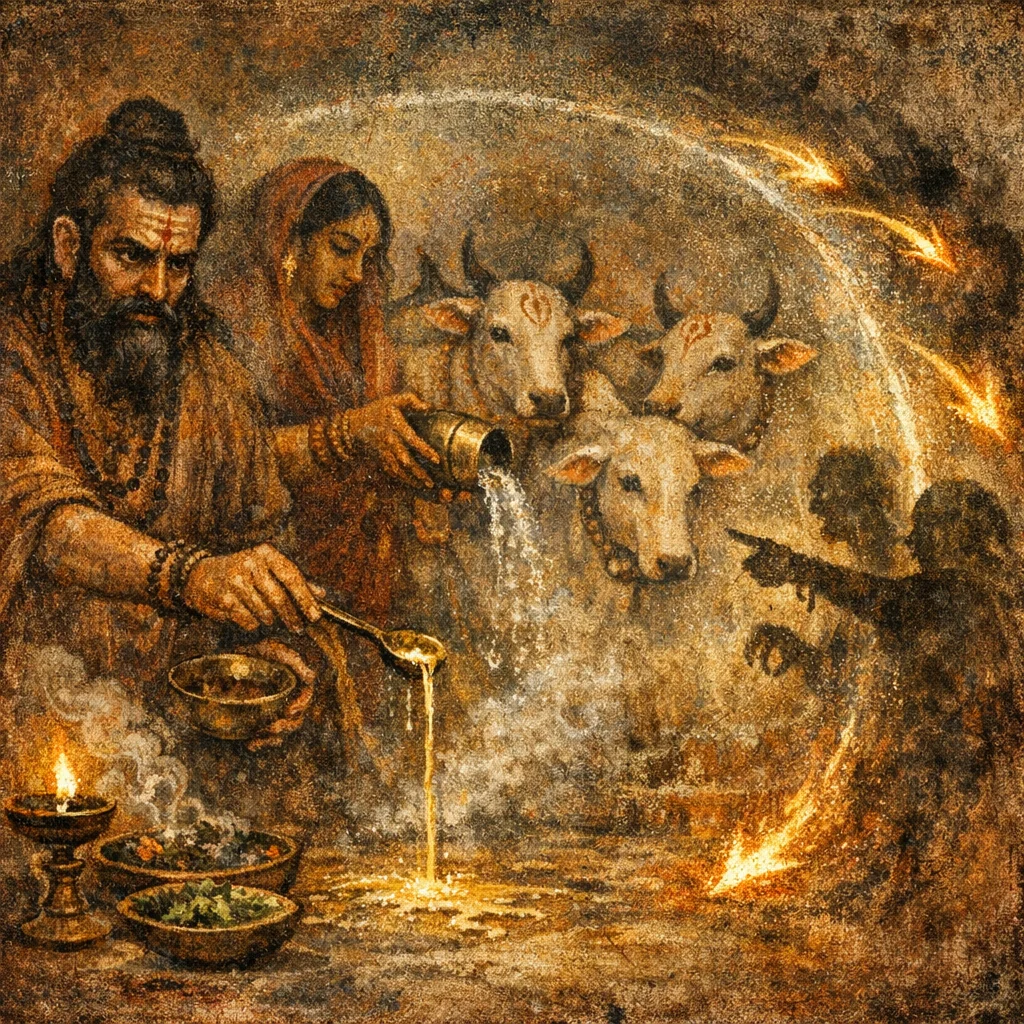
Ye inviolable, rich in progeny, shining as ye fare to good pasture, pure, drinking the Waters at the fair watering-place—let not the thief have mastery over you, nor the evil-tongued reviler: round about you may Rudra’s missile choose its guard.
Mantra 2
पदज्ञा स्थ रमतयः संहिता विश्वनाम्नीः । उप मा देवीर्देवेभिरेत । इमं गोष्ठमिदं सदो घृतेनास्मान्त्समुक्षत
Ye track-knowing, gracious ones, united, bearing every name—hither to me come, O Goddesses, with the Gods. This cattle-stall, this seat of ours, with ghee do ye bedew; and us, with full sprinkling, strengthen.
Frequently Asked Questions
It is used to protect cattle on the way to pasture and at the watering place, and to strengthen the cowshed and household seat through a protective invocation of Rudra and a ghee-sprinkling consecration.
In this hymn Rudra’s fierce power is redirected into guardianship: his “heti” (weapon/missile) is asked to stand around the herd as a deterrent to thieves and hostile forces.
The hymn itself points to clean water (āpaḥ) for purity and ghee (ghṛta) for sprinkling/strengthening; it is performed in relation to the pasture route, watering place, and the cowshed (goṣṭha).