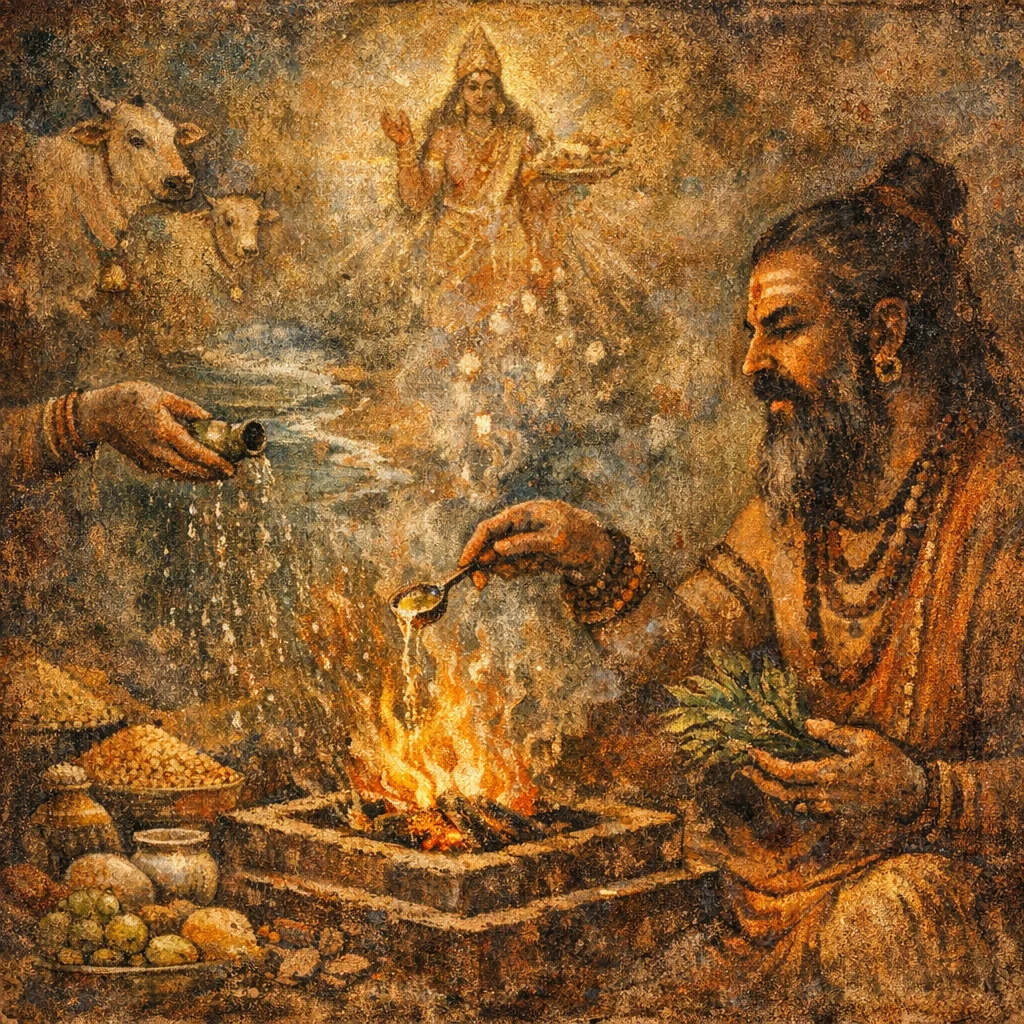
Sukta 40
Rishi: Traditionally Atharvanic/Angirasa attribution for this paustika complex (hymn-level ascription varies by Anukramaṇī)
Devata: Sarasvant (with the Waters and Puṣṭi/puṣṭapati as associated powers)
Chandas: Mixed/Triṣṭubh-like cadence (hymn-level metrical assignment varies in recensions)
Mantras
Mantra 1
सरस्वान्। यस्य व्रतं पशवो यन्ति सर्वे यस्य व्रत उपतिष्ठन्त आपः । यस्य व्रते पुष्टपतिर्निविष्टस्तं सरस्वन्तमवसे हवामहे
Sarasvant—whose ordinance all cattle follow, whose ordinance the Waters attend; in whose ordinance the Lord of Nourishment is established: him, Sarasvant, for aid we invoke.
Mantra 2
आ प्रत्यञ्चं दाशुषे दाश्वंसं सरस्वन्तं पुष्टपतिं रयिष्ठाम्। रायस्पोषं श्रवस्युं वसाना इह हुवेम सदनं रयीणाम्
Hither, turned toward the offerer, bounteous, Sarasvant—lord of nourishment, most wealthy—(bringing) increase of riches, fame-bestowing: clothing ourselves therewith, here let us invoke the seat of treasures.
Frequently Asked Questions
Sarasvant is a prosperity-bearing power linked with the Waters, portrayed as the one whose ordinance (vrata) governs cattle, nourishment, and thriving. He is invoked as Puṣṭapati, the lord who ‘seats’ increase in the home.
It aims at puṣṭi (nourishment and thriving), growth of cattle-wealth, increase of material resources (rayi), and also śravas (good reputation). The hymn’s imagery emphasizes not just gain, but stable establishment—‘a seat of treasures.’
Yes. Traditionally it suits a household prosperity act: keep clean water, recite 7.40.1 and 7.40.2, and lightly sprinkle at the threshold, storehouse, or cattle-shed while intending that prosperity be installed and remain steady.