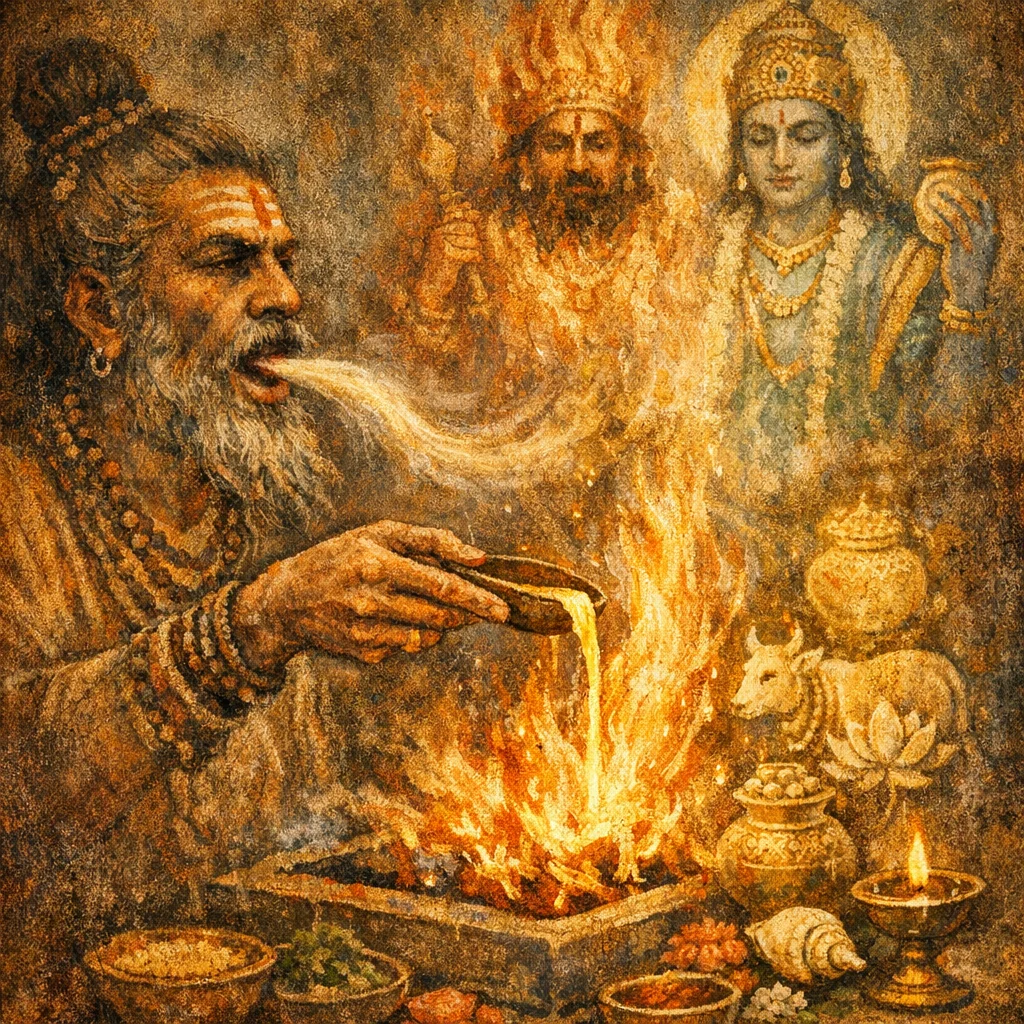
Sukta 29
Rishi: Not specified in the provided input (requires AVŚ anukramaṇī lookup for 7.29.1).
Devata: Agni-Viṣṇu (dual).
Chandas: Not specified in the provided input; likely triṣṭubh (requires scan).
Mantras
Mantra 1
अग्नाविष्णू। अग्नाविष्णू महि तद् वां महित्व पाथो घृतस्य गुह्यस्य नाम । दमेदमे सप्त रत्ना दधानौ प्रति वां जिह्वा घृतमा चरण्यात्
Agni and Viṣṇu—mighty is that your might: the draught of ghee, whose name is secret. In house and house ye bear the seven treasures: toward you may the tongue convey the ghee for tasting.
Mantra 2
अग्नाविष्णू महि धाम प्रियं वां वीथो घृतस्य गुह्या जुषाणौ। दमेदमे सुष्टुत्या वावृधानौ प्रति वां जिह्वा घृतमुच्चरण्यात्
Agni and Viṣṇu, great is your dear splendour; the course of ghee—its hidden powers—ye two enjoy. In house and house, waxing through good praise, toward you may the tongue send forth the ghee aloft.
Frequently Asked Questions
Agni is the carrier and taster of the offering through the fire, while Viṣṇu represents the all-pervading reach and fulfillment of the rite. Together they ensure the oblation both travels correctly and yields stable results.
In Vedic idiom, “seven treasures” signifies complete prosperity—food, cattle/wealth, strength, protection, good offspring/continuity, good repute, and overall well-being—rather than a single literal set of items.
No. The hymn is centered on ghṛta offered into a properly tended fire, supported by clear recitation and praise (suṣṭuti). No herbs or amulets are indicated within these two verses.