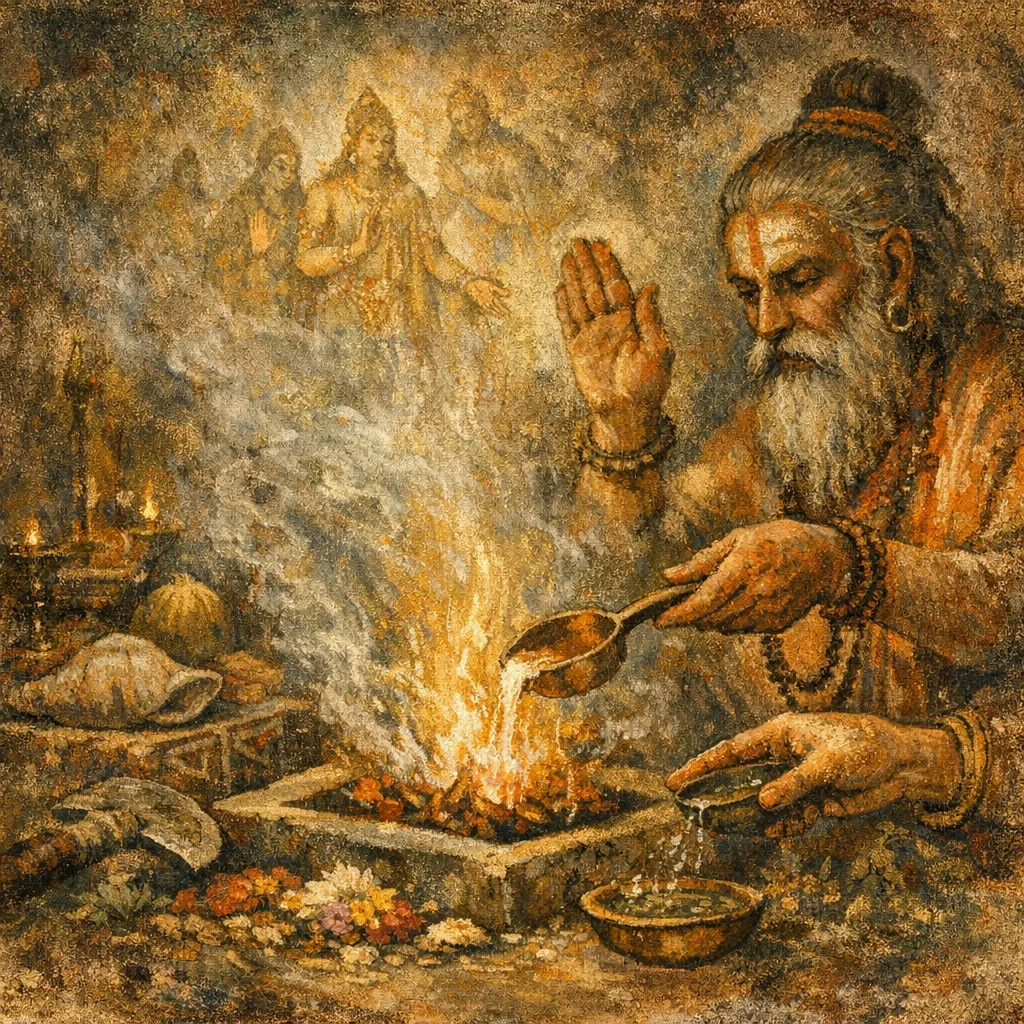
Sukta 28
Rishi: Not specified in the provided input (requires AVŚ anukramaṇī lookup for 7.28.1).
Devata: Svasti (Auspiciousness) and the Devās (collective gods) as acceptors of yajña.
Chandas: Not specified in the provided input; appears anuṣṭubh-like in cadence but needs metrical scan.
Mantras
Frequently Asked Questions
It is used to bless the practical setup of a sacrifice—especially the altar-space (vedi) and the tools used to prepare fuel and materials—so the rite proceeds safely and successfully.
Because these are high-risk, essential implements in yajña preparation (cutting and splitting wood). The mantra places ‘svasti’ on them to prevent mishap and ritual defect while preparing the offering-fire setup.
No. The verse itself focuses on consecrating knowledge, tools, and altar through recitation; the only ‘materials’ implied are the implements and the oblation (havis) used in the sacrifice.