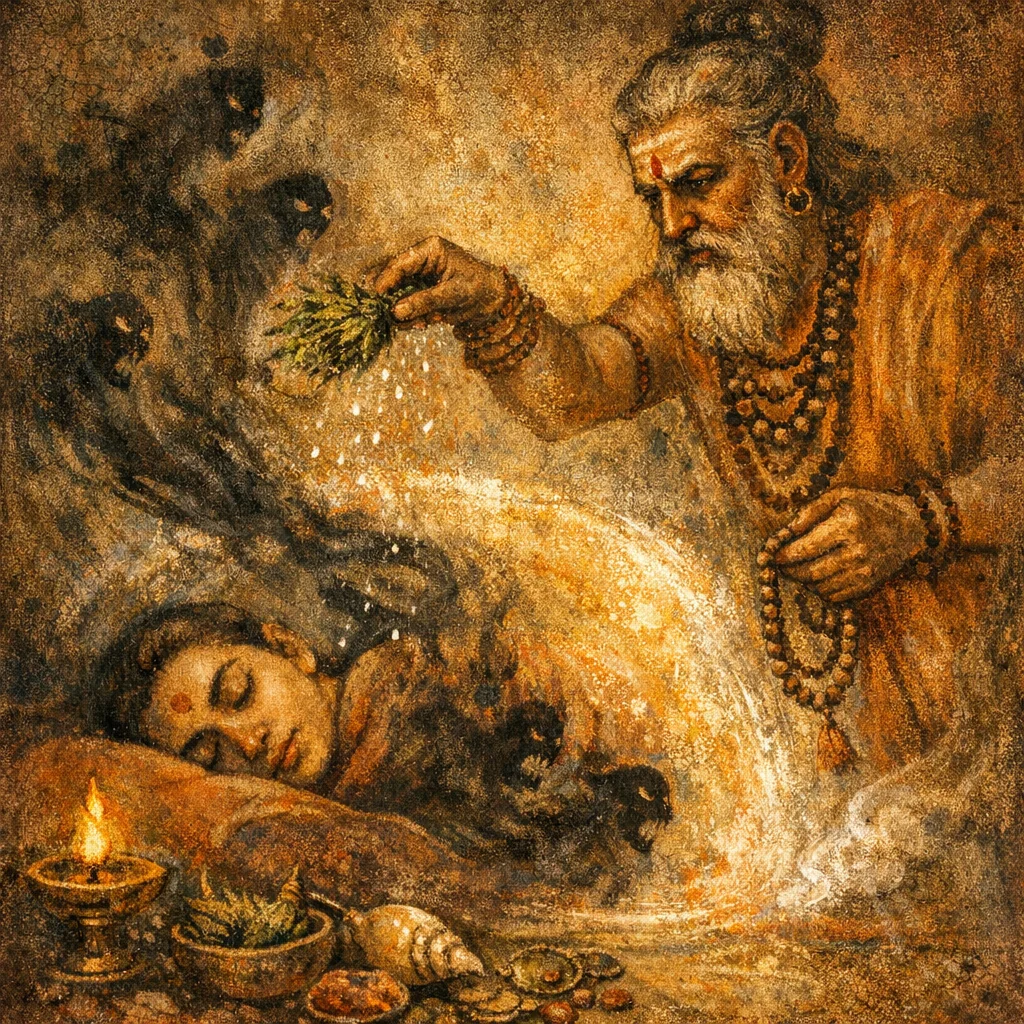
Sukta 23
Rishi: Uncertain (requires anukramaṇī verification for AVŚ 7.23.1).
Devata: Rakṣoghna-brahman (the mantra’s own power); implicitly Indra/Agni as destroyers of rakṣas in Atharvanic idiom.
Chandas: Anuṣṭubh (probable; requires scansion).
Mantras
Frequently Asked Questions
It protects against bad dreams and the forces believed to cause them—demonic oppression, life-wasting misfortune, deathward influences, and harmful/hostile speech.
No. The verse itself is designed as a self-sufficient rakṣoghna-brahman: the spoken mantra is the primary instrument, though simple cleansing or sprinkling water may be added optionally.
Before sleep is the most natural timing; it can also be recited right after a disturbing dream or whenever one feels pressured by misfortune, fear, or slander.