Sukta 67
Rishi: Atharvanic tradition (Anukramaṇī attribution not supplied in input)
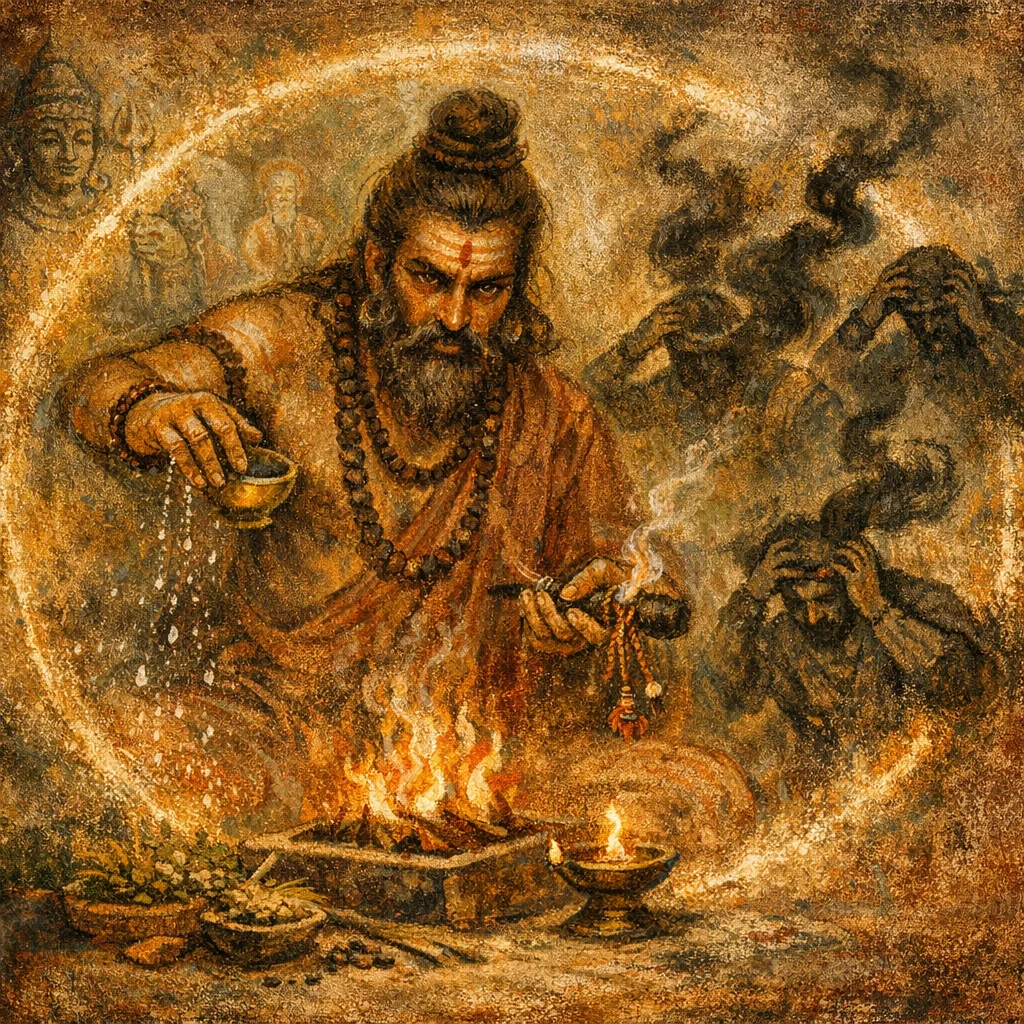
Devata: Indra and Pūṣan
Chandas: Anuṣṭubh-like (probable; not fully verified)
Mantras
Mantra 1
शत्रुनाशनम्। परि वर्त्मानि सर्वत इन्द्रः पूषा च सस्रतुः । मुह्यन्त्वद्यामूः सेना अमित्राणां परस्तराम्
Enemy-destruction. Around the paths on every side have Indra and Pūṣan sped: let those armies of the foemen, this day, be confounded most utterly.
Mantra 2
मूढा अमित्राश्चरताशीर्षाण इवाहयः । तेषां वो अग्निमूढानामिन्द्रो हन्तु वरंवरम्
Bewildered, O foemen, wander ye—headlong like serpents. Of you, fire-confounded, let Indra smite the choicest, one by one.
Mantra 3
ऐषु नह्य वृषाजिनं हरिणस्या भियं कृधि । पराङमित्र एषत्वर्वाची गौरुपेषतु
Bind on, in these (quarters), the bull-hide; upon the antelope’s fear do thou impose (it). Away, O Mitra, let the foe be driven; hitherward let the Cow draw near and come unto us.
Frequently Asked Questions
It is used to protect all approaches (roads, paths, boundaries) and to cause enemy forces to become disoriented, panic, and lose leadership, while safety and prosperity return to the performer.
Indra supplies force that breaks hostile power and strikes leaders, while Pūṣan is the guardian of roads and safe passage; together they ‘cover’ the routes and turn movement and advantage toward the performer.
Yes. The third verse mentions binding on a bull-hide (vṛṣā-jina) as a protective fastening, and the second verse invokes Agni as a confounding force that contributes to the enemy’s bewilderment.