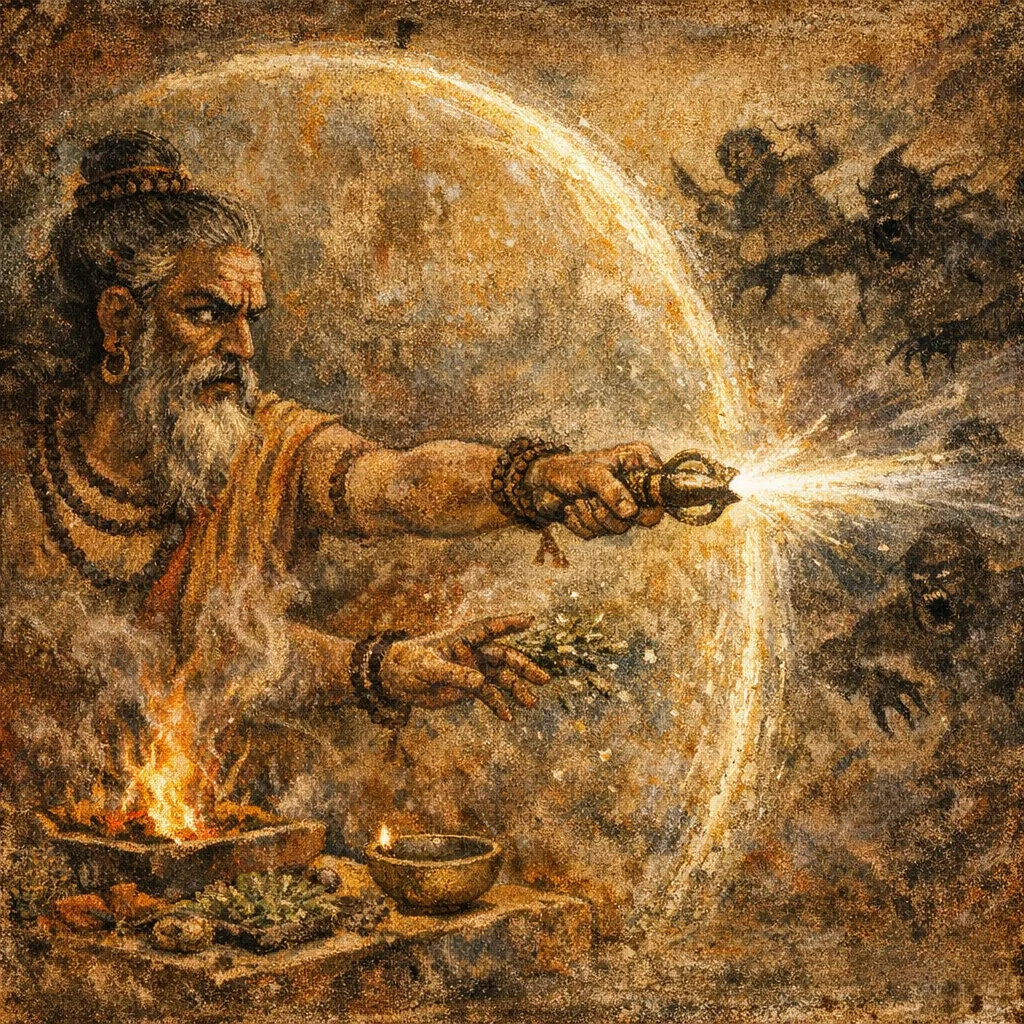
Sukta 66
Rishi: Atharvanic tradition (Anukramaṇī attribution not supplied in input)
Devata: Indra (with implicit hostile forces as object)
Chandas: Mixed/Anuṣṭubh-like cadence (exact metrical parsing uncertain from provided text)
Mantras
Mantra 1
शत्रुनाशनम्। निर्हस्तः शत्रुरभिदासन्नस्तु ये सेनाभिर्युधमायन्त्यस्मान्। समर्पयेन्द्र महता वधेन द्रात्वेषामघहारो विविद्धः
Enemy-destruction. Handless be the foe, the assailant: let him be so—those who with armies, warring, advance against us. Deliver them up, O Indra, to mighty slaughter; let their evil-bearer be pierced through, and let them be driven off.
Mantra 2
आतन्वाना आयच्छन्तोऽस्यन्तो ये च धावथ । निर्हस्ताः शत्रवः स्थनेन्द्रो वोऽद्य पराशरीत्
Ye who extend yourselves, who reach and shoot, and ye who rush—stand ye, O enemies, disarmed: Indra hath this day shattered you utterly.
Mantra 3
निर्हस्ताः सन्तु शत्रवोऽङ्गैषां म्लापयामसि । अथैषामिन्द्र वेदांसि शतशो वि भजामहै
Disarmed be the foes; their limbs we cause to languish. Then, O Indra, their counsels—by hundreds—may we rend asunder and divide.
Frequently Asked Questions
Literally “handless,” it functions as “weaponless/disarmed”—a ritual command that strips the enemy of fighting capacity and initiative.
In Atharvanic terms it is abhicāra with a defensive aim: it targets hostile aggressors who are advancing, seeking to prevent harm by disabling and routing them under Indra’s power.
Here “vedāṃsi” means their counsels/plans (strategic intentions). The mantra asks that their coordination be split into many parts so their force collapses into confusion and retreat.