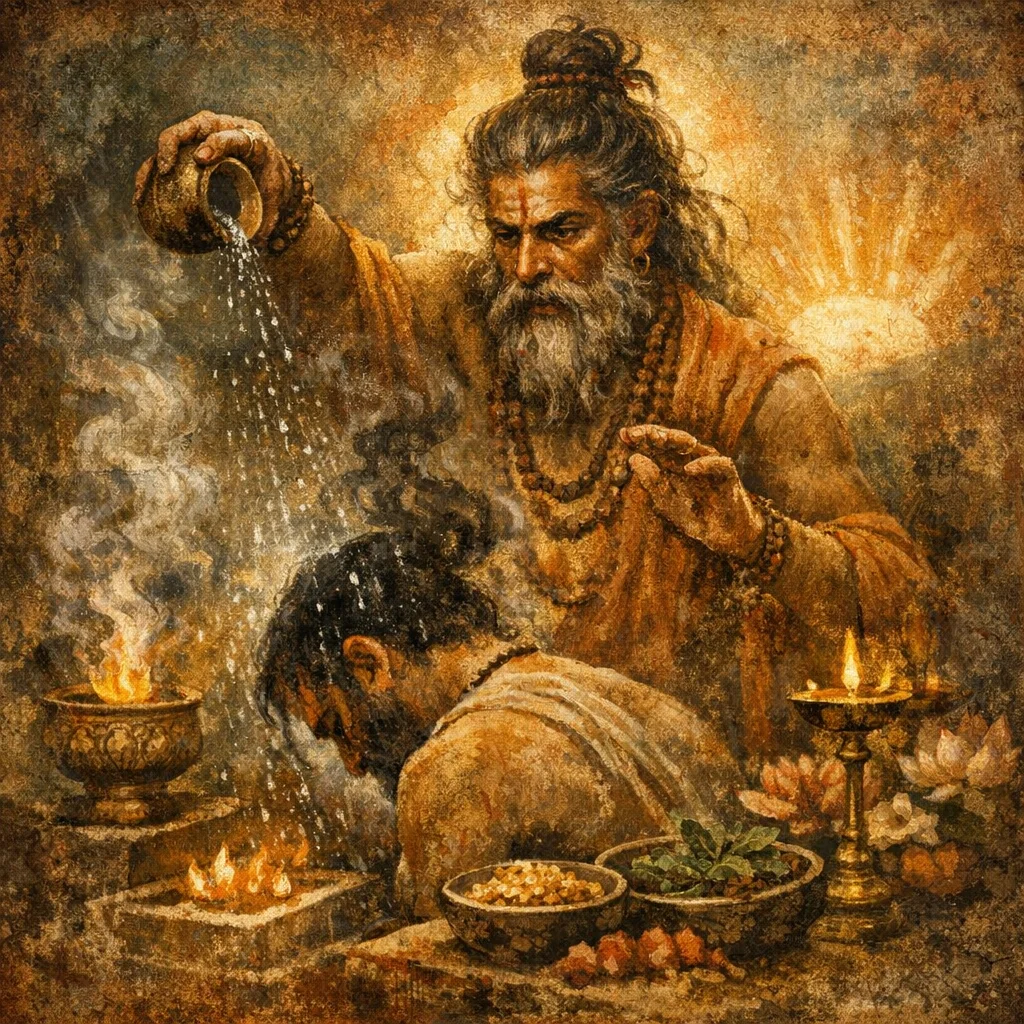
Sukta 62
Rishi: Atharvanic tradition (specific ṛṣi attribution varies in anukramaṇī lists)
Devata: Vaiśvānara (Agni), Vāta, Dyāvā-Pṛthivī
Chandas: Jagatī/triṣṭubh-mixed (Atharvanic; often treated as mixed meter)
Mantras
Mantra 1
पावमानम्। वैश्वानरो रश्मिभिर्नः पुनातु वातः प्राणेनेषिरो नभोभिः । द्यावापृथिवी पयसा पयस्वती ऋतावरी यज्ञिये न पुनीताम्
Purifying: let Vaiśvānara with his rays purify us; let Wind, swift, with breath, with the sky-waters. Let Heaven and Earth, rich in milk, guardians of Order, worthy of sacrifice, purify us.
Mantra 2
वैश्वानरीं सूनृतामा रभध्वं यस्या आशास्तन्वोऽवीतपृष्ठाः । तया गृणन्तः सधमादेषु वयं स्याम पतयो रयीनाम्
Lay hold of Vaiśvānari, of gracious Truth, whose hopes make our very persons guarded behind. With her, praising in the common feasts, may we be lords of riches.
Mantra 3
वैश्वानरीं वर्चस आ रभध्वं शुद्धा भवन्तः शुचयः पावकाः । इहेडया सधमादं मदन्तो ज्योक् पश्येम सूर्यमुच्चरन्तम्
Lay hold of Vaiśvānari for splendor; becoming purified—bright, cleansing. Here, with Iḍā, rejoicing in the common feast, may we for long behold the Sun ascending.
Frequently Asked Questions
For purification—clearing ritual impurity and illness-causing taints—and for restoring strength, splendor (varcas), prosperity, and longevity.
Because purification is pictured as total: Agni purifies by heat and rays, Wind purifies by breath and movement, and Heaven–Earth stabilize purity through nourishment and cosmic order (ṛta).
No. The hymn is effective as a śuddhi–rakṣā recitation with simple supports like clean water, a flame/lamp, and optionally milk as a nourishing purifier.