Sukta 119
Rishi: Atharvanic tradition (verify Anukramaṇī for 6.119)
Devata: Agni Vaiśvānara
Chandas: Anuṣṭubh (probable; confirm in critical edition)
Mantras
Mantra 1
आनृण्यम्। यददीव्यन्नृणमहं कृणोम्यदास्यन्नग्न उत संगृणामि । वैश्वानरो नो अधिपा वसिष्ठ उदिन्नयाति सुकृतस्य लोकम्
Freedom from debt: when, not gambling, I yet make debt; when, sitting (at home), O Agni, I also duly hymn—Vaiśvānara, our lord and best protector, he verily leads upward unto the world of well-doing.
Mantra 2
वैश्वानराय प्रति वेदयामि यद्यृणं संगरो देवतासु । स एतान् पाशान् विचृतं वेद सर्वानथ पक्वेन सह सं भवेम
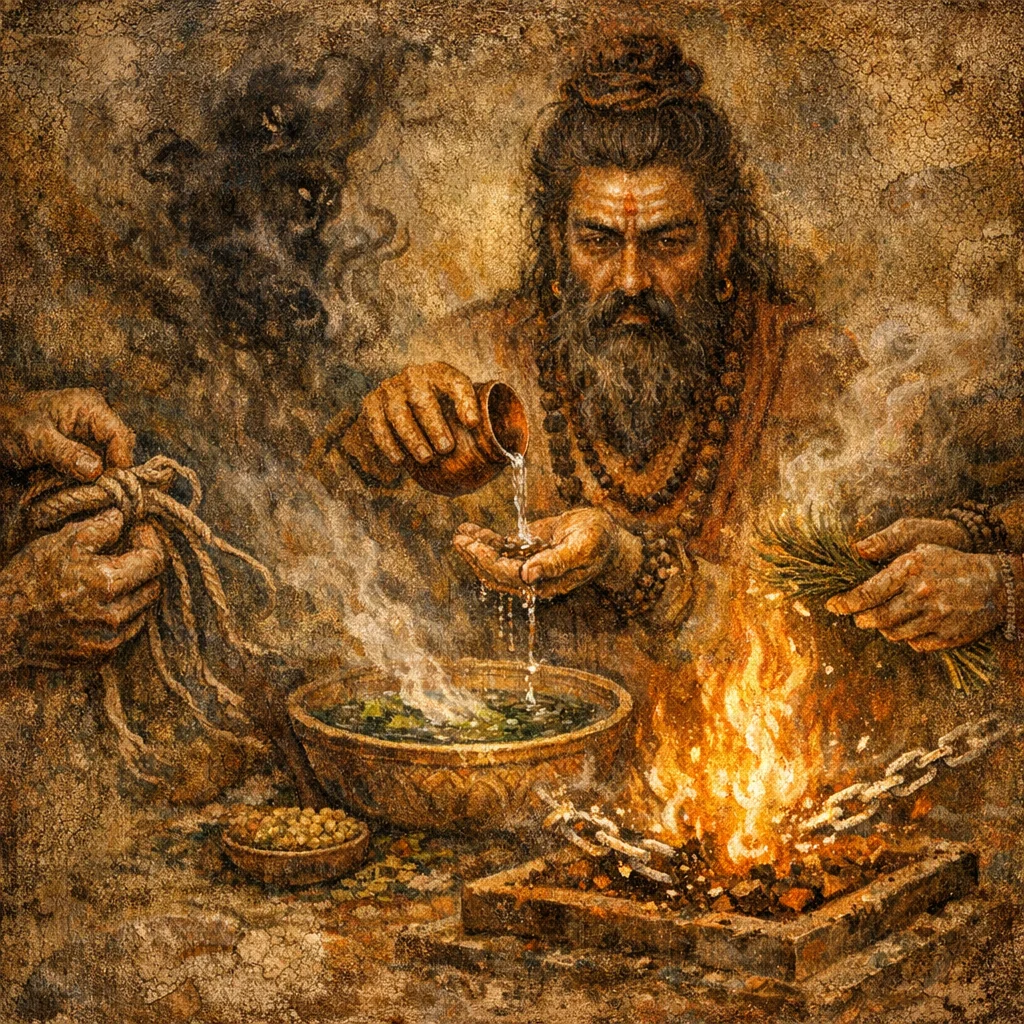
Unto Vaiśvānara I make declaration, of the debt (that stands) in contest among the Gods. He knoweth all these nooses, disentangled in their whole extent; then, with the ripened issue, may we come together in completeness.
Mantra 3
वैश्वानरः पविता मा पुनातु यत् संगरमभिधावाम्याशाम्। अनाजानन् मनसा याचमानो यत् तत्रैनो अप तत् सुवामि
May Vaiśvānara, the purifier, cleanse me, in that I rush toward the contest through hope; not knowing, with mind (bewildered), as one who begs—what guilt is therein, that I drive it away.
Frequently Asked Questions
It seeks ānṛṇya—freedom from the binding force of debt—along with a settled resolution of disputes and purification from any guilt or taint that may cling to the situation.
As the universal household fire and truthful witness, Vaiśvānara is invoked to ‘know all nooses’ (pāśas), untie obligations, and cleanse enas, restoring the petitioner’s auspicious status.
The first verse contrasts reckless causes (like gambling) with proper recourse: even if debt exists, the hymn turns to Vaiśvānara for lawful release, purification, and a merit-restoring settlement rather than denial or evasion.