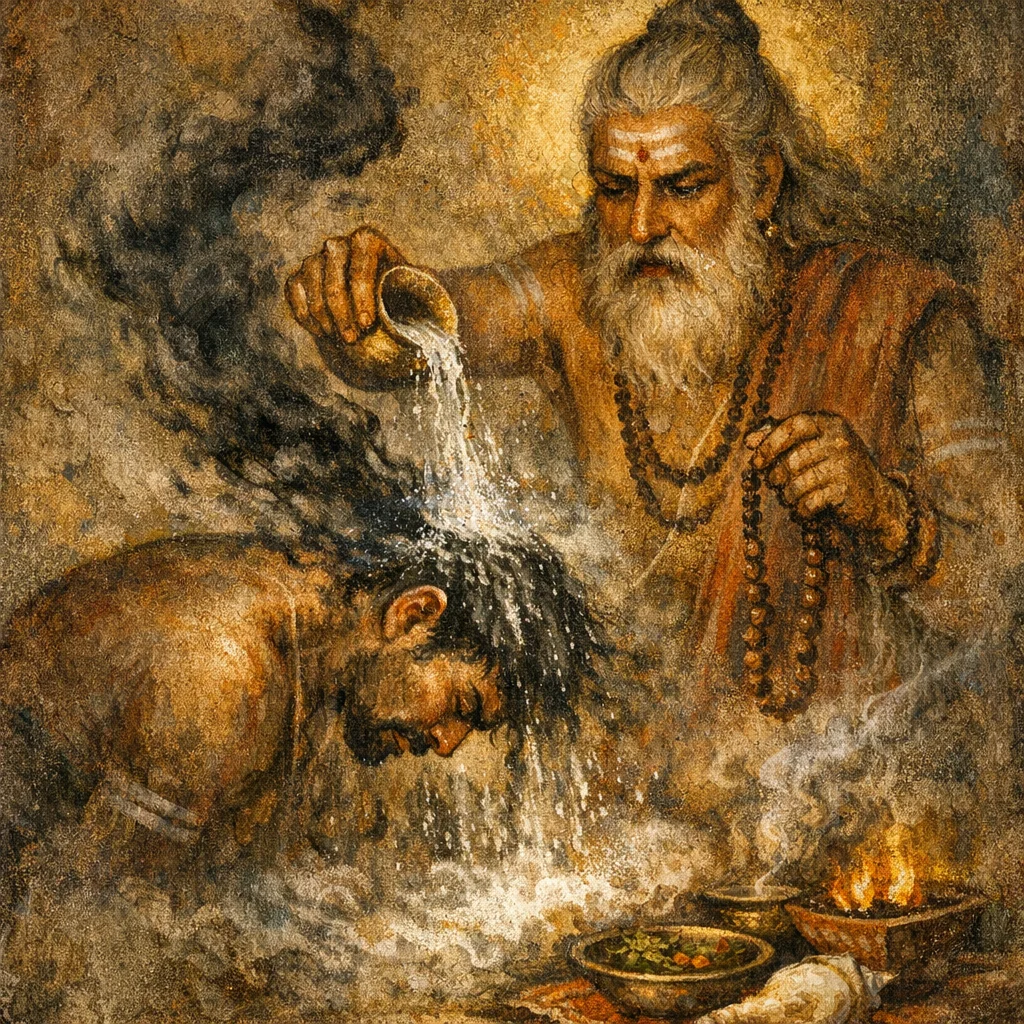
Sukta 113
Rishi: Atharvanic tradition (Anukramaṇī attribution not supplied in input; commonly treated as Atharvan/Angirasic healing corpus)
Devata: Viśve Devāḥ (with Trita as mythic purifier; grahi as adversary)
Chandas: Anuṣṭubh (probable; not metrically verified here)
Mantras
Mantra 1
पापनाशनम्। त्रिते देवा अमृजतैतदेनस्त्रित एनन्मनुष्येऽषु ममृजे । ततो यदि त्वा ग्राहिरानशे तां ते देवा ब्रह्मणा नाशयन्तु
Sin-destroying. In Trita the Gods wiped off this guilt; Trita wiped it off among men. Thereafter, if the Seizer hath laid hold on thee, that let the Gods, by holy spell, cause to perish for thee.
Mantra 2
मरीचीर्धूमान् प्र विशानु पाप्मन्नुदारान् गच्छोत वा नीहारान्। नदीनां फेनाँ अनु तान् वि नश्य भ्रूणघ्नि पूषन् दुरितानि मृक्ष्व
Into the rays, into the smokes pass forth, O Evil; go to the openings, or else to the mists. Along the foams of rivers—following them—vanish away: O Pūṣan, slayer of the embryo, wipe thou off the evils.
Mantra 3
द्वादशधा निहितं त्रितस्यापमृष्टं मनुष्यैनसानि । ततो यदि त्वा ग्राहिरानशे तां ते देवा ब्रह्मणा नाशयन्तु
Twelvefold is it laid away—Trita’s—brushed off from the sins of men. Thereafter, if the Seizer should lay hold on thee, that let the Gods, by holy spell, destroy for thee.
Frequently Asked Questions
Grāhi is the ‘seizer’—a harmful force imagined as taking hold of a person (like a sudden affliction, possession, or gripping illness). The hymn asks the Gods to destroy it through brahman (mantra-power).
Trita is presented as a mythic purifier: the Gods wipe off enas in Trita, and Trita wipes it off among humans. This precedent is used to make the patient’s cleansing ritually certain and effective.
Not necessarily. The text itself emphasizes brahman (the spoken formula) and a cleansing action (wiping/sprinkling). Natural dispersal symbols—smoke, mist, or flowing water imagery—support the expulsion described in the verses.