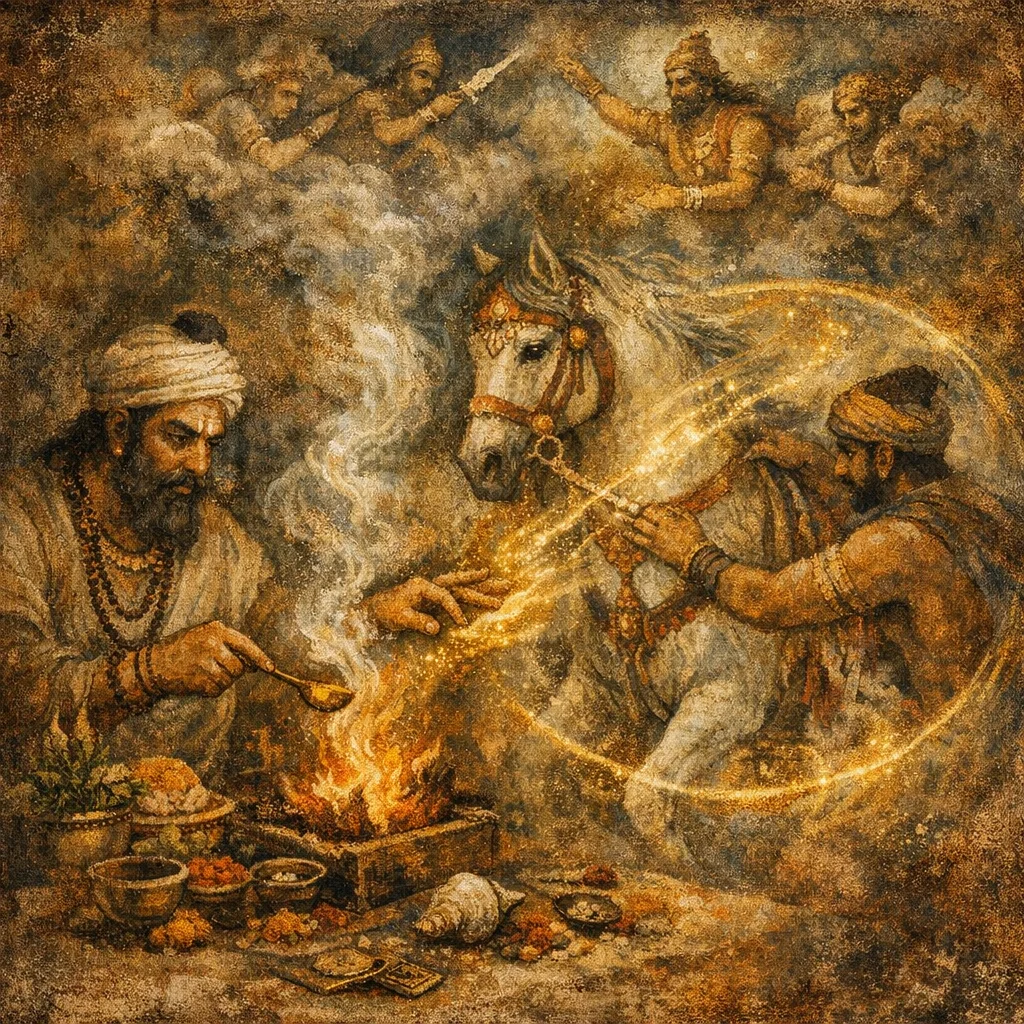
Sukta 92
Rishi: Atharvanic tradition (anukramaṇī attribution varies for short practical sūktas)
Devata: Indra; Maruts; Tvaṣṭṛ (functional triad for victory, impetus, and bodily perfection)
Chandas: Triṣṭubh-like cadence (pragmatically used; AV meters here may be mixed/irregular in some recensions)
Mantras
Mantra 1
वाजी। वातरम्हा भव वाजिन् युज्यमान इन्द्रस्य याहि प्रसवे मनोजवाः । युञ्जन्तु त्वा मरुतो विश्ववेदस आ ते त्वष्टा पत्सु जवं दधातु
O racer, be wind-swift, O prize-winner; when thou art yoked, go at Indra’s impulse, swift as the mind at the starting forth. Let the all-wise Maruts yoke thee on; and may Tvaṣṭṛ set speed for thee within thy feet.
Mantra 2
जवस्ते अर्वन् निहितो गुहा यः श्येने वात उत योऽचरत् परीत्तः । तेन त्वं वाजिन् बलवान् बलेनाजिं जय समने पारयिष्णुः
Thy speed, O steed, is laid away in secret—speed that is in the falcon, and that which the wind hath moved, ranging about. Therewith, O racer, strong with strength, win thou the race in the encounter, one that bears it through unto the end.
Mantra 3
तनूष्टे वाजिन् तन्वं१ नयन्ती वाममस्मभ्यं धावतु शर्म तुभ्यम्। अह्रुतो महो धरुणाय देवो दिवीऽव ज्योतिः स्वमा मिमीयात्
Thy body, O racer—thy body as it bears thee onward—let it run to win the good for us, and safety for thyself. Unharmed, for great glory and for firm support, may the god from heaven measure out unto thee his own light.
Frequently Asked Questions
It is used to secure victory and superior speed for a horse in a race or high-stakes run, while also protecting the horse from harm.
Indra gives the winning impulse and command; the Maruts provide driving, storm-like propulsion and ‘yoking’ energy; Tvaṣṭṛ perfects the body and sets speed into the feet—together covering start, force, form, and endurance.
Not necessarily. The hymn works primarily through recitation at yoking and at the start, using the harness and the horse’s body (especially feet/limbs) as the ritual focus; optional sprinkling with clean water is a simple supportive practice.