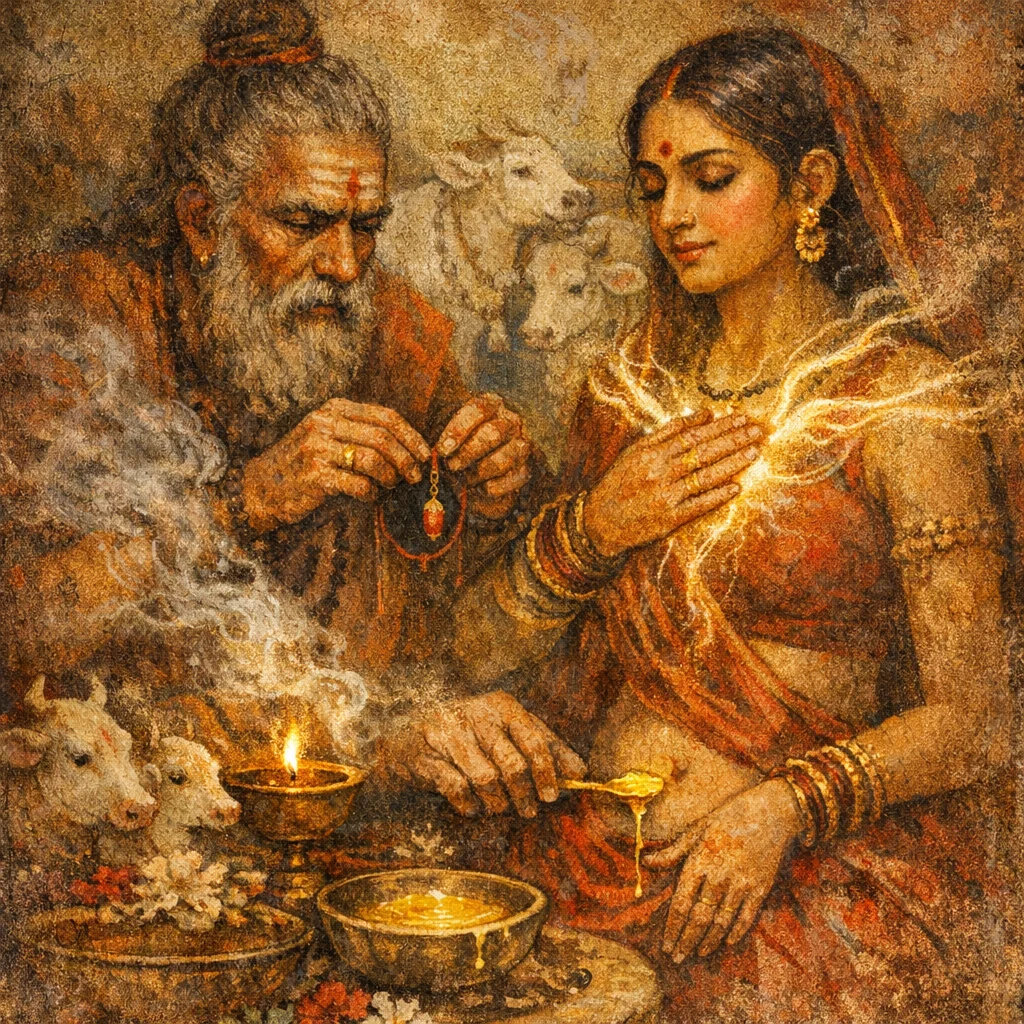
Sukta 9
Rishi: Atharvanic tradition (seer attribution varies by anukramaṇī for this hymn)
Devata: Saṁvanana/vaśīkaraṇa (the charm’s coercive ‘binding’ power; effectively the addressed person as object of the rite)
Chandas: Anuṣṭubh (probable; common for AV domestic charms)
Mantras
Mantra 1
कामात्मा वाञ्छ मे तन्वं१ पादौ वाञ्छाक्ष्यौ३वाञ्छ सक्थ्यौऽ। अक्ष्यौऽ वृषण्यन्त्याः केशा मां ते कामेन शुष्यन्तु
Desire-ensouled, long for my body; long for my feet; long for my eyes; long for my thighs: the hairs of thee, the lusting woman—let them with desire for me be dried up.
Mantra 2
मम त्वा दोषणिश्रिषं कृणोमि हृदयश्रिषम्। यथा मम क्रतावसो मम चित्तमुपायसि
I make thee arm-attached, I make thee heart-attached; that, O helper of my purpose, thou mayest come unto my mind—unto me.
Mantra 3
यासां नाभिरारेहणं हृदि संवननं कृतम् । गावो घृतस्य मातरो ऽमूं सं वानयन्तु मे
They whose navel is for licking, whose heart hath charmings wrought—let the cows, the mothers of the ghee, draw yonder one wholly unto me.
Frequently Asked Questions
It is used to attract a specific person—stirring longing, ‘binding’ their mind and heart, and drawing them to approach the practitioner.
Cows are called the “mothers of ghee,” symbolizing nourishing, maternal pull; that natural ‘drawing power’ is redirected to draw the target (amūm) wholly toward the speaker.
The verses do not mandate substances. Ghṛta (ghee) is thematically suggested by the final mantra and may be used optionally as a supportive offering or focus during recitation.