Sukta 113
Rishi: Ṛgvedic attribution via RV parallel (to be fixed by cross-index)
Devata: Indra
Chandas: Triṣṭubh/Jagatī-like length is possible here; meter should be confirmed against RV source (this verse is longer than typical Anuṣṭubh).
Mantras
Mantra 1
उभयं शृणवच्च न इन्द्रो अर्वागिदं वचः । सत्राच्या मघवा सोमपीतये धिया शविष्ठ आ गमत्
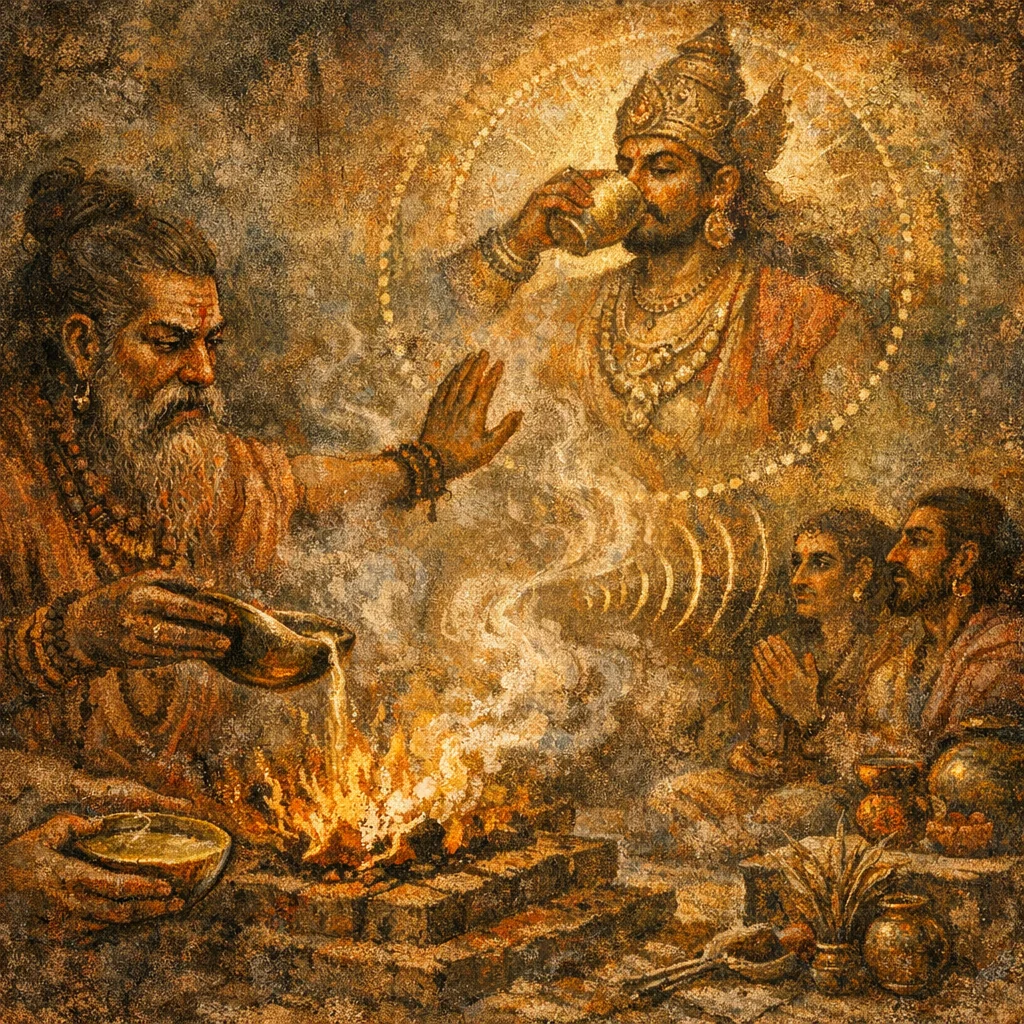
Let Indra hear us on both sides, and hitherward this our speech: the Bounteous, in unbroken course, most mighty, with inspired thought, let him come for Soma-drinking.
Mantra 2
तं हि स्वराजं वृषभं तमोजसे धिषणे निष्टतक्षतुः । उतोपमानां प्रथमो नि षीदसि सोमकामं हि ते मनः
For him, the self-ruling Bull—him for might—have the two Dhīṣaṇās fashioned forth; and among those that are to be compared thou sittest down as first: for Soma-desiring is thy mind.
Frequently Asked Questions
To invite Indra to turn toward the reciter’s speech, arrive promptly for Soma-drinking, and take the foremost seat at the rite—bringing strength and prosperity.
Dhīṣaṇā refers to inspired ritual intelligence; the hymn says it ‘fashions’ Indra’s might, implying that correct inspired recitation and intention effectively secure his empowered presence.
Yes, it can function as a prosperity-strengthening Indra-invocation with a symbolic offering (a simple libation) and a prepared seat, though exact substitutes depend on one’s ritual tradition.