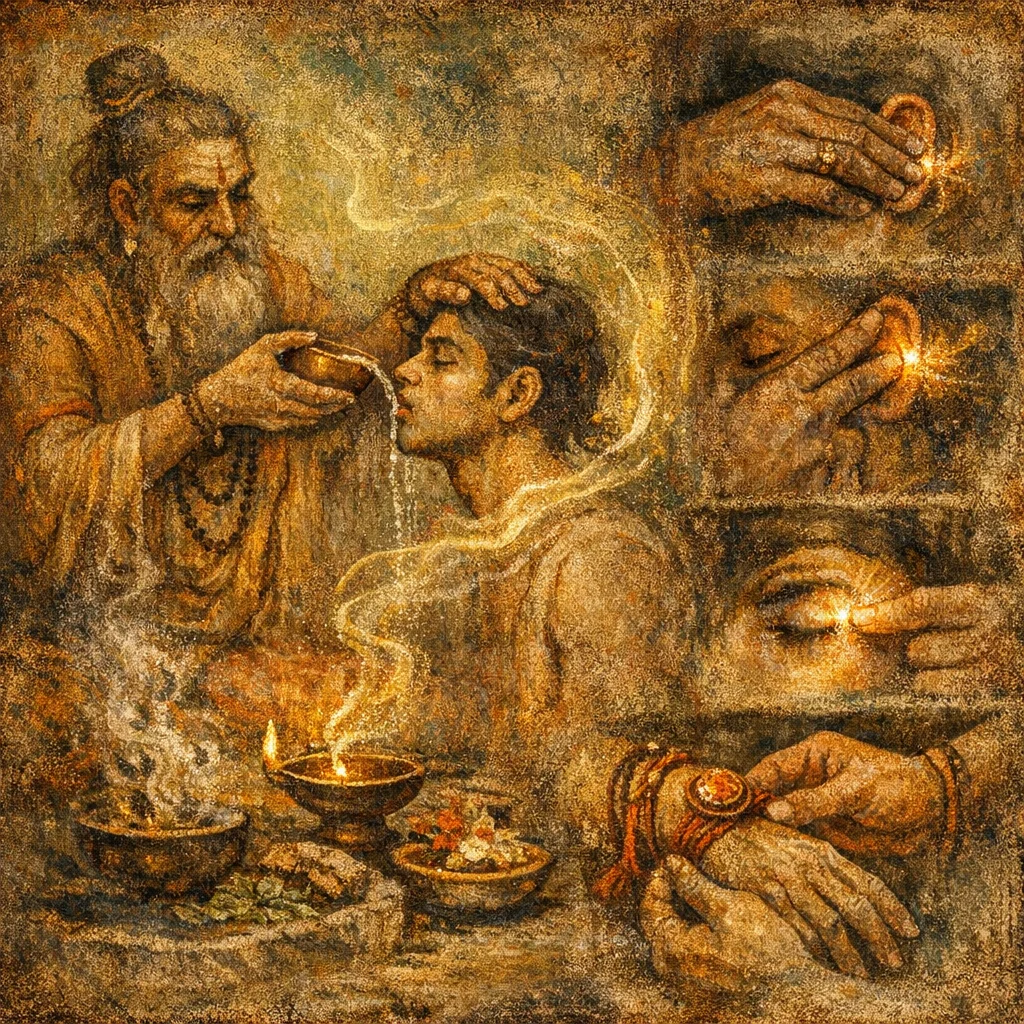
Sukta 17
Rishi: Atharvanic tradition (specific ṛṣi attribution varies by anukramaṇī for this hymn; commonly Atharvan/Angiras-type attributions in this register).
Devata: Śrotra (Hearing) personified as an indriya-power; implicitly supported by the general indriya-deities.
Chandas: Anuṣṭubh-like short formula (mantric prose/short metrical cadence typical of faculty-installation verses)
Mantras
Mantra 1
बलप्राप्तिः। ओजोऽस्योजो मे दाः स्वाहा ।१॥ सहोऽसि सहो मे दाः स्वाहा
Thou art vigour: to me give vigour—svāhā. Thou art might: to me give might—svāhā.
Mantra 2
बलमसि बलं मे दाः स्वाहा
Thou art strength: give me strength—svāhā!
Mantra 3
आयुरस्यायुर्मे दाः स्वाहा
Thou art Life: give me life. Svāhā!
Mantra 4
श्रोत्रमसि श्रोत्रं मे दाः स्वाहा
Thou art Hearing: bestow on me hearing. Svāhā!
Mantra 5
चक्षुरसि चक्षुर्मे दाः स्वाहा
Thou art sight: bestow on me sight. Svāhā!
Mantra 6
परिपाणमसि परिपाणं मे दाः स्वाहा
Thou art the All-encompassing Hand: bestow on me the All-encompassing Hand. Svāhā!
Frequently Asked Questions
It is used to restore and stabilize faculties—especially hearing—while also strengthening life-force and adding a protective ‘covering’ to prevent further harm.
This is an Atharvanic installation pattern: the faculty is treated as a divine power that can be identified, invoked, and ‘placed’ into the patient; svāhā seals the act as effective offering/placement.
Not necessarily. The hymn works well with a simple consecration medium like water (for sprinkling/sipping) and, optionally, a protective thread or amulet tied while reciting the closing protective verse.