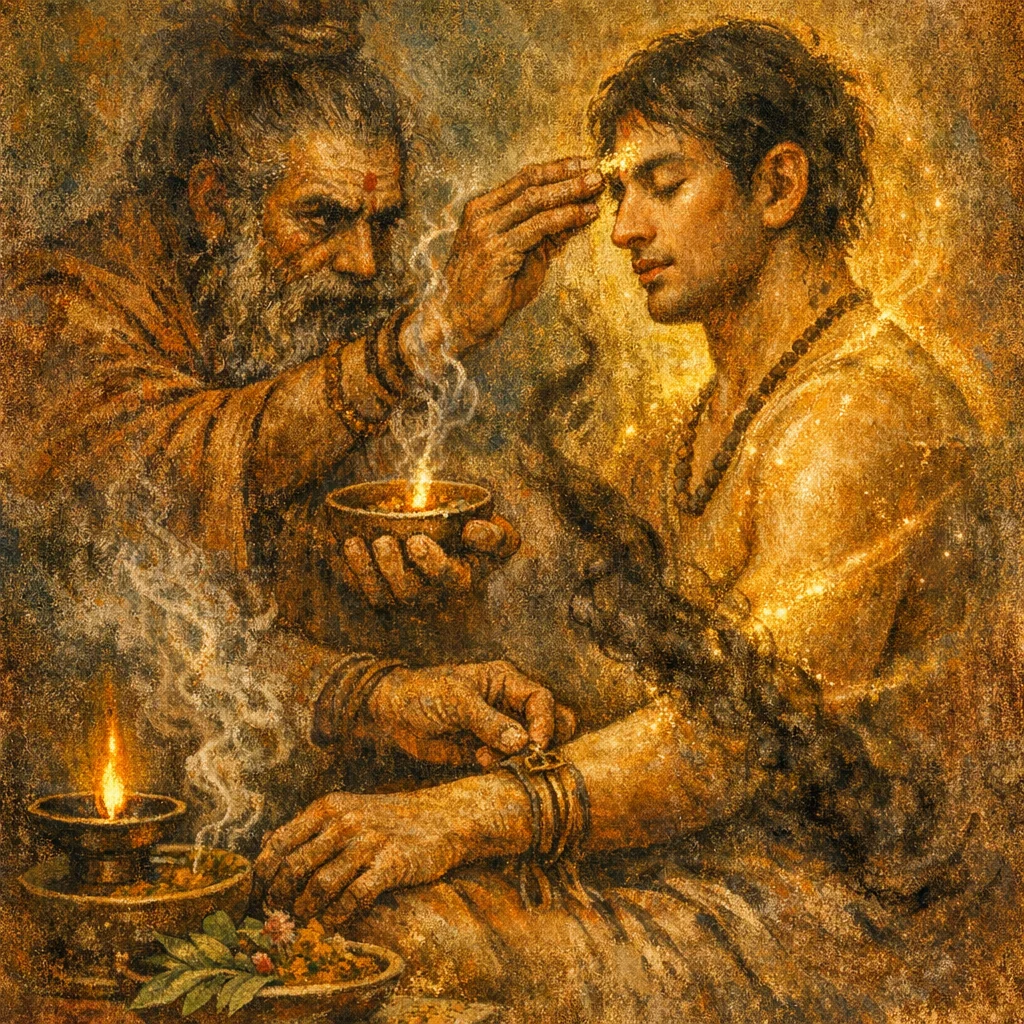
Sukta 60
Rishi: Atharvanic tradition (late book; specific ṛṣi attribution varies by anukramaṇī)
Devata: Ojas/Java/Pratiṣṭhā as functional powers (abstract deities of strength and stability)
Chandas: Mixed/late Atharvanic; approximates Anuṣṭubh cadence
Mantras
Mantra 1
अङ्गानि। वाङ् म आसन् नसोः प्राणश्चक्षुरक्ष्णोः श्रोत्रं कर्णयोः । अपलिताः केशा अशोणा दन्ता बहु बाह्वोर्बलम्
Let my members be in sound estate: let breath be in my nostrils, sight in mine eyes, hearing in mine ears; let my hairs be ungreyed, my teeth firm, and in mine arms abundant strength.
Mantra 2
ऊर्वोरोजो जङ्घयोर्जवः पादयोः । प्रतिष्ठा अरिष्टानि मे सर्वात्मानिभृष्टः
In my thighs be vigour; in my shanks be speed; in my feet be firm establishment. Unharmed be my sound conditions; unstricken be my whole self.
Frequently Asked Questions
For strengthening the body—especially arms and lower limbs—while protecting the person from injury and decline. It is a short, mantra-centered benediction for wholeness and steady functioning.
They are personified powers: ojas is vigour/resilience, java is speed and effective movement, and pratiṣṭhā is firm grounding or stable establishment. The hymn ‘seats’ these powers into specific body parts.
No. The text itself does not require substances; it works as a spoken installation of strength and protection. Many practitioners optionally touch the relevant limbs during recitation or sip/sprinkle clean water as a simple ritual support.