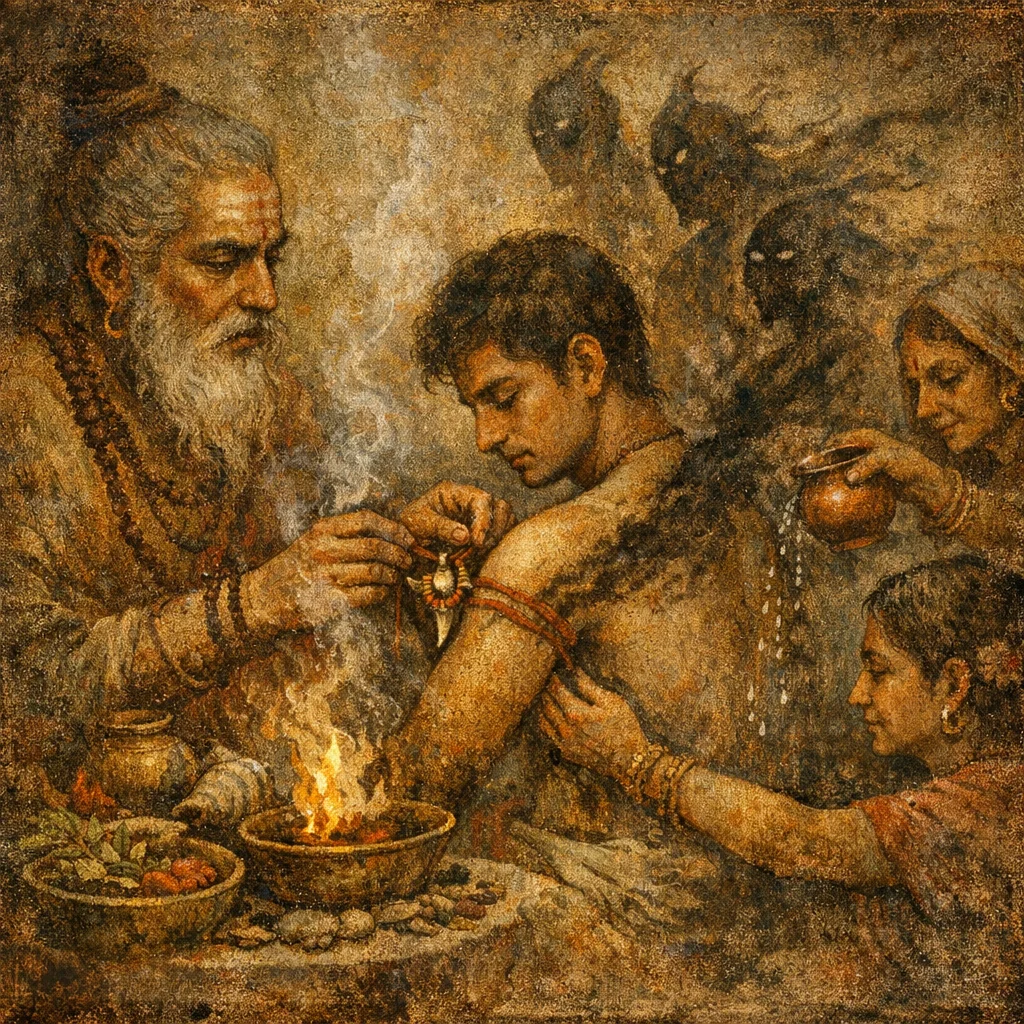
Sukta 36
Rishi: Atharvanic tradition (maṇi-hymn corpus)
Devata: Maṇi (amulet) personified; allied with Tejas/Varcas as powers
Chandas: Anuṣṭubh (predominant cadence)
Mantras
Mantra 1
शतवारो मणिः। शतवारो अनीनशद् यक्ष्मान् रक्षांसि तेजसा । आरोहन् वर्चसा सह मणिर्दुर्णामचातनः
The hundredfold Amulet: the hundredfold hath, with fiery might, driven off consumptions and the demons. Mounting with splendour, the Amulet hath chased away ill-name.
Mantra 2
शॄङ्गाभ्यां रक्षो नुदते मूलेन यातुधान्यः । मध्येन यक्ष्मं बाधते नैनं पाप्माति तत्रति
With its two horns it thrusts away the demon; with its root the witch. With its middle it checks consumption: no evil thing dares pass unto him.
Mantra 3
ये यक्ष्मासो अर्भका महान्तो ये च शब्दिनः । सर्वान् दुर्णामहा मणिः शतवारो अनीनशत्
The consumptions, be they small or great, and those that are clamorous with sound—of all these the hundredfold Amulet, the slayer of ill-name, hath driven them away.
Mantra 4
शतं वीरानजनयच्छतं यक्ष्मानपावपत्। दुर्णाम्नः सर्वान् हत्वाव रक्षांसि धूनुते
A hundred heroes he begat; a hundred wasting-sicknesses he cast away. Having smitten all the ill-named, he shaketh off the Rākṣasas downward and afar.
Mantra 5
हिरण्यशृङ्ग ऋषभः शातवारो अयं मणिः । दुर्णाम्नः सर्वांस्तृड्ढ्वाव रक्षांस्यक्रमीत्
Golden-horned, bull-like, hundred-warding is this amulet: having crushed all the ill-named, it hath strode down and away over the Rākṣasas.
Mantra 6
शतमहं दुर्णाम्नीनां गन्धर्वाप्सरसां शतम्। शतं शश्वन्वतीनां शतवारेण वारये
A hundred of the ill-named—of Gandharvas and Apsarases a hundred—yea, a hundred of the ever-returning, with the hundred-warding I hold at bay.
Frequently Asked Questions
In AV 19.36 the maṇi is both an amulet-object and a personified power. It is spoken of as acting with tejas and varcas to protect, heal, and restore reputation.
It targets yakṣma (wasting illness), rakṣasas and other hostile forces, recurring or returning afflictions, and durṇāman—an ominous ‘ill-name’ or social stigma that clings to a person.
“Hundred” functions as ritual intensification: it signifies totality and many-directional coverage. Saying ‘a hundred’ repeatedly builds the sense of complete warding and prevents relapse or return.