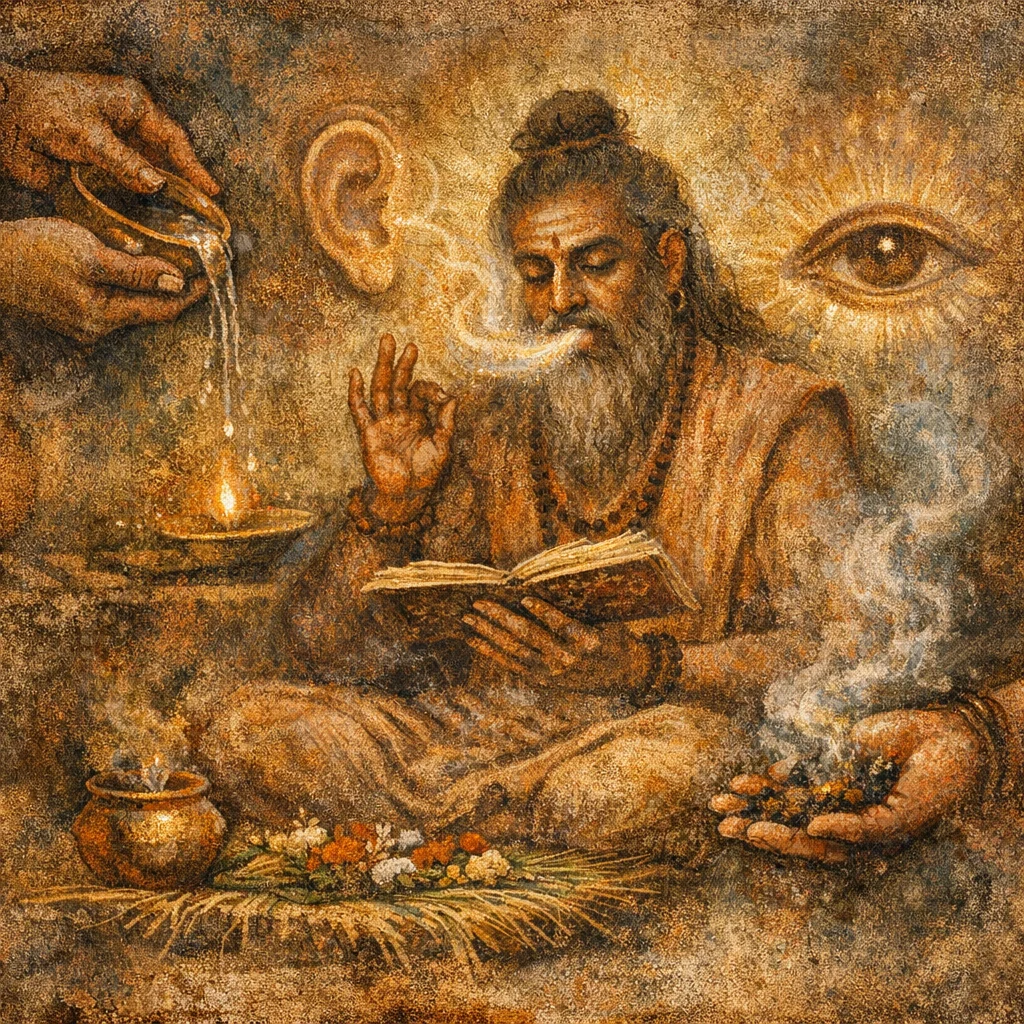
Sukta 2
Rishi: Atharvanic tradition (anukramaṇī-dependent)
Devata: Vāk (Speech) / abstract power of sweet utterance
Chandas: Likely Anuṣṭubh fragment/hemistich; full metrical context depends on surrounding mantras
Mantras
Mantra 1
निर्दुरर्मण्य ऊर्जा मधुमती वाक्
Forth from ill-will—strong, honeyed—is the Word.
Mantra 2
मधुमती स्थ मधुमतीं वाचमुदेयम्
Honey-sweet be thou; and honey-sweet the speech may I send forth.
Mantra 3
उपहूतो मे गोपाः उपहूतो गोपीथः
Invoked for me is the Herdsman-guard; invoked is the cow-shelter.
Mantra 4
सुश्रुतौ कर्णौ भद्रश्रुतौ कर्णौ भद्रं श्लोकं श्रूयासम्
Well-hearing be mine ears, auspicious-hearing be mine ears: may I hear an auspicious saying.
Mantra 5
सुश्रुतिश्च मोपश्रुतिश्च मा हासिष्टां सौपर्णं चक्षुरजस्रं ज्योतिः
Good hearing and attentive hearing—let them not forsake me; eagle-like be the eye, unceasing the light.
Mantra 6
ऋषीणां प्रस्तरोऽसि नमोऽस्तु दैवाय प्रस्तराय
Thou art the prastara of the seers: obeisance be to the divine prastara.
Frequently Asked Questions
For social śānti: it removes ill-will and establishes speech that is strong, sweet, and welcome, while also guarding one’s hearing from inauspicious reports.
Because social well-being depends on both: speaking agreeably and receiving good, auspicious words. The ear-verse asks that only ‘bhadra’ (good) sayings be heard.
Prastara is the strewn sacred grass/seat that supports a rite. Ideally it is used physically, but the verse can also consecrate a clean seat as a functional substitute when needed.