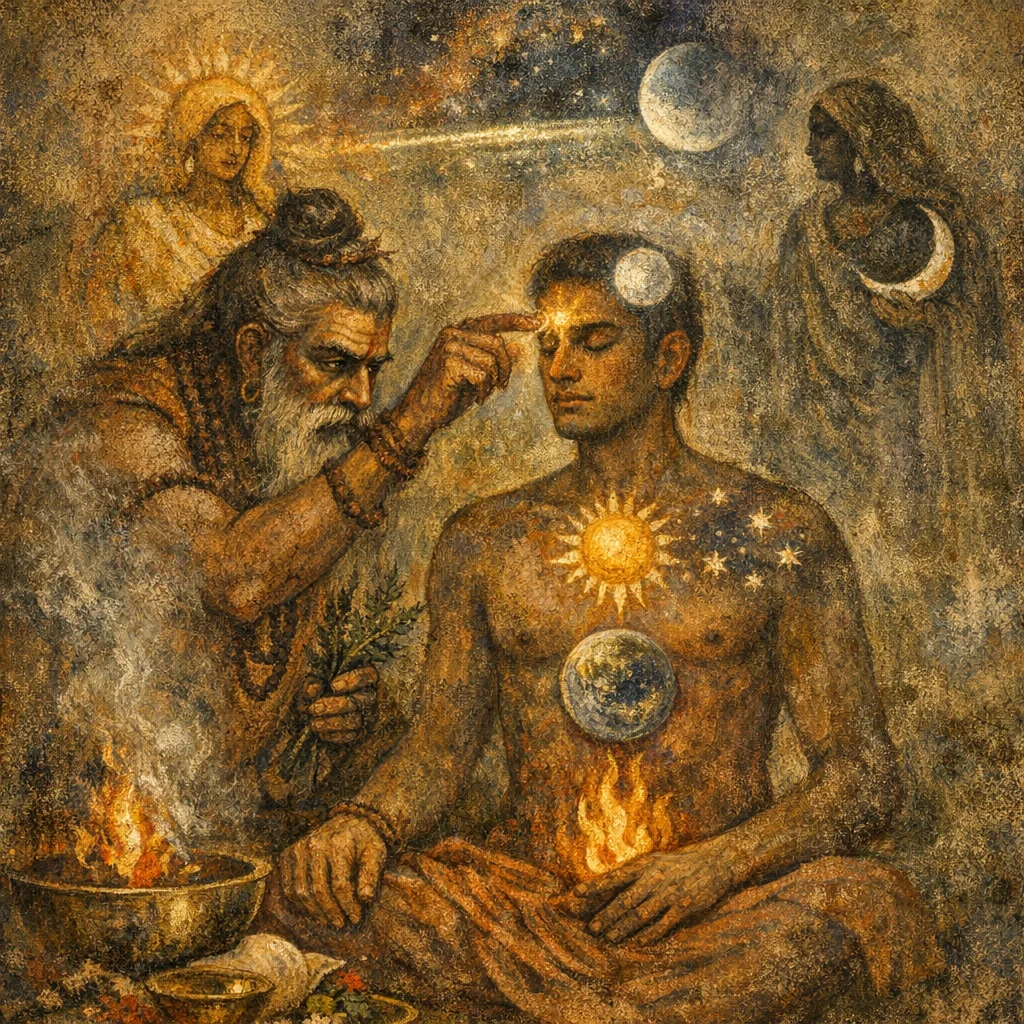
Sukta 18
Rishi: Traditionally associated with Vrātya-speculation in AV 15 (exact r̥ṣi assignment varies by anukramaṇī tradition).
Devata: Vrātya (personified liminal sacral power).
Chandas: Mixed/irregular (AV 15 often exhibits non-RV metrical behavior; this line is formulaic rather than strictly metrical).
Mantras
Mantra 1
अध्यात्म-प्रकरणम्। तस्य व्रात्यस्य
The chapter of the Inner-Self: of that Vratya—
Mantra 2
यदस्य दक्षिणमक्ष्यसौ स आदित्यो यदस्य सव्यमक्ष्यसौ स चन्द्रमाः
That which is his right eye—yonder, that is the Āditya; and that which is his left eye—yonder, that is the Moon.
Mantra 3
योऽस्य दक्षिणः कर्णोऽयं सो अग्निर्योऽस्य सव्यः कर्णोऽयं स पवमानः
Which is his right ear—this is Agni; and which is his left ear—this is Pavamāna.
Mantra 4
अहोरात्रे नासिके दितिश्चादितिश्च शीर्षकपाले संवत्सरः शिरः
Day-and-night are the nostrils; Diti and Aditi are (there); in the skull the Year is the head.
Mantra 5
अह्ना प्रत्यङ् व्रात्यो रात्र्या प्राङ् नमो व्रात्याय
By day the Vrātya is turned backward; by night he is turned forward. Reverence be to the Vrātya.
Frequently Asked Questions
Here the Vrātya is a personified liminal force—socially “outside” yet ritually powerful—recast as a cosmic person whose body is made of sun, moon, day-night, and the year.
The identifications (bandhus) stabilize and ‘domesticate’ dangerous power: by naming the Vrātya as structured time and light, the hymn turns unpredictability into protective order.
It functions mainly through recitation and reverence—especially at thresholds or liminal times (dusk/dawn)—ending with homage (“namo vrātyāya”) to avert hostility and gain protection.