
Shloka 36
Sankhya Yoga — Sankhya Yoga
अवाच्यवादांश्च बहून्वदिष्यन्ति तवाहिताः । निन्दन्तस्तव सामर्थ्यं ततो दुःखतरं नु किम् ॥ २.३६ ॥
avācyavādāṁś ca bahūn vadiṣyanti tavāhitāḥ | nindantas tava sāmarthyaṁ tato duḥkhataraṁ nu kim || 2.36 ||

Musuh-musuh yang menghendaki keburukan bagimu akan mengucapkan banyak kata yang tidak patut, mencela kemampuanmu; adakah yang lebih menyakitkan daripada itu?
Your enemies will speak many unbecoming words, censuring your ability; what can be more painful than that?
Your ill-wishers will utter many things that ought not be said, disparaging your capacity; what could be more distressing than that?
avācya-vāda indicates “unspeakable/unseemly talk,” often rendered as “abusive words.” The verse continues the honor/shame line of persuasion; the stress is on public disparagement rather than physical harm.
FAQs
It identifies anticipated humiliation and ridicule as powerful drivers of anxiety, showing how fear of judgment can amplify avoidance.
The metaphysical layer is secondary here; the verse operates at the level of ethics and psychology within the epic’s social world.
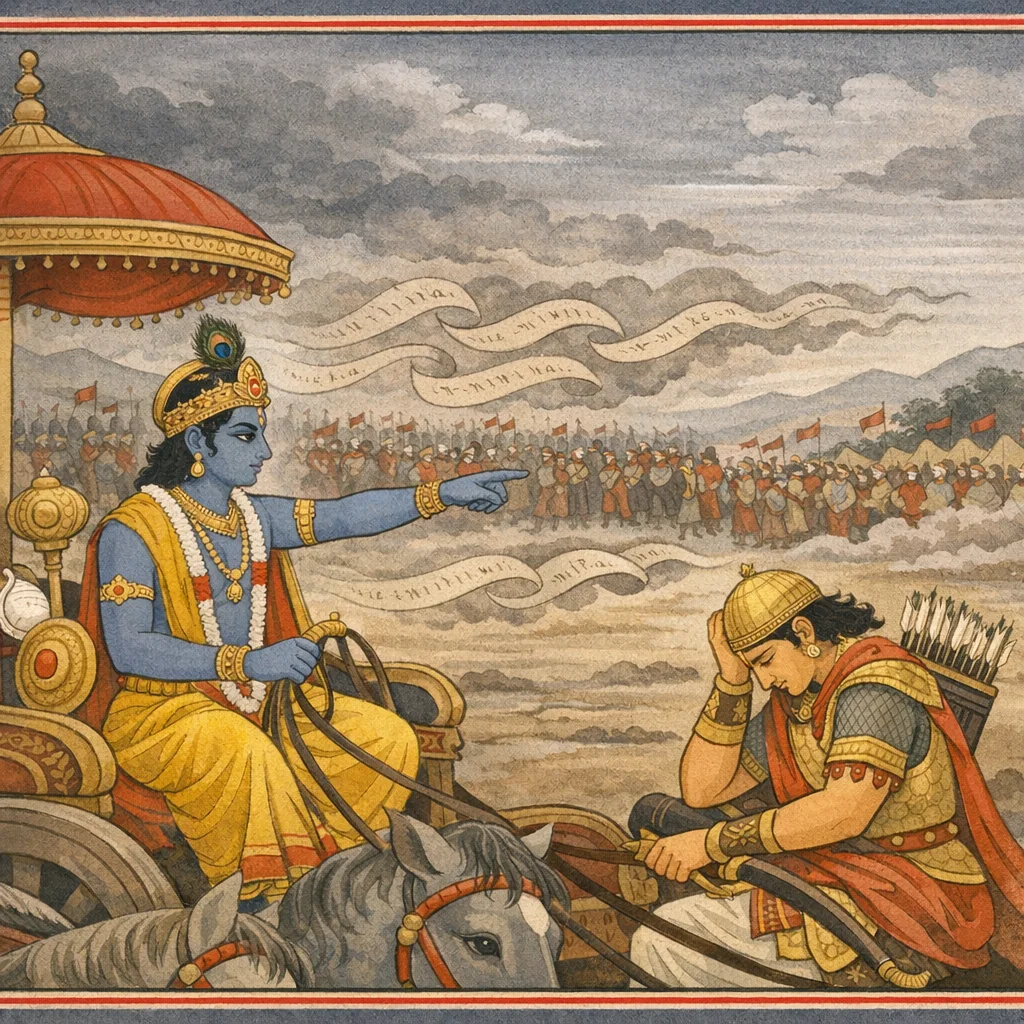
Krishna underscores that withdrawal would invite disparagement from opponents, thereby urging Arjuna to align action with his role.
It can be applied to resilience: learning to act from considered principles rather than being governed by the prospect of others’ negative commentary.