
Shloka 7
Dhyana Yoga — Atma Samyama Yoga
जितात्मनः प्रशान्तस्य परमात्मा समाहितः । शीतोष्णसुखदुःखेषु तथा मानापमानयोः ॥ ६.७ ॥
jitātmanaḥ praśāntasya paramātmā samāhitaḥ | śītoṣṇa-sukha-duḥkheṣu tathā mānāpamānayoḥ || 6.7 ||

Bagi orang yang telah menaklukkan dirinya dan tenang damai, Paramātman bersemayam dengan mantap; ia tetap seimbang dalam dingin dan panas, dalam suka dan duka, serta dalam hormat dan hina.
जिसने अपने मन को जीत लिया है और जो शान्त है, उसका परमात्मा समाहित रहता है; (वह) शीत-उष्ण, सुख-दुःख तथा मान-अपमान में सम रहता है।
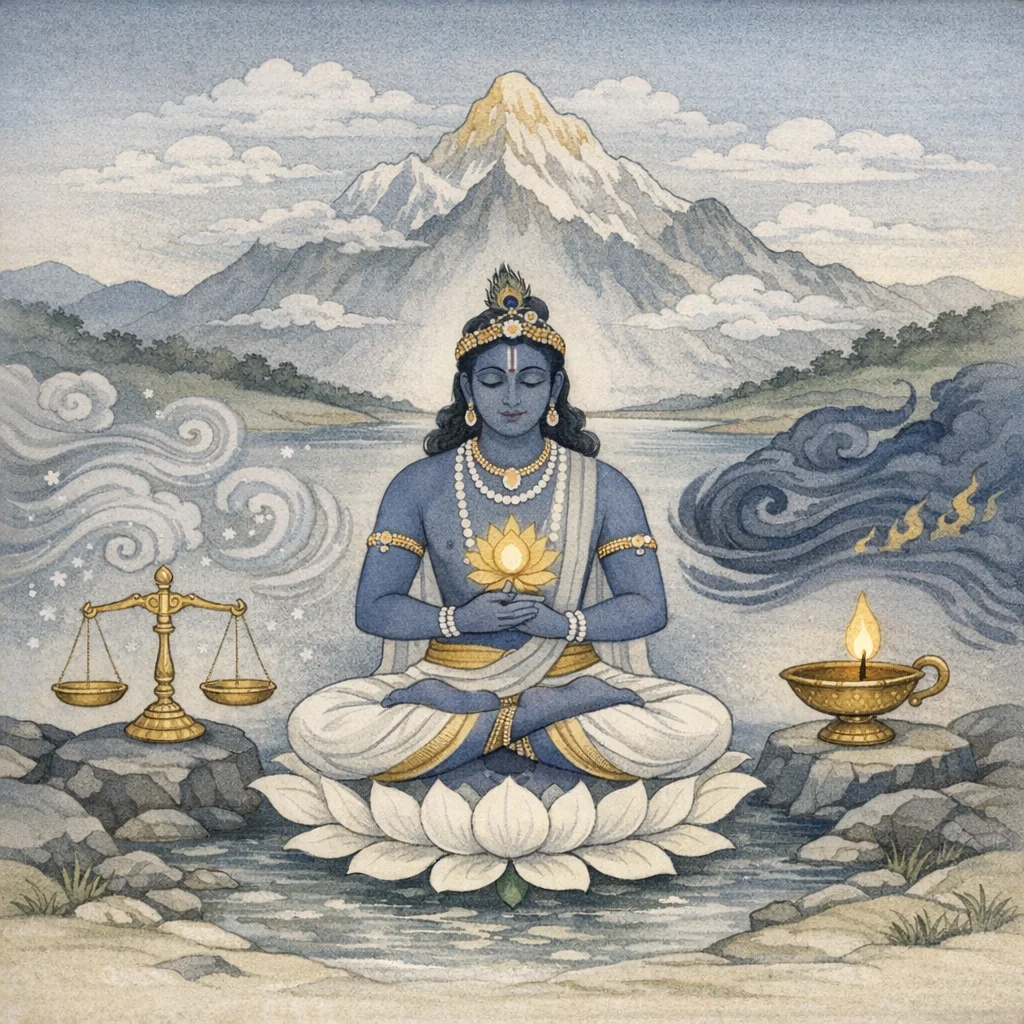
For one who has mastered oneself and is tranquil, the supreme self (paramātman) is firmly established; (he remains steady) amid cold and heat, pleasure and pain, and honor and dishonor.
“Paramātman” is read theistically (God present/established in the yogin) in some traditions, and as the highest self/ultimate reality realized in samādhi in others; the verse also functions ethically, describing equanimity under changing conditions.
FAQs
It portrays emotional resilience: the person remains balanced despite sensory discomforts and social evaluation, indicating reduced dependence on external validation.
The verse links inner tranquility with the presence/realization of the highest principle (paramātman), suggesting that steady consciousness is both a sign and support of realization.
Early in Chapter 6, it defines the yogin’s stable state, preparing for the detailed meditation instructions that follow.
Encourages cultivating steadiness amid discomfort and criticism/praise—useful for stress management, ethical consistency, and maintaining focus in demanding environments.