
Bhagavad Gita — Dhyana Yoga, Shloka 20
Atma Samyama Yoga
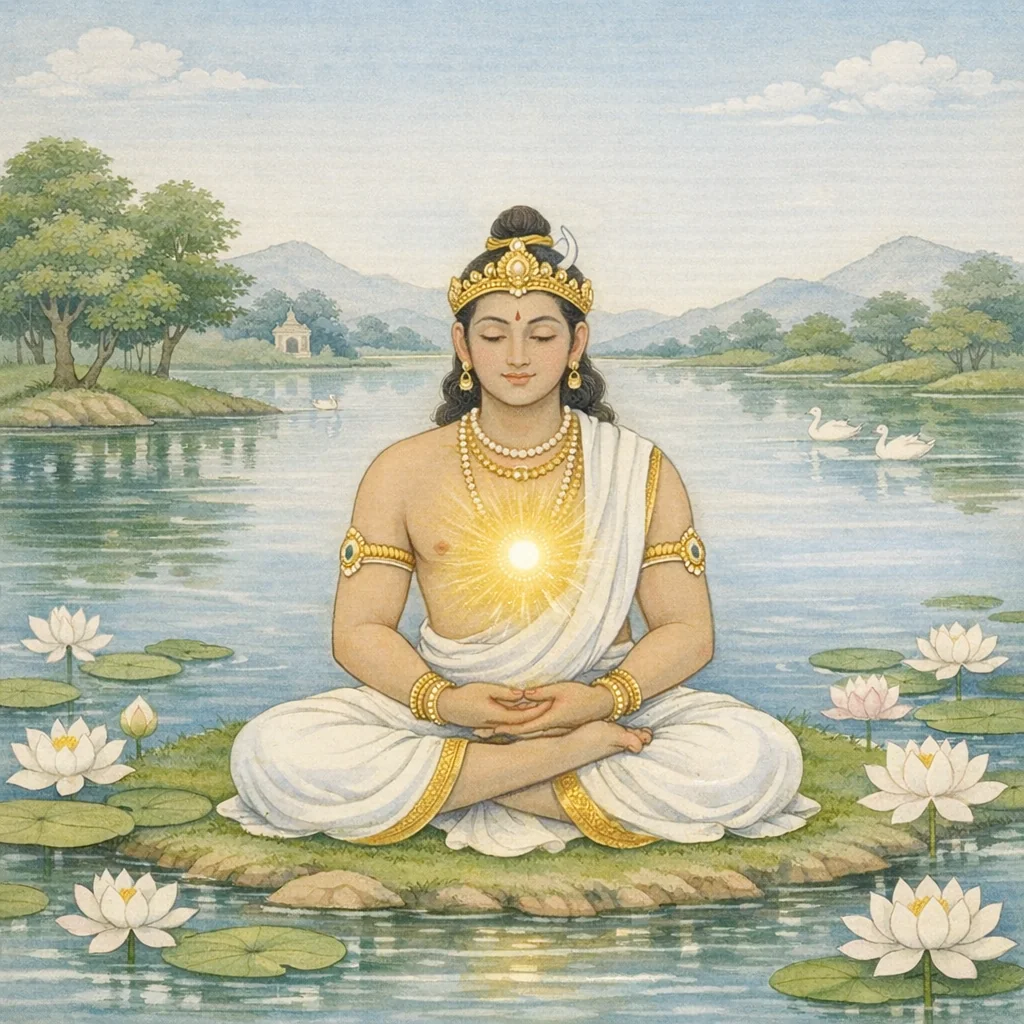
यत्रोपरमते चित्तं निरुद्धं योगसेवया । यत्र चैवात्मनात्मानं पश्यन्नात्मनि तुष्यति ॥ ६.२० ॥
yatroparamate cittaṁ niruddhaṁ yogasevayā | yatra caivātmanātmānaṁ paśyann ātmani tuṣyati || 6.20 ||

Di mana batin yang telah dikendalikan oleh laku yoga menjadi hening, dan di mana sang pelaku melihat Ātman dengan Ātman di dalam Ātman sendiri, lalu berpuas diri dalam Ātman.
जिस अवस्था में योगाभ्यास से निरुद्ध चित्त उपराम हो जाता है और जिसमें (साधक) अपने-आप से अपने-आप को आत्मा में ही देखता हुआ आत्मा में ही संतुष्ट हो जाता है।
Where the mind, restrained through the practice of yoga, comes to rest; and where, seeing the Self by the self (i.e., through one’s own inner awareness), one is content in the Self alone.
Interpretation hinges on ‘आत्मना आत्मानं’—often read epistemically (the self/inner faculty apprehends the Self) rather than as two metaphysical selves. The verse aligns with Upaniṣadic idiom of self-knowledge as immediate and inward.
FAQs
It describes a shift from externally conditioned satisfaction to intrinsic contentment: the mind quiets through sustained practice, and satisfaction arises from inward clarity.
The verse points to a mode of knowing in which the Self is ‘seen’ directly (not as an object among objects), suggesting a foundational consciousness underlying mental activity.
This continues the meditative phenomenology of Chapter 6: after steadiness (6.18–19), the text describes the experiential ‘where’ (yatra) of absorption and self-contentment.
In contemplative terms: emphasize regular practice and observe the difference between gratification (from stimuli) and contentment (from settled awareness).