
Bhagavad Gita — Dhyana Yoga, Shloka 10
Atma Samyama Yoga
योगी युञ्जीत सततमात्मानं रहसि स्थितः । एकाकी यतचित्तात्मा निराशीरपरिग्रहः ॥ ६.१० ॥
yogī yuñjīta satatam ātmānaṃ rahasi sthitaḥ | ekākī yata-cittātmā nirāśīr aparigrahaḥ || 6.10 ||

Seorang yogi hendaknya senantiasa melatih diri dengan tinggal di tempat sunyi, seorang diri, mengendalikan pikiran dan tubuh, tanpa mengharap buah hasil, serta tanpa keterikatan pada pengumpulan; dan menempatkan batinnya pada Atman.
योगी एकान्त स्थान में स्थित होकर, अकेला, चित्त और शरीर को वश में किये, निराश (फल की आशा से रहित) और अपरिग्रही (संग्रह-रहित) होकर, सदा अपने मन को आत्मा में लगावे।
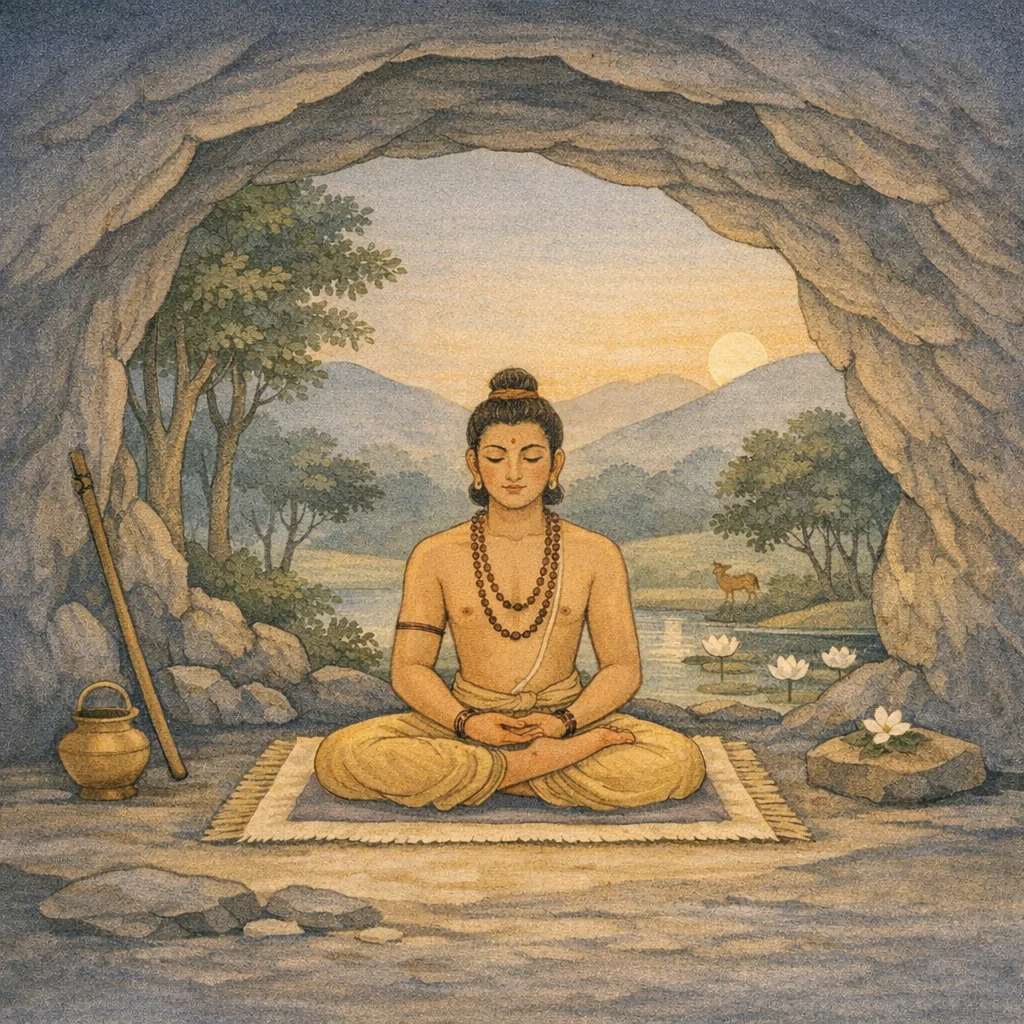
Let the yogin continually discipline himself in a secluded place, alone, with mind and person controlled, without expectation, and without acquisitiveness.
‘Ātmānaṃ yuñjīta’ is variously rendered ‘unite the self (with the Self)’ versus ‘discipline oneself’; the Sanskrit allows both, with the chapter’s practical instructions favoring the latter as a method leading to the former.
FAQs
Seclusion and reduced stimulation support attentional training. ‘Without expectation’ reduces performance anxiety; ‘non-possessiveness’ reduces distraction from acquisition and maintenance concerns.
The method aims at disentangling consciousness from craving and identification, preparing for insight into the Self as distinct from fluctuating mental states.
This begins a practical sequence (6.10–6.15) detailing conditions and posture for meditation, shifting from qualities of the yogin to concrete discipline.
Create a consistent, low-distraction routine (even brief daily sessions), simplify inputs (devices/notifications), and set process-based goals rather than outcome-based expectations.