Prapathaka 2
Soma-yāga cycle (Śrauta): continuation of the Agniṣṭoma/Somayāga liturgy—especially the Soma-handling and associated stotras/śastras and offering-formulas that integrate the Adhvaryu’s Yajurvedic recitations with the Sāmavedic chant and Hotṛ’s Ṛgvedic recitation.
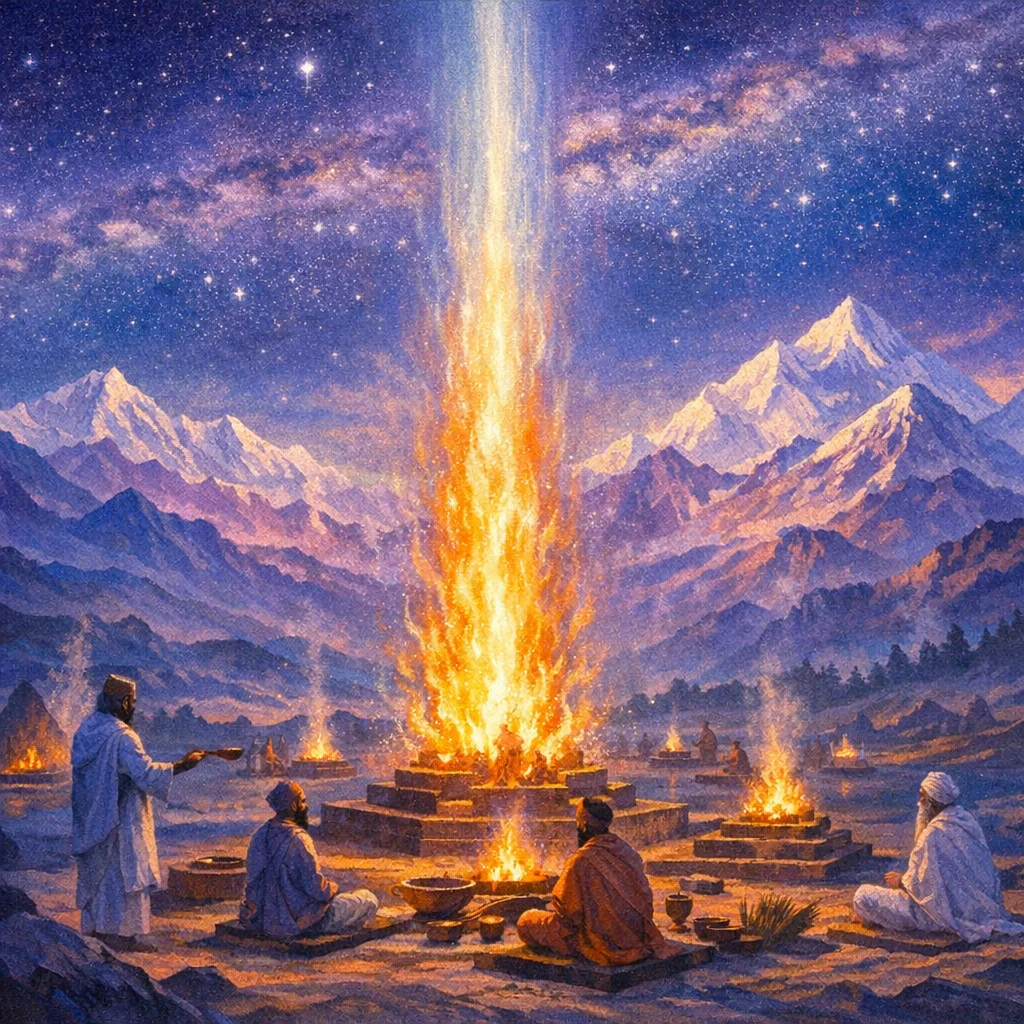
Kṛṣṇa Yajurveda, Kāṇḍa 7 Prapāṭhaka 2 belongs to the mature Soma-yāga stratum in which the Adhvaryu’s operational mantras are coordinated with the tripartite śrauta performance (Adhvaryu–Hotṛ–Udgātṛ). The chapter’s texture is characteristically “procedural”: mantras function as performative speech-acts that authorize handling of Soma, regulate transitions between pressing, offering, and consumption, and ritually map the sacrificer’s body and social identity onto the sacrificial field. The prapāṭhaka also exhibits the Black-Yajurvedic tendency to interleave mantra and brāhmaṇa-like direction, producing a compact liturgical script rather than a purely hymnic anthology. Theologically, Soma is treated as both oblation and divine agent—purifier, invigorator, and mediator—while Agni remains the mouth of the rite. The chapter thus exemplifies how late Vedic ritualism fuses cosmology (ṛta, waters, light) with exacting choreography, ensuring efficacy through correct sequence, meters, and priestly role-differentiation.
Anuvakas
Anuvakas for this prapathaka are loading. Please check back soon.