
Shloka 3
Dhyana Yoga — Atma Samyama Yoga
आरुरुक्षोर्मुनेर्योगं कर्म कारणमुच्यते । योगारूढस्य तस्यैव शमः कारणमुच्यते ॥ ६.३ ॥
ārurukṣor muner yogaṁ karma kāraṇam ucyate | yogārūḍhasya tasyaiva śamaḥ kāraṇam ucyate || 6.3 ||

योग में आरूढ़ होने की इच्छा रखने वाले मुनि के लिए कर्म साधन कहा गया है; और उसी योगारूढ़ के लिए शम (मन की शान्ति/निवृत्ति) साधन कहा गया है।
योग में आरूढ़ होने की इच्छा रखने वाले मुनि के लिए कर्म साधन कहा गया है; और उसी योगारूढ़ के लिए शम (मन की शान्ति/निवृत्ति) साधन कहा गया है।
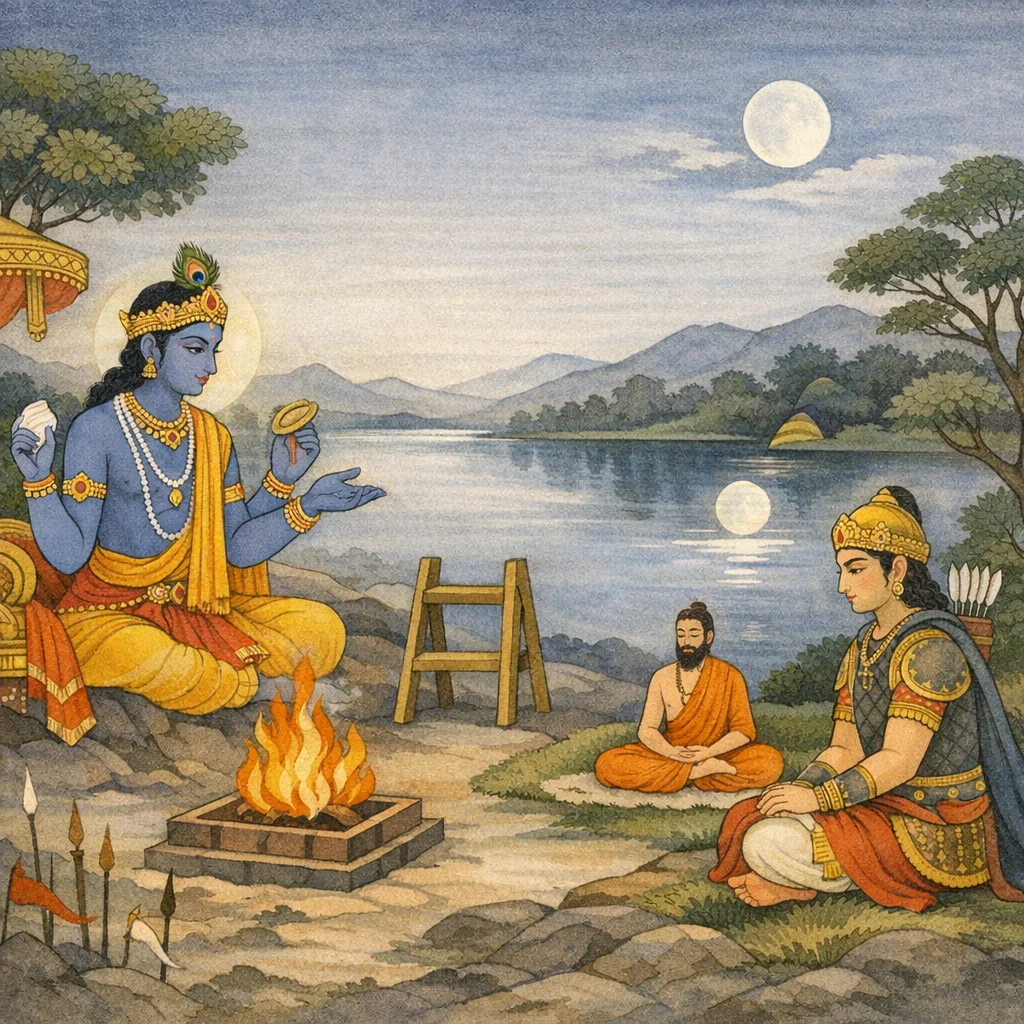
For the sage who wishes to ascend to yoga, action is said to be the means; for that same one who has ascended to yoga, tranquility (śama) is said to be the means.
The progression is interpreted either as a two-stage path (disciplinary action → contemplative stillness) or as complementary emphases within a single integrated practice, depending on commentator and school.
FAQs
It reflects skill acquisition: structured activity builds stability and self-efficacy; later, reduced mental agitation becomes the primary support for deeper concentration.
Action purifies and steadies the mind, enabling contemplative knowledge; once steadiness is established, inner quiet becomes the direct condition for insight.
It introduces a developmental model for Chapter 6’s meditation teaching, explaining why disciplined life and duties can precede sustained contemplation.
Begin with consistent routines and ethical commitments; as attention improves, prioritize rest, simplicity, and reduced overstimulation to deepen focus.